Dr. Phyto
μονιλίωση καρπών
Monilinia fructigena
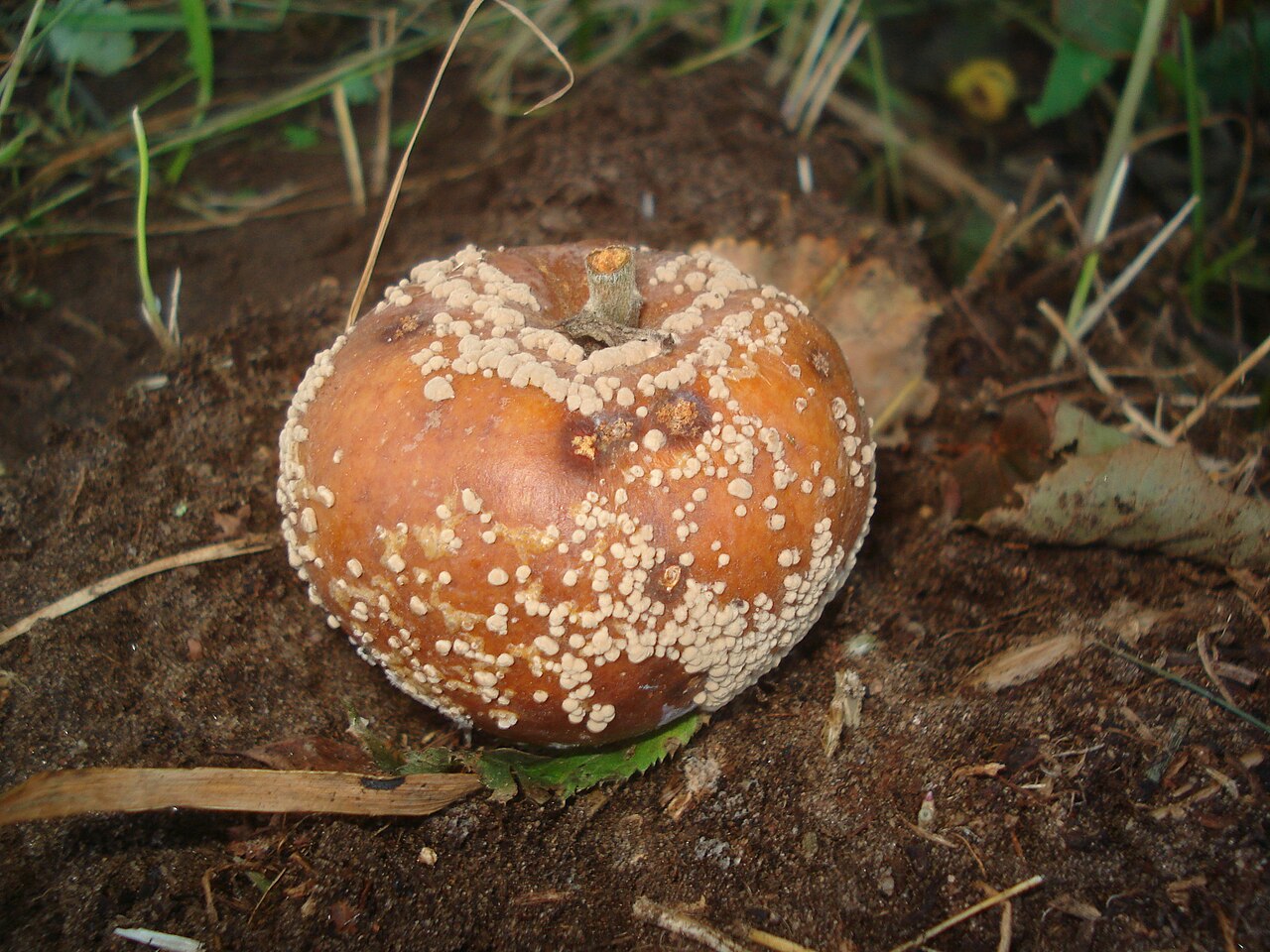
Συμπτώματα
Μαλακή καστανή σήψη των ωριμαζόντων καρπών, ωχρόχρωμα συσσωματώματα σπορίων σε ομόκεντρους δακτυλίους, μουμιοποιημένοι καρποί που παραμένουν στα κλαδιά όλο τον χειμώνα, ταχεία εξάπλωση σε καρπούς που εφάπτονται μέσα σε πυκνές συστάδες.
Φυτά που προσβάλλονται
Συχνά συγχέεται με
- μαύρος καρκίνος κυδωνιάς
Πώς να τα ξεχωρίσετε: Monilinia fructigena: Παρατηρήστε στον καρπό μια εξαπλούμενη μαλακή καστανή σήψη με ανυψωμένα ανοιχτόχρωμα-μπεζ σπορόφορα μαξιλαράκια (σποροδόχια) διατεταγμένα σε ομόκεντρους δακτυλίους πάνω στη σάπια επιφάνεια· οι μουμιοποιημένοι καρποί παραμένουν στο κλαδί και η μόλυνση προχωρά στον ποδίσκο προκαλώντας ξήρανση ανθέων και κλαδιών. Diaporthe perniciosa: Παρατηρήστε στα κλαδιά και τα λεπτά κλαριά βυθισμένα έλκη φλοιού με απότομα όρια και προοδευτική ξήρανση, με τον νεκρό φλοιό διάστικτο από μικροσκοπικά μαύρα σπυριά (πυκνίδια) που σε υγρό καιρό εκκρίνουν ανοιχτόχρωμες έλικες· οι κηλίδες στους καρπούς είναι πιο σκληρές, πιο σκούρες και δεν εμφανίζουν τους τακτικούς ομόκεντρους ανοιχτόχρωμους δακτυλίους.
- καρπόκαψα
Πώς να τα ξεχωρίσετε: Η ζημιά από τον Cydia pomonella (καρπόκαψα) εμφανίζεται ως μία μόνο, στρογγυλή οπή εισόδου/εξόδου στο κυδώνι, συνήθως κοντά στον κάλυκα (μάτι) ή εκεί που ακουμπούν δύο καρποί, βουλωμένη ή περιτριγυρισμένη από κοκκινωπό-καστανό, εύθρυπτο περίττωμα (frass). Κόβοντας τον καρπό, βρίσκετε μια καμπυλωτή στοά που οδηγεί προς τον πυρήνα, φαγωμένα σπόρια και συχνά μια ροζ-λευκή κάμπια με σκούρο κεφάλι. Η σάρκα γύρω από τη στοά είναι κυρίως ανέπαφη, όχι μαλακή. Η Monilinia fructigena (καστανή σήψη) είναι μια εξαπλούμενη, μαλακή, ανοιχτό έως σοκολατί καστανή σαπισμένη περιοχή που καλύπτει μεγάλο μέρος του καρπού, διάσπαρτη με ομόκεντρους δακτυλίους από μικρά μπεζ ή κρεμ μαξιλαράκια σπορίων. Δεν υπάρχει στοά εντόμου· όλη η σαπισμένη περιοχή είναι μαλακή και υδαρής, και οι προσβεβλημένοι καρποί συχνά συρρικνώνονται σε μια σκληρή μούμια που παραμένει κολλημένη στο κλαδί.
- βακτηριακό κάψιμο
Πώς να τα ξεχωρίσετε: Το Erwinia amylovora (βακτηριακό κάψιμο/πυρόμορφο) είναι βακτήριο: τα προσβεβλημένα άνθη και οι κορυφές βλαστών της κυδωνιάς μαραίνονται απότομα και γίνονται σκούρα καφέ έως μαύρα σαν καμένα από φωτιά, η κορυφή του βλαστού κυρτώνει σχηματίζοντας το χαρακτηριστικό σχήμα ποιμενικής αγκίστρας, ενώ σε ζεστό υγρό καιρό αναβλύζει γαλακτώδες λευκό έως κεχριμπαρένιο βακτηριακό έκκριμα πάνω στον μαυρισμένο ιστό και ο φλοιός κάτω από το νεκρό κλαδίσκο βυθίζεται και γίνεται διαποτισμένος με νερό. Το Monilinia fructigena (φαιά σήψη) είναι μύκητας: τα νεκρά άνθη και οι κλαδίσκοι γίνονται ανοιχτό έως μέτριο καφέ (όχι το βαθύ μαύρο του βακτηριακού καψίματος), δεν υπάρχει έκκριμα ούτε σχήμα αγκίστρας, και πάνω στον νεκρό ιστό, στα έλκη και κυρίως στους σαπίζοντες καρπούς σχηματίζει ωχροκαφέ-γκρι θύσανους σπορίων (σποροδόχια) διατεταγμένα σε ομόκεντρους δακτυλίους. Αν δείτε μαυρισμένα μαραμένα άνθη με κολλώδες έκκριμα και αγκιστρωτή κορυφή βλαστού, αντιμετωπίστε το ως ύποπτο κρούσμα βακτηριακού καψίματος και αναφέρετέ το στον εθνικό οργανισμό φυτοπροστασίας (NPPO), καθώς το Erwinia amylovora είναι ρυθμιζόμενος/υποχρεωτικά δηλωτέος οργανισμός στην ΕΕ.
- αμερικανική φαιά σήψη
Πώς να τα ξεχωρίσετε: Και οι δύο μύκητες προκαλούν φαιά σήψη στα βερίκοκα με ομόκεντρους δακτυλίους από μαξιλαροειδή, ωχροκίτρινα έως μπεζ σπορόφορα συσσωματώματα (σποροδόχια) στην επιφάνεια του σαπισμένου καρπού, οπότε το σύμπτωμα του καρπού από μόνο του δεν τα ξεχωρίζει. Η κοινή Monilinia fructigena σχηματίζει συνήθως μπεζ έως ωχρό-γκρι σποροδόχια, εξελίσσεται πιο αργά και προκαλεί τη μεγαλύτερη ζημιά σε ώριμους και τραυματισμένους καρπούς αργά στην εποχή· οι μουμιοποιημένοι καρποί παραμένουν στο δέντρο. Η καραντίνας Monilinia fructicola είναι συνήθως πιο επιθετική: προκαλεί ταχεία, επεκτεινόμενη σήψη καρπού, άφθονες λεπτές γκρι-μπεζ σπορομάζες, καθώς και τήξη ανθέων με κολλώδη έλκη και ξήρανση στους ανθοφόρους βλαστούς, συχνά νωρίς στην εποχή. Επειδή τα ορατά σημάδια επικαλύπτονται έντονα, τα δύο ΔΕΝ διαχωρίζονται αξιόπιστα στο χωράφι — απαιτείται εργαστηριακή επιβεβαίωση (μορφολογία καλλιέργειας ή PCR), και μια ύποπτη εύρεση M. fructicola αποτελεί υποχρεωτικά δηλωτέο συμβάν καραντίνας.
- ευρωπαϊκή φαιά σήψη
Πώς να τα ξεχωρίσετε: Ο M. fructigena είναι κυρίως παθογόνο σήψης καρπών. Χαρακτηριστική είναι μια ταχέως διευρυνόμενη καστανή σήψη σε ώριμους καρπούς, καλυμμένη με έντονα μπεζ-καφέ μαξιλαράκια σπορίων διατεταγμένα σε σαφείς ΟΜΟΚΕΝΤΡΟΥΣ ΔΑΚΤΥΛΙΟΥΣ. Οι προσβεβλημένοι καρποί συρρικνώνονται σε σκληρές, σκούρες 'μούμιες' που συχνά παραμένουν στο δέντρο όλο τον χειμώνα. Η προσβολή ανθέων και βλαστών είναι πολύ σπανιότερη από ό,τι στον M. laxa, και τα σπόρια έχουν θερμότερο ώχρα/καφέ χρώμα αντί για ποντικόχρωμο. Ο M. laxa προσβάλλει κυρίως άνθη και βλαστούς. Την άνοιξη τα άνθη και οι τρυφερές κορυφές των βλαστών μαραίνονται και καστανιάζουν απότομα, συχνά με σταχτόχρωμα (ποντικόχρωμα) θύσανους σπορίων πάνω στα νεκρά άνθη. Προκαλεί επιμήκη, βυθισμένα έλκη στους βλαστούς, συχνά με κομμίωση· τα μαραμένα άνθη και φύλλα παραμένουν προσκολλημένα στον βλαστό (ξήρανση σε σχήμα αγκίστρου). Στους καρπούς η σήψη είναι πιο σφιχτή, καστανωπή, με μικρότερες, ακανόνιστες σταχτο-μπεζ φλύκταινες ΧΩΡΙΣ ευδιάκριτους δακτυλίους.
Αντιμετώπιση
Ο Dr. Phyto δημιουργεί ένα χρονολογημένο, βήμα-προς-βήμα σχέδιο αντιμετώπισης με εγκεκριμένα στη χώρα προϊόντα — ξεκινήστε μια δωρεάν διάγνωση.
Συχνές ερωτήσεις
- Πώς αναγνωρίζω μονιλίωση καρπών σε βερικοκιά;
- Μαλακή καστανή σήψη των ωριμαζόντων καρπών, ωχρόχρωμα συσσωματώματα σπορίων σε ομόκεντρους δακτυλίους, μουμιοποιημένοι καρποί που παραμένουν στα κλαδιά όλο τον χειμώνα, ταχεία εξάπλωση σε καρπούς που εφάπτονται μέσα σε πυκνές συστάδες.
- Πρέπει να δηλώσω μονιλίωση καρπών;
- Όχι. Το μονιλίωση καρπών δεν είναι δηλωτέο, οπότε δεν χρειάζεται να ενημερώσεις κάποια αρχή. Αντιμετώπισέ το σαν συνηθισμένο πρόβλημα κήπου.
- Πώς αντιμετωπίζεται το μονιλίωση καρπών;
- Κυρίως με βιολογικά και καλλιεργητικά μέτρα — απομάκρυνση του προσβεβλημένου υλικού, αλλαγή των συνθηκών που το ευνοούν και χρήση εγκεκριμένων στη χώρα σου σκευασμάτων. Τα ακριβή βήματα και ο χρόνος τους εξαρτώνται από το φυτό, την εποχή και τον τόπο: ο Dr. Phyto τα βρίσκει σε μια δωρεάν διάγνωση.
Πρώτη διάγνωση δωρεάν · χωρίς εγγραφή