Dr. Phyto
carrot root fly
Psila rosae
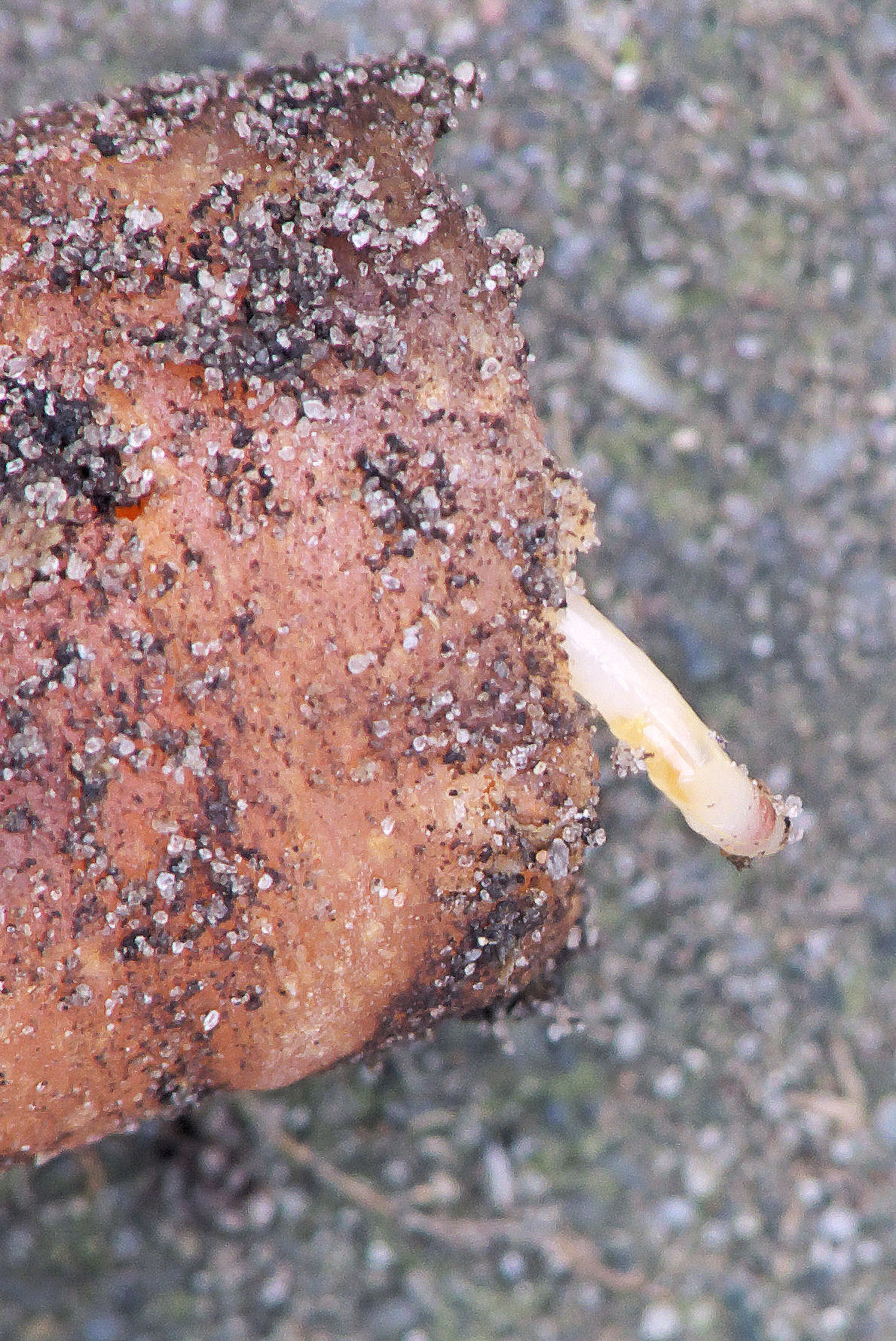
Symptoms
Reddish-brown tunnels through carrot roots filled with brown frass, off flavour + rapid soft rot of damaged roots in storage, yellow flies 5mm long at plant base.
Plants affected
Easily confused with
- bacterial soft rot
How to tell them apart: Pectobacterium carotovorum (bacterial soft rot) shows a slimy, wet, structureless breakdown of the entire carrot root — tissue collapses into a soft, cream-to-tan mush that smells strongly foul and rotten, with no defined channels and often a watery ooze at the surface. Psila rosae (carrot fly) larvae instead bore narrow, rust-brown to reddish tunnels running just under the skin and through the flesh, with intact firm tissue between the tunnels and small pale maggots (up to ~8 mm) sometimes visible inside. Look for the give-away: soft rot is diffuse mush with a putrid stench, while carrot fly is dry, firm tissue scored by distinct winding rust-coloured galleries. Secondary soft rot can later invade fly tunnels, so check whether the channels are still firm-walled (fly) or have dissolved into general slime (bacteria).
- carrot forking and forking
How to tell them apart: Abiotic carrot forking is a physiological disorder: the taproot simply splits into two or more clean, separate roots, usually with smooth, healthy white-to-orange flesh and no tunnels, discolouration, or insects. It is triggered when the growing tip hits an obstacle — stony or cloddy compacted soil, fresh manure, or excess nitrogen. Psila rosae (carrot root fly) instead leaves rusty-brown sunken tunnels and galleries winding through the outer cortex of the root, often with cream-coloured legless maggots (about 8 mm) and brown frass inside; the surface is scarred and corky, foliage may turn reddish-bronze and wilt. The decisive sign: forking from stony soil has clean smooth surfaces, while fly damage shows the characteristic rust-coloured mining tunnels and larvae.
Treatment
Dr. Phyto builds a dated, step-by-step treatment plan with country-approved products — start a free diagnosis to get yours.
Common questions
- How do I recognise carrot root fly on carrot?
- Reddish-brown tunnels through carrot roots filled with brown frass, off flavour + rapid soft rot of damaged roots in storage, yellow flies 5mm long at plant base.
- Do I have to report carrot root fly?
- No. carrot root fly is not a notifiable organism, so there is nothing to report to an authority. Treat it as a normal garden problem.
- How is carrot root fly treated?
- Mainly with biological and cultural measures — removing affected material, changing the conditions that favour it, and treating with agents approved in your country. The exact steps and their timing depend on the plant, the season and where you live: Dr. Phyto works them out in a free diagnosis.
Free first diagnosis · no sign-up to start