Dr. Phyto
late blight
Phytophthora infestans
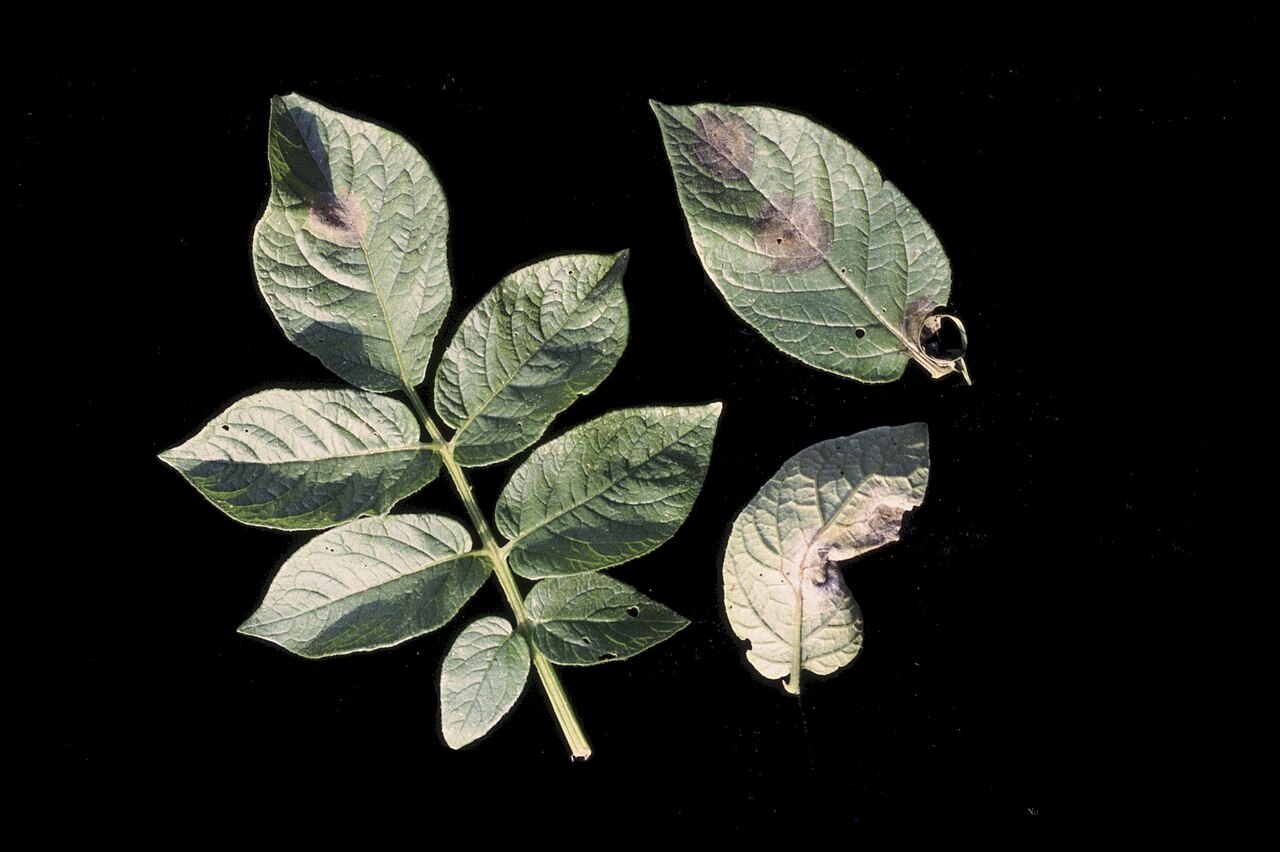
Symptoms
Water-soaked olive-grey spots spreading rapidly.
Plants affected
Easily confused with
- early blight
How to tell them apart: Early blight (Alternaria solani): concentric dark target-ring spots on the OLDER, lower leaves first, dry and brittle, spreads slowly in warm dry-then-humid weather. Late blight (Phytophthora infestans): greasy grey-green water-soaked patches on ANY leaves plus stems, a fine white mould on the underside in humidity, and the whole plant can collapse within days.
- tomato leaf mold
How to tell them apart: Tomato leaf mould (Cladosporium fulvum): pale yellow blotches on the upper leaf surface with an olive-green velvety mould directly beneath them, in humid greenhouses, no water-soaking. Late blight (Phytophthora infestans): greasy water-soaked grey-green lesions with white sporulation, kills leaves and stems fast.
- tomato Fusarium wilt
How to tell them apart: Fusarium oxysporum f.sp. lycopersici (Fusarium wilt) is a vascular disease: lower leaves yellow progressively, often on just one side of the plant or one side of a leaf, then wilt during the heat of the day and may recover at night early on. There are NO leaf lesions and NO mould; the giveaway is brown vascular streaking inside the stem when you slit it lengthwise near the base. Decline is slow and chronic over weeks. Phytophthora infestans (late blight) instead produces dark greasy water-soaked patches on leaves and stems, with a white fuzzy mould on the leaf underside in humid weather, plus firm greasy-brown blotches on green fruit. It collapses the canopy explosively in cool, wet conditions, with no internal vascular browning.
- potato blackleg / soft rot
How to tell them apart: Phytophthora infestans (late blight): look for grey-green to brown, water-soaked lesions that begin on leaflets and upper stems, often with a paler halo; in cool, humid weather (especially overnight) a white downy mould rings the lesion margins on leaf undersides. Stem cankers are firm, dark brown and dry-to-leathery, not slimy, and infected tubers show a rusty-brown granular rot under the skin. The disease spreads downward and from the foliage, so upper canopy and stem tips are hit first. Pectobacterium atrosepticum (blackleg): look at the stem base — an inky-black, soft, slimy wet rot rises from the seed tuber up the stem, the tissue smells foul and smears when squeezed, and there is never any white mould. Plants yellow and wilt from the bottom up in warm, wet soil.
Treatment
Dr. Phyto builds a dated, step-by-step treatment plan with country-approved products — start a free diagnosis to get yours.
Common questions
- How do I recognise late blight on tomato?
- Water-soaked olive-grey spots spreading rapidly.
- Do I have to report late blight?
- No. late blight is not a notifiable organism, so there is nothing to report to an authority. Treat it as a normal garden problem.
- How is late blight treated?
- Mainly with biological and cultural measures — removing affected material, changing the conditions that favour it, and treating with agents approved in your country. The exact steps and their timing depend on the plant, the season and where you live: Dr. Phyto works them out in a free diagnosis.
Free first diagnosis · no sign-up to start