Dr. Phyto
κλαδοσπορίωση
Cladosporium fulvum
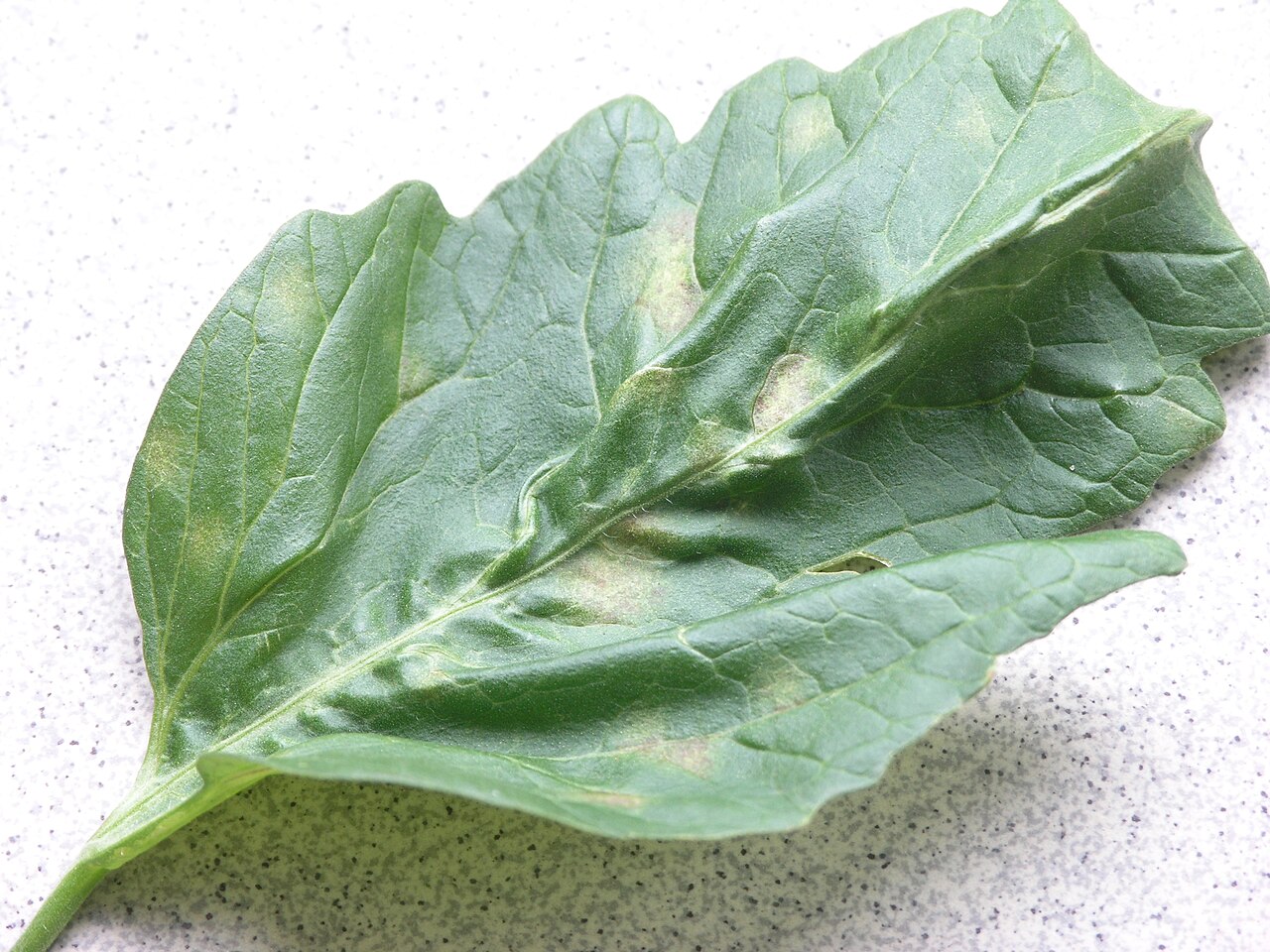
Συμπτώματα
Ωχροκίτρινες κηλίδες στην άνω επιφάνεια του φύλλου, ελαιοπράσινη έως καστανή βελούδινη μούχλα στην κάτω επιφάνεια ακριβώς κάτω από κάθε κίτρινη κηλίδα, έντονη αποφύλλωση που οδηγεί σε ηλιόκαυμα των καρπών.
Φυτά που προσβάλλονται
Συχνά συγχέεται με
- περονόσπορος
Πώς να τα ξεχωρίσετε: Κλαδοσπορίωση / μούχλα φύλλων τομάτας (Cladosporium fulvum): ωχροκίτρινες κηλίδες στην επάνω επιφάνεια του φύλλου με ελαιοπράσινη βελούδινη μούχλα ακριβώς από κάτω τους, σε υγρά θερμοκήπια, χωρίς υδαρή εμφάνιση. Όψιμος περονόσπορος (Phytophthora infestans): λιπαρές υδαρείς γκριζοπράσινες αλλοιώσεις με λευκή σπορίωση, σκοτώνει γρήγορα φύλλα και βλαστούς.
- πρώιμο έλκος (αλτερναρίωση)
Πώς να τα ξεχωρίσετε: Ο πρώιμος περονόσπορος (αλτερναρίωση) δημιουργεί σκούρες καστανές έως μαύρες νεκρωτικές κηλίδες πρώτα στα κατώτερα, παλαιότερα φύλλα, με κάθε κηλίδα να εμφανίζει χαρακτηριστικούς ομόκεντρους δακτυλίους σαν στόχο. Οι κηλίδες περιβάλλονται από κίτρινη άλω και ο προσβεβλημένος ιστός γίνεται ξηρός και χαρτώδης. Καθώς εξελίσσεται, ολόκληρα κατώτερα φύλλα κιτρινίζουν και νεκρώνονται, ενώ ίδιες δακτυλιωτές βυθισμένες αλλοιώσεις εμφανίζονται σε βλαστούς και στη βάση του καρπού. Ευνοείται από ζεστό καιρό με εναλλαγή υγρασίας και ξηρασίας, στο χωράφι και στο θερμοκήπιο. Η κλαδοσπορίωση (μούχλα φύλλων) εμφανίζει ανοιχτοπράσινες έως έντονα κίτρινες κηλίδες στην ΕΠΑΝΩ επιφάνεια του φύλλου χωρίς ομόκεντρους δακτυλίους, ενώ στην αντίστοιχη θέση στην ΚΑΤΩ επιφάνεια αναπτύσσεται βελούδινο ελαιοπράσινο έως γκριζοκαστανό στρώμα μύκητα από σπόρια. Αυτή η χνουδωτή σποριοποίηση στην κάτω πλευρά είναι το αποφασιστικό σημάδι και δεν εμφανίζεται ποτέ στην αλτερναρίωση. Τα φύλλα τυλίγονται, ξεραίνονται και πέφτουν, ξεκινώντας συνήθως χαμηλά. Ευνοείται έντονα από υψηλή υγρασία και κακό αερισμό, οπότε είναι κυρίως πρόβλημα θερμοκηπίου και πυκνών φυτεύσεων και όχι ξηρού χωραφιού.
- ιός της καστανής ρυτιδωτής νόσου της ντομάτας
Πώς να τα ξεχωρίσετε: Ο ιός της καστανής ρυτιδωμένης κηλίδωσης των καρπών της τομάτας (ToBRFV) είναι ένας εδραιωμένος στην ΕΕ ιός (tobamovirus): προκαλεί πραγματικό συστηματικό ΜΩΣΑΪΚΟ — ακανόνιστες ανοιχτές και σκούρες πράσινες κηλίδες μαζί με κίτρινο στίγμα σε όλη την άνω επιφάνεια του φύλλου — μαζί με στένωση, φουσκάλιασμα και φτεροειδή παραμόρφωση των νέων φύλλων, καθώς και αποκαλυπτικές καστανές ρυτιδωμένες κηλίδες και κίτρινα στίγματα στον ΚΑΡΠΟ. Ο αποχρωματισμός είναι καθαρά μοτίβο χρώματος, χωρίς μυκητιακή ανάπτυξη και χωρίς σπόρια. Το Cladosporium fulvum (κλαδοσπορίωση/μούχλα φύλλων τομάτας) ξεκινά ως διάχυτες ανοιχτοπράσινες έως κίτρινες κηλίδες μόνο στην ΑΝΩ επιφάνεια των παλαιότερων κάτω φύλλων, αλλά το καθοριστικό σημάδι βρίσκεται στην ΚΑΤΩ επιφάνεια ακριβώς κάτω από κάθε κηλίδα: μια ελαιοπράσινη έως γκριζοκαστανή ΒΕΛΟΥΔΙΝΗ μούχλα από σπόρια. Η μούχλα των φύλλων δεν παραμορφώνει ποτέ τη νέα βλάστηση ούτε σημαδεύει τον καρπό και ευδοκιμεί σε υγρά, κακώς αεριζόμενα θερμοκήπια. Αν δείτε βελούδινη μούχλα κάτω από κίτρινες κηλίδες είναι μούχλα φύλλων· αν δείτε στικτό μωσαϊκό με παραμορφωμένα φύλλα και καστανούς ρυτιδωμένους καρπούς ΧΩΡΙΣ μούχλα, πρόκειται για ToBRFV — μια διαδεδομένη, εδραιωμένη στην ΕΕ ιογενή ασθένεια που αντιμετωπίζεται με τα συνήθη μέτρα υγιεινής, σπόρου και καλλιέργειας.
Αντιμετώπιση
Ο Dr. Phyto δημιουργεί ένα χρονολογημένο, βήμα-προς-βήμα σχέδιο αντιμετώπισης με εγκεκριμένα στη χώρα προϊόντα — ξεκινήστε μια δωρεάν διάγνωση.
Συχνές ερωτήσεις
- Πώς αναγνωρίζω κλαδοσπορίωση σε ντομάτα;
- Ωχροκίτρινες κηλίδες στην άνω επιφάνεια του φύλλου, ελαιοπράσινη έως καστανή βελούδινη μούχλα στην κάτω επιφάνεια ακριβώς κάτω από κάθε κίτρινη κηλίδα, έντονη αποφύλλωση που οδηγεί σε ηλιόκαυμα των καρπών.
- Πρέπει να δηλώσω κλαδοσπορίωση;
- Όχι. Το κλαδοσπορίωση δεν είναι δηλωτέο, οπότε δεν χρειάζεται να ενημερώσεις κάποια αρχή. Αντιμετώπισέ το σαν συνηθισμένο πρόβλημα κήπου.
- Πώς αντιμετωπίζεται το κλαδοσπορίωση;
- Κυρίως με βιολογικά και καλλιεργητικά μέτρα — απομάκρυνση του προσβεβλημένου υλικού, αλλαγή των συνθηκών που το ευνοούν και χρήση εγκεκριμένων στη χώρα σου σκευασμάτων. Τα ακριβή βήματα και ο χρόνος τους εξαρτώνται από το φυτό, την εποχή και τον τόπο: ο Dr. Phyto τα βρίσκει σε μια δωρεάν διάγνωση.
Πρώτη διάγνωση δωρεάν · χωρίς εγγραφή