Dr. Phyto
mummyberry of blueberry
Monilinia vaccinii-corymbosi
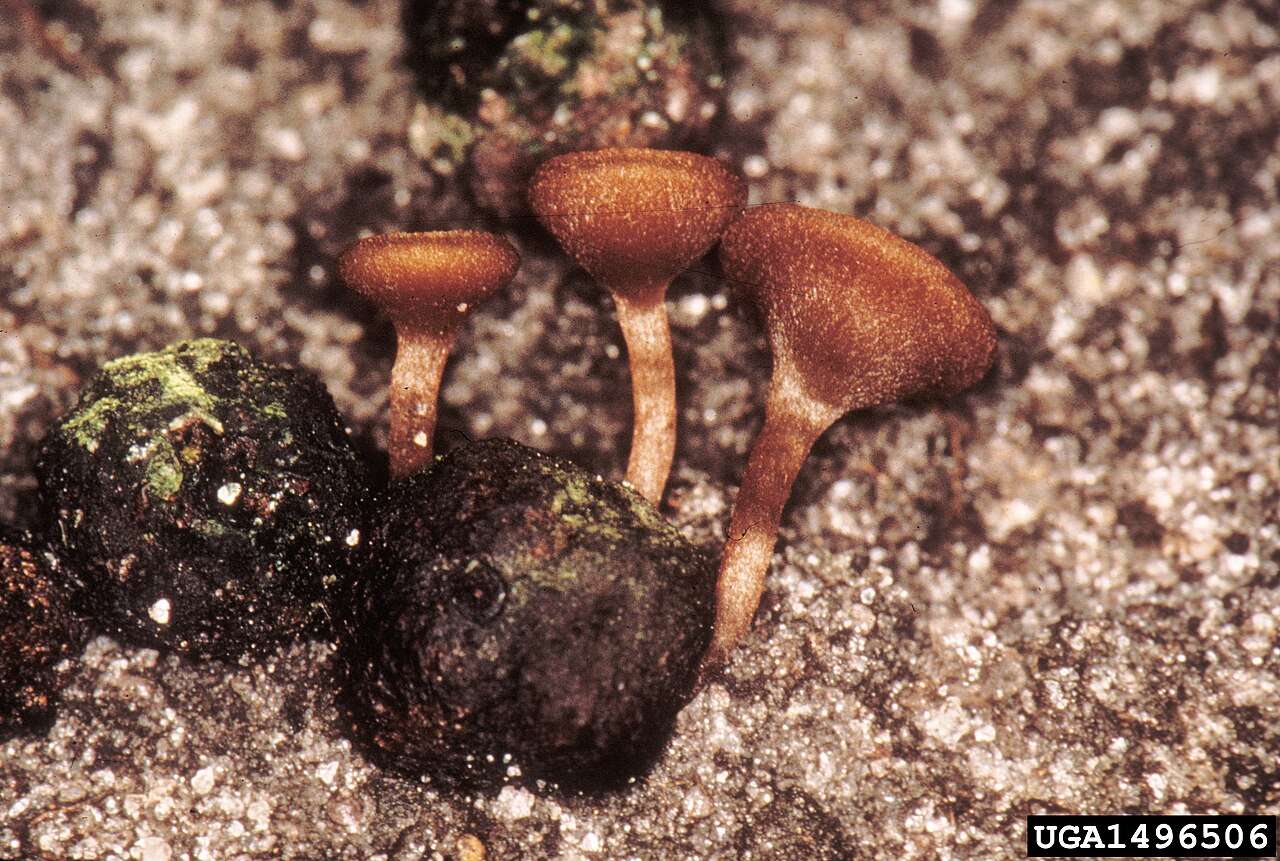
Symptoms
Sudden wilting + browning of young blueberry shoots in spring (the diagnostic primary symptom), flowering shoots blackened + dropping, fruit replaced by grey-white pumpkin-shaped mummies at harvest (looks like the berry was sprayed with grey paint), mummies fall to ground + survive winter.
Plants affected
Easily confused with
- spotted-wing drosophila (SWD)
How to tell them apart: On blueberry (Vaccinium corymbosum), Drosophila suzukii (spotted wing drosophila) causes a wet, soft rot: ripe berries collapse and leak juice, the skin shows tiny ovipositor puncture scars/dimples, and tearing a berry open reveals small white legless maggots feeding in the pulp. Monilinia vaccinii-corymbosi (mummy berry) causes a dry rot: infected fruit turns from green to a tan/pinkish-grey, shrivels and hardens into a wrinkled, ridged 'mummy' with NO insect inside, often clinging to the bush or dropping to the ground. Look for maggots and oozing softness for the fly; look for a hard, dried, hollow tan mummy (plus earlier blackened, wilted shoot tips and blossoms) for the fungus.
- blueberry stem blight
How to tell them apart: Botryosphaeria dothidea (stem blight) kills whole individual canes that suddenly flag — leaves turn brown/reddish but stay attached — and when you slit the bark you find a sharp wedge-shaped reddish-brown discolouration running down the wood from a wound or pruning cut, usually on older or stressed canes through summer. Monilinia vaccinii-corymbosi (mummy berry) instead strikes the soft new spring growth: young shoots and flower clusters wilt and bend into a brown 'shepherd's crook', the dying tissue often shows a dark central vein, and in humid weather a powdery grey-tan fungal dust (conidia) coats the blighted shoots and later infected fruit shrivel into hard grey 'mummies'. The grey spore mass on collapsed young shoots plus mummified berries is unique to Monilinia; internal wedge-shaped wood streaking on flagging older canes points to Botryosphaeria.
- grey mould (Botrytis)
How to tell them apart: On Vaccinium myrtillus both Botrytis cinerea (grey mould) and Monilinia vaccinii-corymbosi (mummyberry, shoot-strike phase) cause a cool, damp spring blight of blossoms and tender new shoots, so the early stage is easily confused. Mummyberry is the more sharply patterned of the two: the new shoot suddenly wilts into a shepherd's-crook, turns dark chocolate-brown, and the necrosis runs down the petiole and out along the leaf midrib and main veins in a distinctive 'oak-leaf' wedge, dusted with a thin powdery grey-tan layer of spores hugging the midrib; weeks later the green berries become hard, ash-grey, pumpkin-ribbed mummies that drop to the ground. Botrytis instead smothers collapsed flowers and soft shoot tips in an abundant, fluffy, mouse-grey fuzz that you can puff into a cloud, with soft watery brown rot rather than midrib-confined necrosis, and it rots the fruit into a soft grey-furred mush — never the hard ribbed mummy. If you see a thick velvety grey carpet over dead blossoms it is Botrytis; if you see a crooked dark shoot with grey spores tracking the midrib it is mummyberry.
Treatment
Dr. Phyto builds a dated, step-by-step treatment plan with country-approved products — start a free diagnosis to get yours.
Common questions
- How do I recognise mummyberry of blueberry on highbush blueberry?
- Sudden wilting + browning of young blueberry shoots in spring (the diagnostic primary symptom), flowering shoots blackened + dropping, fruit replaced by grey-white pumpkin-shaped mummies at harvest (looks like the berry was sprayed with grey paint), mummies fall to ground + survive winter.
- Do I have to report mummyberry of blueberry?
- No. mummyberry of blueberry is not a notifiable organism, so there is nothing to report to an authority. Treat it as a normal garden problem.
- How is mummyberry of blueberry treated?
- Mainly with biological and cultural measures — removing affected material, changing the conditions that favour it, and treating with agents approved in your country. The exact steps and their timing depend on the plant, the season and where you live: Dr. Phyto works them out in a free diagnosis.
Free first diagnosis · no sign-up to start