Dr. Phyto
spotted-wing drosophila (SWD)
Drosophila suzukii
Symptoms
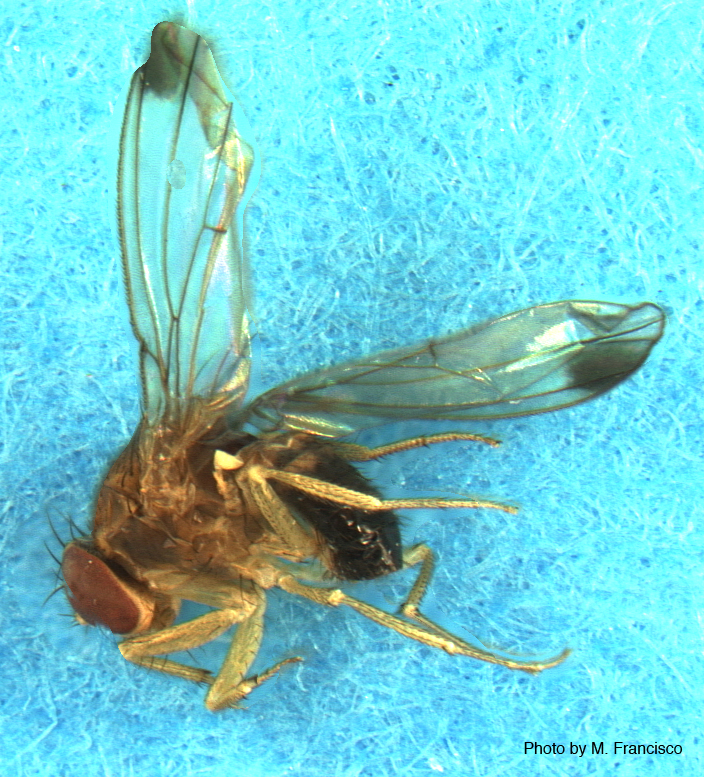
Brown soft patches under skin of ripening berries 24-48h before harvest, tiny white maggots inside fruit when split, fruit collapses + leaks juice within 3 days, males with distinctive black wing-tip spot.
Plants affected
Easily confused with
- grey mould (Botrytis)
How to tell them apart: Drosophila suzukii (spotted wing drosophila): the rot starts from inside individual drupelets that go soft, watery and collapse while the fruit still looks intact on the surface; look for tiny (2-4 mm) white legless maggots wriggling inside the pulp, pinprick oviposition scars on the skin, and small amber flies (males with a single dark spot on each wingtip) hovering over ripening fruit in warm humid weather. The fruit weeps clear juice and stays firmless but is NOT covered in fuzz. Botrytis cinerea (grey mould): the rot spreads from the surface inward, often starting at the stem end or a wound, and within a day or two develops a characteristic dusty grey-brown fuzzy mould (sporulating mycelium) over the affected drupelets, especially in cool damp or rainy conditions. No maggots are present; the whole fruit dries into a soft mummy rather than weeping juice.
- raspberry beetle
How to tell them apart: On Rubus idaeus, Drosophila suzukii (spotted wing drosophila) larvae are tiny (2-3 mm), legless, headless white maggots that tunnel inside the soft drupelets of ripe and over-ripe berries, causing the fruit to collapse, weep juice and turn sunken and brown within a day or two; you may also see a single pin-prick egg-laying scar and fine breathing filaments on the berry skin, and adults are small amber flies, the males with one dark spot on each wing tip. Byturus tomentosus (raspberry beetle) larvae are larger (6-8 mm), yellowish-brown, clearly segmented grubs with a darker head and three pairs of short true legs near the front, and they feed at the stalk end (plug/receptacle) of the berry, leaving dry, shrivelled, browned drupelets rather than a wet collapse. Look for legs and a hard head capsule to confirm the beetle; a soft, legless, headless maggot in mushy fruit points to the fly. The adult Byturus is a small, hairy, greyish-brown beetle seen on the flowers in spring, not a fly.
- mummyberry of blueberry
How to tell them apart: On blueberry (Vaccinium corymbosum), Drosophila suzukii (spotted wing drosophila) causes a wet, soft rot: ripe berries collapse and leak juice, the skin shows tiny ovipositor puncture scars/dimples, and tearing a berry open reveals small white legless maggots feeding in the pulp. Monilinia vaccinii-corymbosi (mummy berry) causes a dry rot: infected fruit turns from green to a tan/pinkish-grey, shrivels and hardens into a wrinkled, ridged 'mummy' with NO insect inside, often clinging to the bush or dropping to the ground. Look for maggots and oozing softness for the fly; look for a hard, dried, hollow tan mummy (plus earlier blackened, wilted shoot tips and blossoms) for the fungus.
Treatment
Dr. Phyto builds a dated, step-by-step treatment plan with country-approved products — start a free diagnosis to get yours.
Common questions
- How do I recognise spotted-wing drosophila (SWD) on garden strawberry?
- Brown soft patches under skin of ripening berries 24-48h before harvest, tiny white maggots inside fruit when split, fruit collapses + leaks juice within 3 days, males with distinctive black wing-tip spot.
- Do I have to report spotted-wing drosophila (SWD)?
- No. spotted-wing drosophila (SWD) is not a notifiable organism, so there is nothing to report to an authority. Treat it as a normal garden problem.
- How is spotted-wing drosophila (SWD) treated?
- Mainly with biological and cultural measures — removing affected material, changing the conditions that favour it, and treating with agents approved in your country. The exact steps and their timing depend on the plant, the season and where you live: Dr. Phyto works them out in a free diagnosis.
Free first diagnosis · no sign-up to start