Dr. Phyto
box tree moth
Cydalima perspectalis
Symptoms
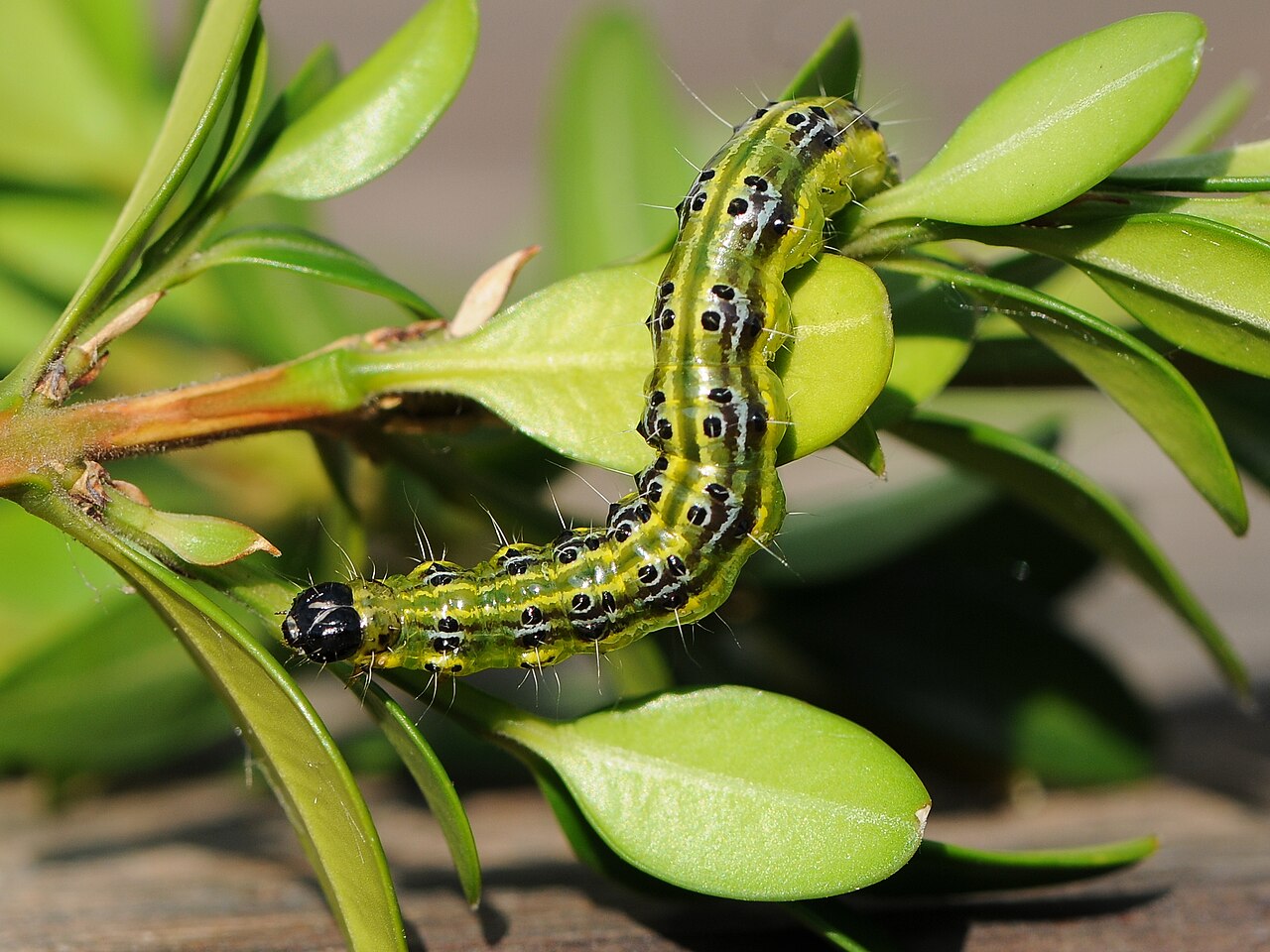
Green caterpillars with black stripes and black heads, inside dense white webbing, rapidly skeletonise and strip box (Buxus) leaves, then strip the green bark — a heavily attacked bush turns brown, webbed and skeletal within days; pale green-and-white moths with a brown wing border fly from spring to autumn over 2–3 generations. The webbing + green-striped caterpillars distinguish it from box blight (which is a leaf/stem fungus, no caterpillars).
Plants affected
Easily confused with
- boxwood Volutella blight
How to tell them apart: Cydalima perspectalis (box tree moth): look for living evidence of an insect — greenish caterpillars with black stripes and a black head, fine white silk webbing binding leaves and twigs together, and green-black pellets of frass caught in the webbing. Damage starts as skeletonised, notched leaves and progresses to completely stripped, bare twigs, often from the inside of the bush outward. Severe shoots look defoliated and brown because the leaves were eaten, not because the bark died. Volutella buxi (Volutella blight): this is a fungus, so there are no insects, no webbing and no frass. Affected leaves turn from green to bronze to straw-tan and hang on the dead twig instead of being eaten away. In humid weather the undersides of the dead leaves and the stem show characteristic salmon-pink to coral spore cushions, and the bark of the dying shoot loosens and peels. Dieback is patchy and tied to the stem girdling, with leaves intact (not chewed).
- box blight
How to tell them apart: Box blight is a fungal disease: look for dark brown to black circular leaf spots, often with a thin paler margin, and conspicuous black or dark-brown streaks/lesions on the green stems (this stem blackening is the clearest sign). Affected leaves turn straw-brown and drop rapidly, leaving bare patches. In humid conditions the undersides of leaves show a white, frosty fungal bloom (spore masses). Crucially, there are NO caterpillars, no silk webbing and no chewed leaf edges — the damage is rot/spotting, not feeding. Box tree moth damage is caterpillar feeding: look for greenish-yellow caterpillars (up to 4 cm) with black heads and black-and-white longitudinal stripes, plus fine white silk webbing binding leaves and shoots together. Leaves are skeletonised or chewed from the edges, and you will find green-black frass (droppings) and pale shed skins among the webbing. Stems remain healthy-coloured without the black streaks of blight; severe attack strips the bush to bare twigs but the browning is caused by feeding, not spotting.
Treatment
Dr. Phyto builds a dated, step-by-step treatment plan with country-approved products — start a free diagnosis to get yours.
Common questions
- How do I recognise box tree moth on common boxwood?
- Green caterpillars with black stripes and black heads, inside dense white webbing, rapidly skeletonise and strip box (Buxus) leaves, then strip the green bark — a heavily attacked bush turns brown, webbed and skeletal within days; pale green-and-white moths with a brown wing border fly from spring to autumn over 2–3 generations. The webbing + green-striped caterpillars distinguish it from box blight (which is a leaf/stem fungus, no caterpillars).
- Do I have to report box tree moth?
- No. box tree moth is not a notifiable organism, so there is nothing to report to an authority. Treat it as a normal garden problem.
- How is box tree moth treated?
- Mainly with biological and cultural measures — removing affected material, changing the conditions that favour it, and treating with agents approved in your country. The exact steps and their timing depend on the plant, the season and where you live: Dr. Phyto works them out in a free diagnosis.
Free first diagnosis · no sign-up to start