Dr. Phyto
cypress aphid
Cinara cupressi
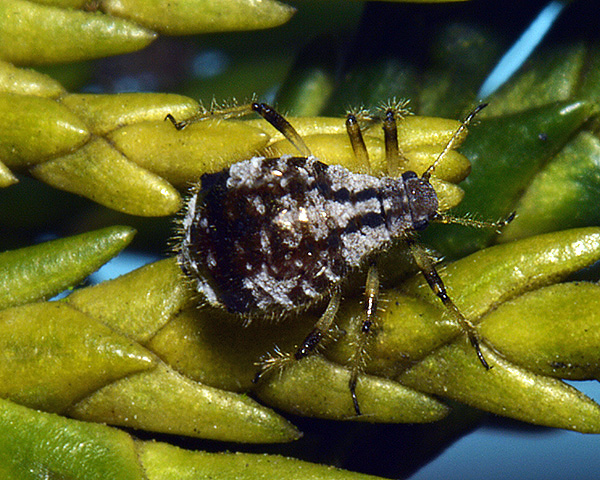
Symptoms
Brown patches inside the canopy starting at the trunk and spreading outward, sticky honeydew, sooty mould, branch dieback.
Plants affected
Easily confused with
- thuja tip blight (Kabatina)
How to tell them apart: Kabatina thujae (a fungal tip blight) and Cinara cupressi (the cypress aphid) both turn Thuja foliage brown, but the signs differ. With Kabatina, individual young shoot tips die back from the tip toward the base, showing a sharp bronze-to-brown boundary against still-green older wood, and on the dead bark you can find tiny black, often slightly raised fruiting bodies (acervuli); damage is usually scattered tip-by-tip. With Cinara cupressi the browning spreads as larger yellowing-then-scorched patches lower in the canopy, you can see the large grey-brown soft-bodied aphids clustered on twigs and inner branches, plus sticky honeydew and black sooty mould, and live ants tending the colonies — none of which occur with Kabatina.
- cypress canker
How to tell them apart: Seiridium cardinale (cypress canker, a fungus) and Cinara cupressi (cypress aphid, an insect) both brown out Thuja foliage but the cause differs. With Seiridium, look on woody twigs and branches for sunken, resin-bleeding cankers with a sharp margin between living and dead bark; girdled branches show foliage that fades from yellow to fox-red beyond the lesion, and tiny black fruiting bodies (pycnidia) dot the dead bark. With Cinara, there is no canker or resin flow: you find clusters of large grey-brown soft-bodied aphids in the inner crown along twigs, sticky honeydew, sooty black mould on foliage, and diffuse browning patches that start lower and inside the canopy where the colonies fed. Always check the bark for a defined resinous lesion (canker) versus live aphids and honeydew (aphid).
Treatment
Dr. Phyto builds a dated, step-by-step treatment plan with country-approved products — start a free diagnosis to get yours.
Common questions
- How do I recognise cypress aphid on arborvitae (thuja)?
- Brown patches inside the canopy starting at the trunk and spreading outward, sticky honeydew, sooty mould, branch dieback.
- Do I have to report cypress aphid?
- No. cypress aphid is not a notifiable organism, so there is nothing to report to an authority. Treat it as a normal garden problem.
- How is cypress aphid treated?
- Mainly with biological and cultural measures — removing affected material, changing the conditions that favour it, and treating with agents approved in your country. The exact steps and their timing depend on the plant, the season and where you live: Dr. Phyto works them out in a free diagnosis.
Free first diagnosis · no sign-up to start