Dr. Phyto
horse chestnut leaf miner
Cameraria ohridella
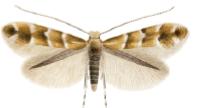
Symptoms
From early summer, irregular pale then reddish-brown blotch mines spread between the veins of the leaves, each containing a tiny caterpillar or pupa; by late summer the whole crown looks scorched brown and leaves drop early. The brown blotches are bounded loosely by the veins and you can see the mine and larva when you hold a leaf to the light.
Plants affected
Easily confused with
- horse chestnut leaf blotch
How to tell them apart: On horse chestnut, both brown the leaves by late summer but the cause and clue differ. Horse chestnut leaf miner (Cameraria ohridella): an INSECT - hold a brown blotch to the light and you see a hollow mine with a tiny caterpillar or pupa inside; blotches start pale then reddish-brown and the leaf litter is the overwintering source. Horse chestnut leaf blotch (Guignardia aesculi): a FUNGUS - irregular reddish-brown dead patches with a distinct BRIGHT YELLOW border spreading from the leaf edge, speckled with tiny black dots, but NO mine and NO insect inside. Management is the same for both (rake up and destroy fallen leaves), so the distinction is mainly reassurance - neither usually kills the tree.
- drought stress
How to tell them apart: On horse chestnut, Cameraria ohridella (horse chestnut leaf miner) makes discrete brown blotch mines bounded by leaf veins — look at the leaf surface against the light and you see pale, semi-transparent tunnels and small caterpillars or pupae inside; damage starts as scattered tan spots between the veins and the leaf curls and dries from those patches outward. Drought scorch instead browns the leaf margins and tips first as a continuous dead band, with no mines, no insects, and the dead tissue not confined between veins; whole leaves go uniformly dull brown and wilt during hot dry spells. If you tear open a brown patch and find a hollow tunnel or larva it is the miner, not drought.
Treatment
Dr. Phyto builds a dated, step-by-step treatment plan with country-approved products — start a free diagnosis to get yours.
Common questions
- How do I recognise horse chestnut leaf miner on horse chestnut?
- From early summer, irregular pale then reddish-brown blotch mines spread between the veins of the leaves, each containing a tiny caterpillar or pupa; by late summer the whole crown looks scorched brown and leaves drop early. The brown blotches are bounded loosely by the veins and you can see the mine and larva when you hold a leaf to the light.
- Do I have to report horse chestnut leaf miner?
- No. horse chestnut leaf miner is not a notifiable organism, so there is nothing to report to an authority. Treat it as a normal garden problem.
- How is horse chestnut leaf miner treated?
- Mainly with biological and cultural measures — removing affected material, changing the conditions that favour it, and treating with agents approved in your country. The exact steps and their timing depend on the plant, the season and where you live: Dr. Phyto works them out in a free diagnosis.
Free first diagnosis · no sign-up to start