Dr. Phyto
φυλλική κηλίδωση της αγριοκαστανιάς (Guignardia)
Guignardia aesculi
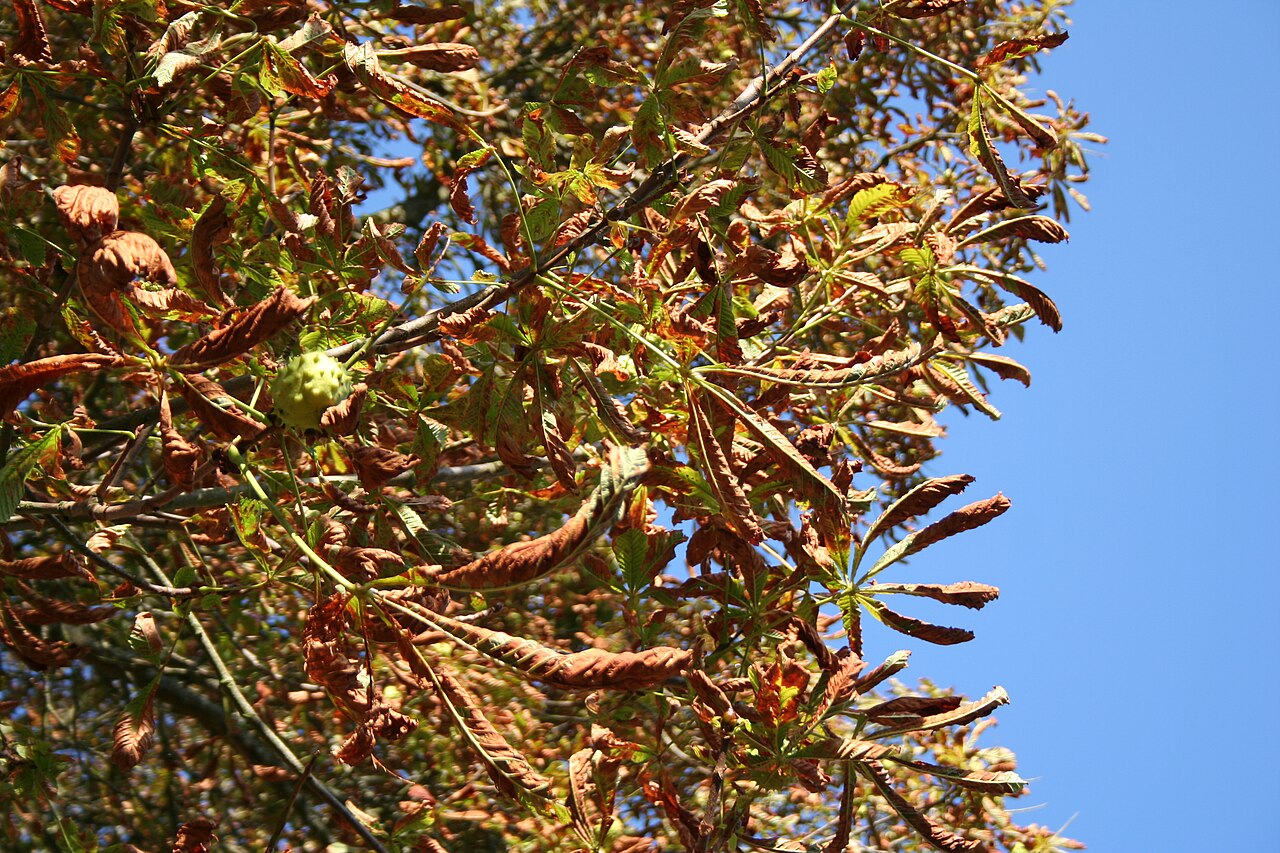
Συμπτώματα
Ακανόνιστες κοκκινωπές-καστανές νεκρές κηλίδες με έντονο κίτρινο περίγραμμα εξαπλώνονται προς τα μέσα από την άκρη του φύλλου και ανάμεσα στις νευρώσεις, συχνά συνενώνονται μέχρι το φύλλο να κατσαρώσει και να πέσει νωρίς· μικροσκοπικές μαύρες καρποφόρες κουκκίδες διαστίζουν τον νεκρό ιστό. Σε αντίθεση με τον φυλλορύκτη ΔΕΝ υπάρχει όρυγμα, ούτε κάμπια ούτε έντομο μέσα - είναι μύκητας (FUNGUS), και οι νεκρές κηλίδες έχουν ένα διακριτό κίτρινο περιθώριο.
Φυτά που προσβάλλονται
Συχνά συγχέεται με
- φυλλορύκτης της αγριοκαστανιάς
Πώς να τα ξεχωρίσετε: Στην ιπποκαστανιά, και τα δύο καστανίζουν τα φύλλα μέχρι το τέλος του καλοκαιριού αλλά η αιτία και το σημάδι διαφέρουν. Φυλλορύκτης της ιπποκαστανιάς (Cameraria ohridella): ένα ΕΝΤΟΜΟ - κρατήστε μια καστανή κηλίδα στο φως και βλέπετε ένα κοίλο όρυγμα με μια μικροσκοπική κάμπια ή νύμφη μέσα· οι κηλίδες ξεκινούν ωχρές και μετά κοκκινωπές-καστανές και η φυλλόστρωση είναι η πηγή διαχείμασης. Περονόσπορος φύλλων της ιπποκαστανιάς (Guignardia aesculi): ένας ΜΥΚΗΤΑΣ - ακανόνιστες κοκκινωπές-καστανές νεκρές κηλίδες με ένα διακριτό ΕΝΤΟΝΟ ΚΙΤΡΙΝΟ περίγραμμα που εξαπλώνεται από την άκρη του φύλλου, διάστικτες με μικροσκοπικές μαύρες κουκκίδες, αλλά ΧΩΡΙΣ όρυγμα και ΧΩΡΙΣ έντομο μέσα. Η διαχείριση είναι η ίδια και για τα δύο (μαζέψτε με τσουγκράνα και καταστρέψτε τα πεσμένα φύλλα), οπότε η διάκριση είναι κυρίως καθησυχαστική - κανένα από τα δύο συνήθως δεν σκοτώνει το δέντρο.
- καταπόνηση από ξηρασία
Πώς να τα ξεχωρίσετε: Η κηλίδωση των φύλλων της ιπποκαστανιάς (Guignardia aesculi) εμφανίζει ακανόνιστες κοκκινοκάστανες κηλίδες με έντονο κίτρινο φωτοστέφανο και κυματιστό σκούρο περίγραμμα, που συχνά ξεκινούν ανάμεσα στα νεύρα ή στην άκρη του φύλλου· σε προσεκτική παρατήρηση ο νεκρός ιστός είναι διάστικτος με μικροσκοπικά μαύρα καρποσώματα (πυκνίδια) ορατά ως μαύρες κουκκίδες, ενώ σε υγρά καλοκαίρια οι κηλίδες συνενώνονται, το φύλλο τυλίγεται και πέφτει πρόωρα. Το απλό υδατικό στρες (αβιοτικό) αντίθετα προκαλεί ομοιόμορφο ανοιχτοκάστανο έγκαυμα μόνο στα περιθώρια και τις άκρες πολλών φυλλαρίων ταυτόχρονα, με ομαλή μετάβαση από πράσινο σε καφέ, ΧΩΡΙΣ κίτρινο φωτοστέφανο και ΧΩΡΙΣ μαύρες κουκκίδες, εντονότερο στην πιο ηλιόλουστη και εκτεθειμένη πλευρά του δέντρου σε ζέστη και ξηρασία. Τα μαύρα πυκνίδια και οι διακριτές κηλίδες με φωτοστέφανο είναι τα καθοριστικά σημάδια του μύκητα· ένα ομοιόμορφο περιθωριακό κάψιμο σε όλη την κόμη χωρίς καρποσώματα δείχνει ξηρασία.
- βακτηριακή κηλίδωση
Πώς να τα ξεχωρίσετε: Στην αγριοκαστανιά (Aesculus hippocastanum), το βακτηριακό κάψιμο (Pseudomonas syringae pv. syringae) εμφανίζει μικρές, υδαρείς, γωνιώδεις σκουρόχρωμες καστανές κηλίδες που οριοθετούνται έντονα από τα νεύρα του φύλλου, συχνά με λεπτή κίτρινη άλω· σε υγρό καιρό ο ιστός μπορεί να εκκρίνει ή να γίνεται γλοιώδης, οι κηλίδες είναι διάσπαρτες ακόμη και στο εσωτερικό του φύλλου και σχετίζονται με έλκη βλαστών/οφθαλμών. Αντίθετα, η φυλλόπτωση/κηλίδωση (Guignardia aesculi) ξεκινά με ερυθρωπές καστανές κηλίδες που μεγαλώνουν σε μεγάλες, ακανόνιστες, ξηρές χαρτώδεις κηλίδες, συνήθως από το χείλος ή την κορυφή του φύλλου, περιβαλλόμενες από έντονο κίτρινο περιθώριο, με κυρτά τραγανά άκρα και μικροσκοπικά μαύρα καρποφόρα σώματα (πυκνίδια) στις νεκρές περιοχές το τέλος του καλοκαιριού. Γωνιώδεις υγρές κηλίδες περιορισμένες από τα νεύρα δείχνουν το βακτήριο· εξαπλούμενες καστανές χαρτώδεις κηλίδες από τα χείλη με μαύρες κουκκίδες δείχνουν τον μύκητα.
Αντιμετώπιση
Ο Dr. Phyto δημιουργεί ένα χρονολογημένο, βήμα-προς-βήμα σχέδιο αντιμετώπισης με εγκεκριμένα στη χώρα προϊόντα — ξεκινήστε μια δωρεάν διάγνωση.
Συχνές ερωτήσεις
- Πώς αναγνωρίζω φυλλική κηλίδωση της αγριοκαστανιάς (Guignardia) σε αγριοκαστανιά (ιπποκαστανιά);
- Ακανόνιστες κοκκινωπές-καστανές νεκρές κηλίδες με έντονο κίτρινο περίγραμμα εξαπλώνονται προς τα μέσα από την άκρη του φύλλου και ανάμεσα στις νευρώσεις, συχνά συνενώνονται μέχρι το φύλλο να κατσαρώσει και να πέσει νωρίς· μικροσκοπικές μαύρες καρποφόρες κουκκίδες διαστίζουν τον νεκρό ιστό. Σε αντίθεση με τον φυλλορύκτη ΔΕΝ υπάρχει όρυγμα, ούτε κάμπια ούτε έντομο μέσα - είναι μύκητας (FUNGUS), και οι νεκρές κηλίδες έχουν ένα διακριτό κίτρινο περιθώριο.
- Πρέπει να δηλώσω φυλλική κηλίδωση της αγριοκαστανιάς (Guignardia);
- Όχι. Το φυλλική κηλίδωση της αγριοκαστανιάς (Guignardia) δεν είναι δηλωτέο, οπότε δεν χρειάζεται να ενημερώσεις κάποια αρχή. Αντιμετώπισέ το σαν συνηθισμένο πρόβλημα κήπου.
- Πώς αντιμετωπίζεται το φυλλική κηλίδωση της αγριοκαστανιάς (Guignardia);
- Κυρίως με βιολογικά και καλλιεργητικά μέτρα — απομάκρυνση του προσβεβλημένου υλικού, αλλαγή των συνθηκών που το ευνοούν και χρήση εγκεκριμένων στη χώρα σου σκευασμάτων. Τα ακριβή βήματα και ο χρόνος τους εξαρτώνται από το φυτό, την εποχή και τον τόπο: ο Dr. Phyto τα βρίσκει σε μια δωρεάν διάγνωση.
Πρώτη διάγνωση δωρεάν · χωρίς εγγραφή