Dr. Phyto
αρμιλλάρια (σήψη ριζών)
Armillaria mellea
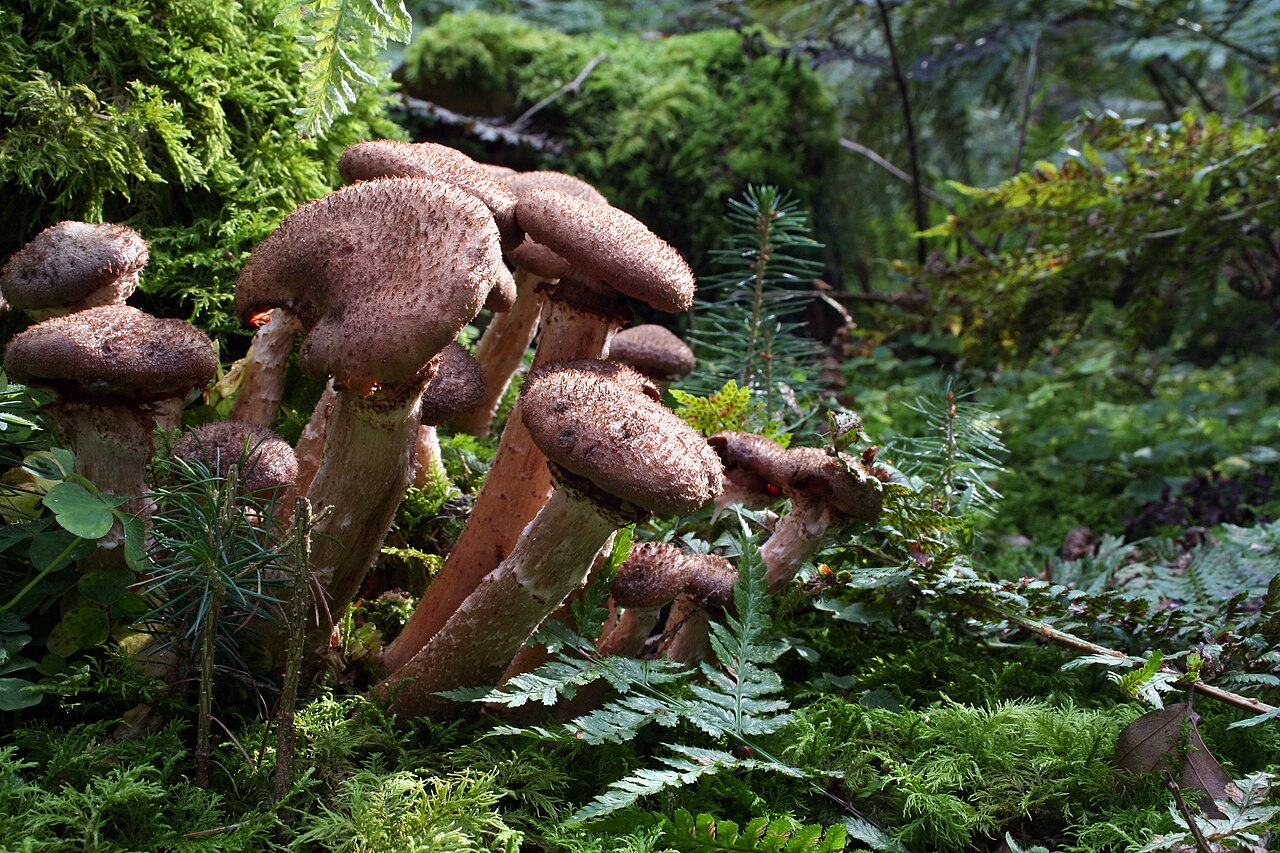
Συμπτώματα
Τα φυτά παρακμάζουν, βλασταίνουν φτωχά, μετά ολόκληροι κλάδοι ή όλος ο θάμνος/δέντρο πεθαίνει — συχνά ξαφνικά το καλοκαίρι· κάτω από τον φλοιό στη βάση και στις ρίζες λευκό μυκητιακό στρώμα με έντονη μυρωδιά μανιταριού· μαύρα ριζόμορφα σαν κορδόνια στο έδαφος· μελί μανιτάρια σε συστάδες το φθινόπωρο.
Φυτά που προσβάλλονται
Συχνά συγχέεται με
- βακτηριακό έλκος κερασιάς
Πώς να τα ξεχωρίσετε: Το Pseudomonas syringae pv. morsprunorum (βακτηριακό έλκος) εμφανίζει βυθισμένα, σκούρα έλκη σε κλαδιά και κορμό που συχνά εκκρίνουν κεχριμπαρένιο έως διαυγές κόμμι (κομμίωση)· τα προσβεβλημένα κλαδιά βλασταίνουν, μετά μαραίνονται απότομα και ξεραίνονται ξεκινώντας από το έλκος, ενώ τα φύλλα αποκτούν γωνιώδεις καστανές κηλίδες τύπου 'τρύπας από σκάγια'. Η ζημιά ξεκινά πάνω από το έδαφος σε συγκεκριμένα κλαδιά και ο φλοιός στο έλκος είναι αποχρωματισμένος και μυρίζει ξινός όταν κοπεί. Το Armillaria mellea (μελωτή αρμιλλάρια) προσβάλλει τις ρίζες και τον λαιμό στο επίπεδο του εδάφους: αν ξεφλουδίσετε τον φλοιό κοντά στη βάση, βρίσκετε ένα λευκό, βεντάλιαστο στρώμα μυκηλίου με έντονη μυρωδιά μανιταριού, καθώς και μαύρους ριζόμορφους σαν κορδόνια στο χώμα. Με την αρμιλλάρια ολόκληρο το δέντρο παρακμάζει ομοιόμορφα από κάτω προς τα πάνω, και το φθινόπωρο μπορεί να εμφανιστούν μελί μανιτάρια σε συστάδες στη βάση του κορμού.
- μακρόκερο σκαθάρι με κόκκινο λαιμό (Aromia bungii)
Πώς να τα ξεχωρίσετε: Ο Aromia bungii (μακρόκερος κάνθαρος με κόκκινο λαιμό) προδίδεται από σωρούς ινώδους, πριονιδιόμορφου αλεσμένου ξύλου και χονδρά ροκανίδια που εξωθούνται από ρωγμές του φλοιού χαμηλά στον κορμό και στους κύριους βραχίονες, από ωοειδείς έως στρογγυλές οπές εξόδου (περίπου 6-10 mm) και από τα γυαλιστερά μαύρα ενήλικα με έντονο πορτοκαλοκόκκινο 'περιλαίμιο' (πρόνωτο). Η ζημιά είναι λάρβες που σκάβουν κάτω από τον φλοιό, οπότε οι μαραμένοι κλάδοι ξεραίνονται ενώ το ξύλο από κάτω δείχνει στοές γεμάτες περιττώματα. Ο Armillaria mellea (μελόμυκητας) αντίθετα εμφανίζει κρεμώδη λευκά, σχήματος βεντάλιας στρώματα μυκηλίου ανάμεσα στον φλοιό και το ξύλο στον λαιμό της ρίζας, μαύρα ριζόμορφα σαν κορδόνια στο έδαφος και στις ρίζες, και μανιτάρια χρώματος μελιού σε συστάδες στη βάση του δέντρου το φθινόπωρο. Με τον Armillaria ο φλοιός στον λαιμό είναι βυθισμένος και σάπιος και δεν υπάρχουν οπές εξόδου εντόμων ούτε πριονίδι. ΣΗΜΕΙΩΣΗ: Ο Aromia bungii είναι επιβλαβής οργανισμός καραντίνας προτεραιότητας της ΕΕ — αν δείτε τον κάνθαρο με το πορτοκαλί περιλαίμιο, ωοειδείς οπές εξόδου ή ροκανίδια, αναφέρετέ το αμέσως στον Εθνικό Οργανισμό Φυτοπροστασίας (NPPO).
- σκαθάρι της σημύδας (Agrilus anxius)
Πώς να τα ξεχωρίσετε: Ο Agrilus anxius (χάλκινος σκαθάρι σημύδας) προσβάλλει τον επάνω κορμό και τους κύριους κλάδους: αναζητήστε ανυψωμένες, σκουριασμένες-καφέ ογκώδεις ραβδώσεις πάνω στον φλοιό, μικροσκοπικές οπές εξόδου σχήματος D (με επίπεδη κορυφή) πλάτους περίπου 3-5 mm και ελικοειδείς στοές προνυμφών γεμάτες πριονίδι ακριβώς κάτω από τον φλοιό όταν τον αφαιρείτε. Η ξήρανση ξεκινά από την κορυφή της κόμης και προχωρά προς τα κάτω, με αραιό κίτρινο φύλλωμα σε καταπονημένες, συχνά εκτεθειμένες στον ήλιο σημύδες. Η Armillaria mellea (μελιτζανί μύκητας/αρμιλλάρια) προσβάλλει τη βάση και τις ρίζες: αφαιρώντας τον φλοιό στον λαιμό βρίσκετε επίπεδα, λευκά, βεντάλιοσχημα φύλλα μυκηλίου που μυρίζουν μανιτάρι, και σκάβοντας στη γραμμή του εδάφους μαύρες ριζόμορφες σαν κορδόνια. Το φθινόπωρο εμφανίζονται συστάδες μελί μανιταριών με δαχτυλίδι στο στέλεχος στη βάση του κορμού ή πάνω από τις ρίζες.
- φυτόφθορα ριζών
Πώς να τα ξεχωρίσετε: Armillaria mellea (μελιμύκητας): Αφαιρώντας τον φλοιό στη βάση του κορμού και στις ρίζες, βρίσκετε επίπεδες, βεντάλιοειδείς στρώσεις κρεμώδους-λευκού έως κρεμ μυκηλίου με φρέσκια μυρωδιά μανιταριού, καθώς και μαύρους, κορδονοειδείς ριζόμορφους που διατρέχουν το έδαφος και τις ρίζες. Το φθινόπωρο εμφανίζονται στη βάση του κορμού συστάδες μελί μανιταριών με δακτύλιο στο στέλεχος. Η σήψη είναι υγρή και ινώδης. Phytophthora cinnamomi (σήψη ριζών και λαιμού): Ο φλοιός στον λαιμό παρουσιάζει σκούρες, βυθισμένες αλλοιώσεις και κοκκινωπή-καφέ έως μαύρη χρώση του εσωτερικού φλοιού, συχνά με σκούρο όριο που εκκρίνει ρητίνη ή χυμό εκεί όπου ο νεκρός ιστός συναντά τον υγιή. Δεν υπάρχουν λευκές βεντάλιες, ριζόμορφοι ή μανιτάρια· οι λεπτές ρίζες είναι μαυρισμένες και σαπισμένες, και η παρακμή είναι εντονότερη σε υγρά, κακώς αποστραγγιζόμενα ή κατακλυσμένα εδάφη.
- σήψη ριζών λεβάντας
Πώς να τα ξεχωρίσετε: Σε μια Thuja occidentalis που παρακμάζει, η Armillaria mellea και η Phytophthora nicotianae προκαλούν την ίδια θαμπή κιτρίνισμα και αραίωση της κόμης, γι' αυτό ελέγξτε τον λαιμό της ρίζας. Στην Armillaria, ξεφλουδίστε τον φλοιό κοντά στη βάση για να βρείτε κρεμώδη-λευκά, βεντάλιας σχήματος στρώματα μυκηλίου με μυρωδιά μανιταριού, καθώς και μαύρα ριζόμορφα σαν κορδόνια στο χώμα και φθινοπωρινές μελί συστάδες μανιταριών στη βάση του κορμού. Στην Phytophthora nicotianae δεν υπάρχουν βεντάλιες ή ριζόμορφα· αντ' αυτού βλέπετε μια σκούρα, διαποτισμένη με νερό ή ρητινώδη αλλοίωση στον λαιμό με κοκκινοκαφέ αποχρωματισμό κάτω από τον φλοιό, σχεδόν πάντα σε βαρύ, υγρό ή κορεσμένο με νερό έδαφος.
- έλκος του κυπαρισσιού
Πώς να τα ξεχωρίσετε: Στη Thuja occidentalis τόσο το Seiridium cardinale (έλκος κυπαρισσιού) όσο και το Armillaria mellea (μελιτζανόμυκητας/honey fungus) προκαλούν γενικευμένο καστάνωμα και σκόρπια νεκρά κλαδιά, αλλά τα διαγνωστικά σημάδια βρίσκονται σε διαφορετικά μέρη. Το Seiridium εμφανίζει βυθισμένα έλκη σε κλαδάκια, κλάδους και στο άνω τμήμα του κορμού, συχνά με σχισμένο κοκκινοκάστανο φλοιό και χαρακτηριστική έκκριση διαυγούς έως κεχριμπαρένιας ρητίνης γύρω από την πληγή· το φύλλωμα πέρα από έναν δακτυλιωμένο κλάδο γίνεται σκουριασμένο-καστανό ενώ το υπόλοιπο φυτό μπορεί να παραμείνει πράσινο, δίνοντας εικόνα 'σημαιών'. Το Armillaria προσβάλλει από κάτω: αφαιρώντας τον φλοιό στον λαιμό της ρίζας και στη βάση του κορμού βρίσκετε μια κρεμώδη-λευκή βεντάλια μυκηλίου με οσμή μανιταριού, μαύρα κορδονοειδή ριζόμορφα στο γύρω έδαφος και μελί μανιτάρια σε συστάδες στη βάση το φθινόπωρο· εδώ η παρακμή είναι πιο ομοιόμορφη και όλο το φυτό μαραίνεται μαζί αντί κλαδί προς κλαδί.
- σμαραγδένιο σκαθάρι της μελιάς
Πώς να τα ξεχωρίσετε: Sto Fraxinus excelsior toso o Agrilus planipennis (smaragdenios floiophagos tis melias) oso kai o Armillaria mellea (melitokitrinos mykitas) prokaloun mia korufi pou leptynei kai xerainetai apo panw pros ta katw me epikormikous vlastous, omos ta apofasistika simadia diaferoun se thesi kai morfi. O Agrilus planipennis epivevaiwnetai ston KORMO kai stous klados: mikres opes exodou 3-4 mm se schima D (me epipedi koryfi), kathetes schismes floiou kai serpentinoeideis S-schimateis stoes pronymfis kato apo ton floio gemates me chlomo priovidiko ypoleimma, syxna me akanonisti simadia apo drykolaptes. O Armillaria mellea epivevaiwnetai ston LAIMO TIS RIZAS kai sti vasi: kremmwdeis levkes vediplomenes mykiliakes membranes pou myrizoun manitari kato apo ton floio, epipeda mavra rizomorfa san kordonia papoutsiwn stis rizes kai sto chwma, kai thysanoi melichrwn manitariwn sti vasi to fthinoporo. Strogyles i kamia opi syn levkoi vediploi kai kordonia = mykitas; opes se schima D syn serpentinoeideis stoes = skathari.
- ξήρανση της μελιάς (Chalara)
Πώς να τα ξεχωρίσετε: Ο Armillaria mellea (μελόμυκος) και ο Hymenoscyphus fraxineus (ξήρανση της φράξου) και οι δύο αραιώνουν την κόμη και νεκρώνουν κλαδιά της φράξου, γι' αυτό έλεγξε τη βάση του κορμού και τα νεκρά κλαδάκια. Για τον Armillaria, ξεφλούδισε τον φλοιό στον λαιμό της ρίζας: ανάμεσα στον φλοιό και το ξύλο υπάρχει ένα κρεμώδες-λευκό, βεντάλιας σχήματος στρώμα μυκηλίου που μυρίζει μανιτάρι, μαύρες ριζόμορφες σαν κορδόνια παπουτσιών διατρέχουν το χώμα και τις ρίζες, και το φθινόπωρο πυκνές δέσμες μελί-καφέ μανιταριών με δαχτυλίδι στο στέλεχος ξεπροβάλλουν στη βάση. Για την ξήρανση της φράξου, κοίτα αντ' αυτού τους βλαστούς: επιμήκεις ρομβοειδείς αλλοιώσεις με σκούρο καφέ βυθισμένο κέντρο ζώνουν τους νεαρούς βλαστούς εκεί που νέκρωσε ένας πλάγιος βλαστός, οι μίσχοι των φύλλων και το κεντρικό νεύρο γίνονται μαυριδερά-καφέ πριν μαραθεί το φύλλο, τα νεκρά κλαδιά προκαλούν θαμνώδεις παραβλαστήσεις στον κορμό, και το καλοκαίρι μικροσκοπικά λευκά μισχωτά κύπελλα εμφανίζονται στα περσινά μαυρισμένα υπολείμματα μίσχων στο έδαφος.
- σκάθαρο αμπέλου
Πώς να τα ξεχωρίσετε: Τόσο ο Armillaria mellea (μελίγαρο, ξυλόμυκητας) όσο και ο Otiorhynchus sulcatus (γουρουνάκι της αμπέλου) προσβάλλουν τις ρίζες και τον λαιμό του λιγούστρου, γι' αυτό υπεράνω του εδάφους φαίνονται ίδια: κιτρίνισμα φύλλων, μάρανση, ξήρανση κλαδιών και ξαφνική κατάρρευση ενός υγιούς θάμνου. Για να τα ξεχωρίσετε πρέπει να σκάψετε: ο Armillaria δείχνει επίπεδα, βεντάλιο-σχήματα κρεμώδη-λευκά μυκήλια κάτω από τον φλοιό στη βάση του κορμού, καθώς και σκληρές μαύρες κορδονοειδείς ταινίες (ριζόμορφα) στο χώμα και μελί-χρωμα μανιτάρια σε συστάδες στη βάση του κορμού το φθινόπωρο. Αντίθετα, το γουρουνάκι αποκαλύπτει παχιές, σχήματος C, χωρίς πόδια λευκές προνύμφες με καστανό κεφάλι μέσα στη ρίζα και ροκανισμένες, κοντές ρίζες — ποτέ μυκηλιακές βεντάλιες ή μαύρα κορδόνια. Χρήσιμη ένδειξη υπέρ του γουρουνιού είναι οι ακανόνιστες εγκοπές στα άκρα των φύλλων από τα νυκτόβια ακμαία σκαθάρια, που ο Armillaria ποτέ δεν προκαλεί.
Αντιμετώπιση
Ο Dr. Phyto δημιουργεί ένα χρονολογημένο, βήμα-προς-βήμα σχέδιο αντιμετώπισης με εγκεκριμένα στη χώρα προϊόντα — ξεκινήστε μια δωρεάν διάγνωση.
Συχνές ερωτήσεις
- Πώς αναγνωρίζω αρμιλλάρια (σήψη ριζών) σε μήλο;
- Τα φυτά παρακμάζουν, βλασταίνουν φτωχά, μετά ολόκληροι κλάδοι ή όλος ο θάμνος/δέντρο πεθαίνει — συχνά ξαφνικά το καλοκαίρι· κάτω από τον φλοιό στη βάση και στις ρίζες λευκό μυκητιακό στρώμα με έντονη μυρωδιά μανιταριού· μαύρα ριζόμορφα σαν κορδόνια στο έδαφος· μελί μανιτάρια σε συστάδες το φθινόπωρο.
- Πρέπει να δηλώσω αρμιλλάρια (σήψη ριζών);
- Όχι. Το αρμιλλάρια (σήψη ριζών) δεν είναι δηλωτέο, οπότε δεν χρειάζεται να ενημερώσεις κάποια αρχή. Αντιμετώπισέ το σαν συνηθισμένο πρόβλημα κήπου.
- Πώς αντιμετωπίζεται το αρμιλλάρια (σήψη ριζών);
- Κυρίως με βιολογικά και καλλιεργητικά μέτρα — απομάκρυνση του προσβεβλημένου υλικού, αλλαγή των συνθηκών που το ευνοούν και χρήση εγκεκριμένων στη χώρα σου σκευασμάτων. Τα ακριβή βήματα και ο χρόνος τους εξαρτώνται από το φυτό, την εποχή και τον τόπο: ο Dr. Phyto τα βρίσκει σε μια δωρεάν διάγνωση.
Πρώτη διάγνωση δωρεάν · χωρίς εγγραφή