Dr. Phyto
citrus mealybug
Planococcus citri
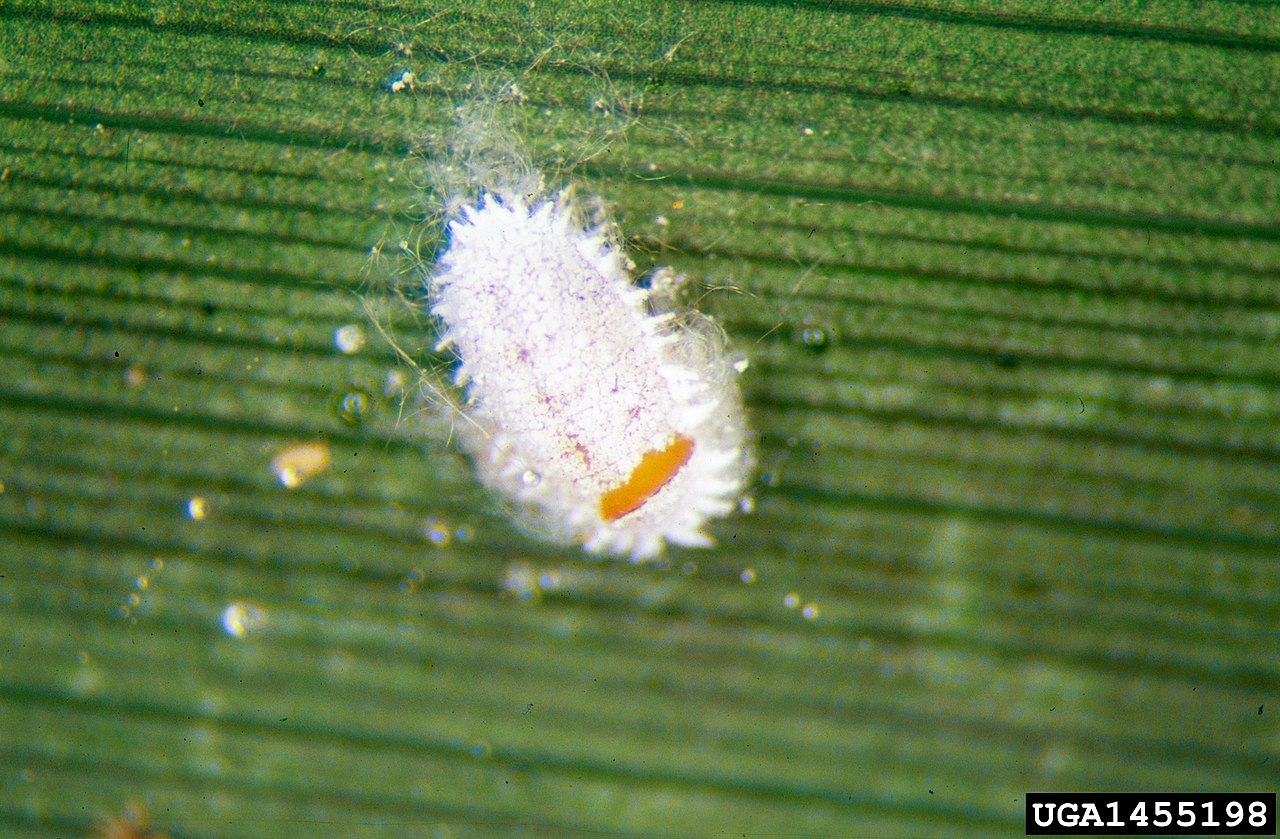
Symptoms
White cottony tufts at leaf nodes, in leaf folds and at the base of petioles; sticky honeydew on leaves and below the pot; slowed growth; leaves yellowing.
Plants affected
Easily confused with
- brown soft scale
How to tell them apart: Coccus hesperidum (brown soft scale): look for flat, oval, smooth-shelled bumps about 3-4 mm long, yellow-brown to olive, often with a darker mottled H-shaped pattern on the back. They sit motionless and firmly attached, lined up along midribs and stems, with NO white powder or waxy filaments. Planococcus citri (citrus mealybug): look for soft, slow-moving oval bodies coated in white mealy wax with short waxy filaments around the margin and two slightly longer tails at the rear; they crowd into leaf axils, fruit calyx and shoot tips, often leaving cottony white egg masses. The key tell: scale = bare smooth brown shells stuck down; mealybug = fluffy white wax with leg-bearing crawlers.
- two-spotted spider mite
How to tell them apart: Planococcus citri (citrus mealybug) shows up as soft, oval, 2-4 mm insects coated in white mealy wax, clustered in leaf axils, along the petioles and where stems meet the Monstera's aerial roots; they leave white cottony tufts and sticky honeydew that often turns into black sooty mould. Tetranychus urticae (two-spotted spider mite) is barely visible (under 0.5 mm), pale green to amber with two dark dorsal spots, living on the undersides of leaves and producing fine silken webbing rather than waxy lumps, with damage seen as a fine pale stippling or speckling across the leaf surface. So: discrete cottony bodies you can pick off in axils plus sticky residue = mealybug; almost-invisible moving dots, dust-fine webbing and a stippled bronzing leaf = spider mite, worsening in hot dry air.
Treatment
Dr. Phyto builds a dated, step-by-step treatment plan with country-approved products — start a free diagnosis to get yours.
Common questions
- How do I recognise citrus mealybug on citron?
- White cottony tufts at leaf nodes, in leaf folds and at the base of petioles; sticky honeydew on leaves and below the pot; slowed growth; leaves yellowing.
- Do I have to report citrus mealybug?
- No. citrus mealybug is not a notifiable organism, so there is nothing to report to an authority. Treat it as a normal garden problem.
- How is citrus mealybug treated?
- Mainly with biological and cultural measures — removing affected material, changing the conditions that favour it, and treating with agents approved in your country. The exact steps and their timing depend on the plant, the season and where you live: Dr. Phyto works them out in a free diagnosis.
Free first diagnosis · no sign-up to start