Dr. Phyto
palm borer moth
Paysandisia archon
⚠ EU-notifiable quarantine organism
Plants affected
Easily confused with
- red palm weevil
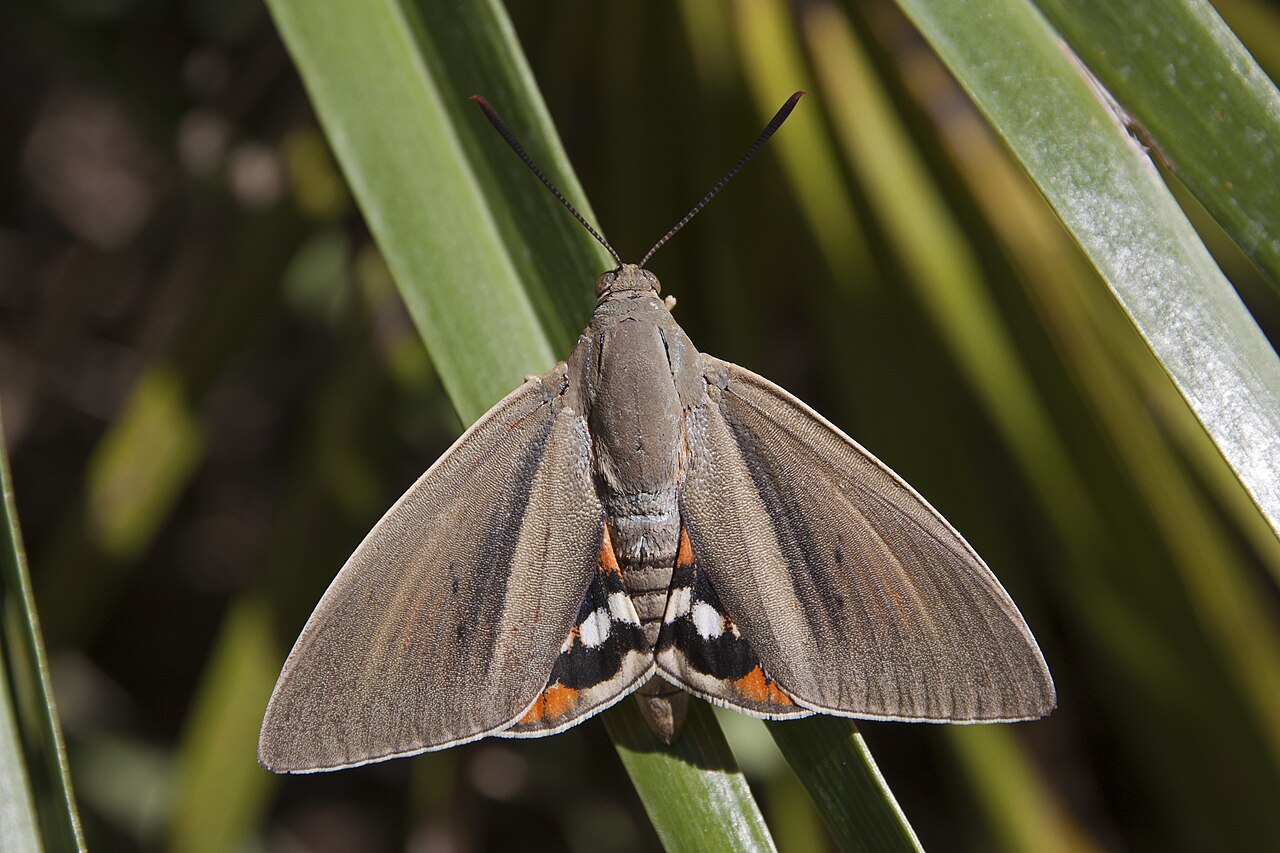
How to tell them apart: Both Rhynchophorus ferrugineus (red palm weevil) and Paysandisia archon (palm borer moth) tunnel in the crown of Phoenix dactylifera and cause wilting central fronds, frass and bored holes, but the culprits look different. R. ferrugineus is a 2.5-4 cm rusty-reddish-brown beetle (weevil) with a long curved snout; its larvae are legless, creamy white, C-shaped grubs and the damage shows wet, fermenting brown frass plus a chewed-tobacco smell oozing from the crown. P. archon is a large day-flying moth, ~9-11 cm wingspan, brown forewings and bright orange hindwings with black-and-white spots; its larvae are caterpillars (with legs/prolegs) that bore long galleries near the stem base and push out coarse, sawdust-like fibrous frass and sawdust pellets at the trunk surface, often with cocoon/pupal cases protruding from exit holes. Both are EU-quarantine organisms — report any suspected find of either to your national plant protection organisation (NPPO).
Treatment
Dr. Phyto builds a dated, step-by-step treatment plan with country-approved products — start a free diagnosis to get yours.
Common questions
- Do I have to report palm borer moth?
- Yes. palm borer moth is a regulated quarantine organism in the EU. A suspected finding must be reported to your national plant protection organisation — they will confirm it and tell you what to do next.
- How is palm borer moth treated?
- Mainly with biological and cultural measures — removing affected material, changing the conditions that favour it, and treating with agents approved in your country. The exact steps and their timing depend on the plant, the season and where you live: Dr. Phyto works them out in a free diagnosis.
Free first diagnosis · no sign-up to start