Dr. Phyto
stem-end rot
Lasiodiplodia theobromae
Plants affected
Easily confused with
- anthracnose
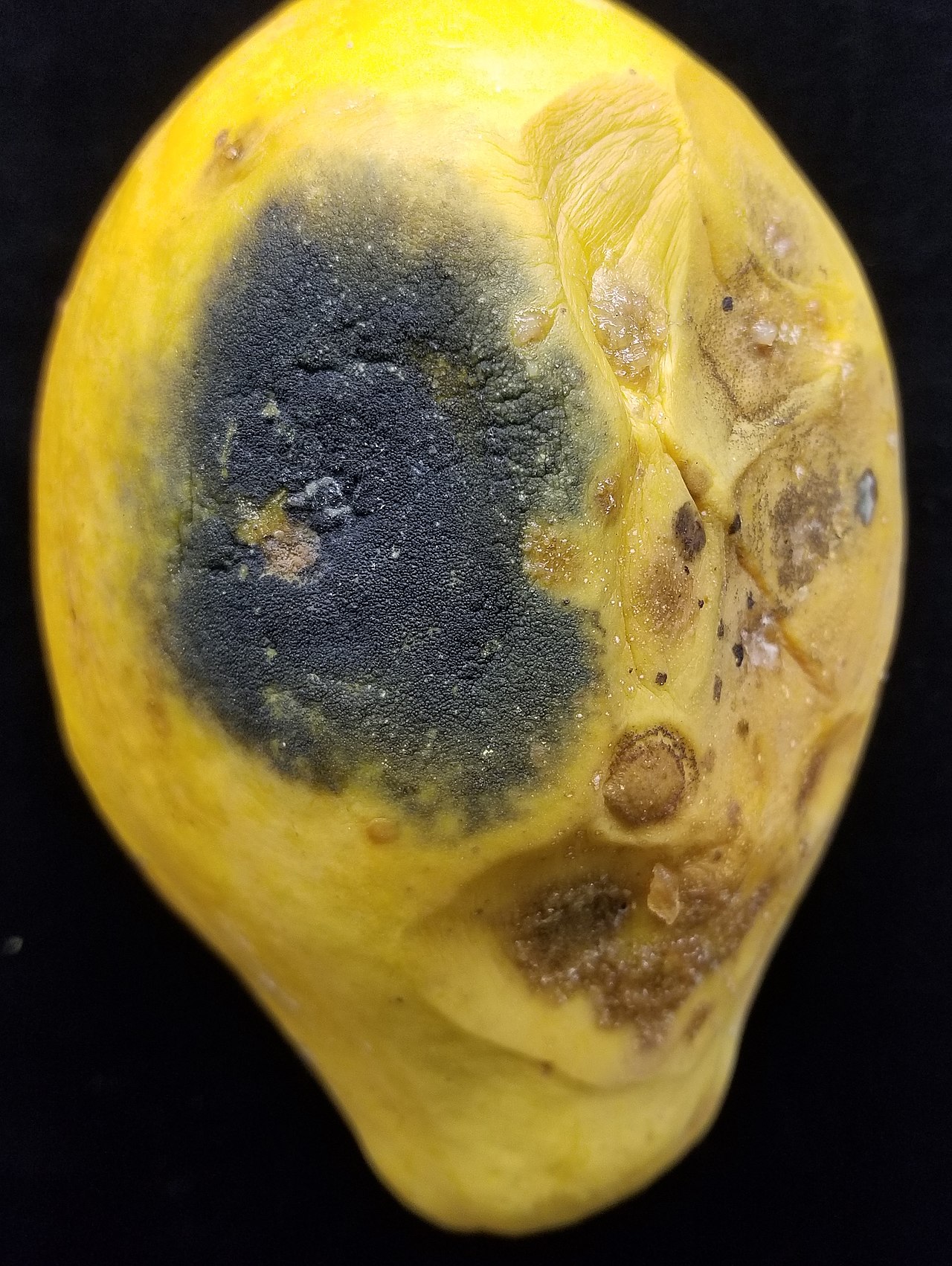
How to tell them apart: Anthracnose on avocado fruit appears as round, sunken, dark-brown to black spots that can start anywhere on the skin, often where the surface was bruised or punctured. As the lesion expands it stays firm-edged and circular, and in humid conditions the centre develops salmon-pink to orange slimy spore masses (acervuli) sitting in concentric rings. The underlying flesh rot is shallow at first and dry-firm rather than watery. Stem-end rot is anchored at the pedicel (the cut stalk end) and spreads from there as a dark-brown to almost black, soft, water-soaked rot moving down and around the fruit. The margin is diffuse rather than a neat circle, the affected flesh quickly turns brown, soft and pulpy, and dense black-grey fungal growth with tiny black pycnidia appears on the surface near the stem. The advance is faster and softer than anthracnose.
Treatment
Dr. Phyto builds a dated, step-by-step treatment plan with country-approved products — start a free diagnosis to get yours.
Common questions
- Do I have to report stem-end rot?
- No. stem-end rot is not a notifiable organism, so there is nothing to report to an authority. Treat it as a normal garden problem.
- How is stem-end rot treated?
- Mainly with biological and cultural measures — removing affected material, changing the conditions that favour it, and treating with agents approved in your country. The exact steps and their timing depend on the plant, the season and where you live: Dr. Phyto works them out in a free diagnosis.
Free first diagnosis · no sign-up to start