Dr. Phyto
Hosta virus X (HVX)
Hosta virus X
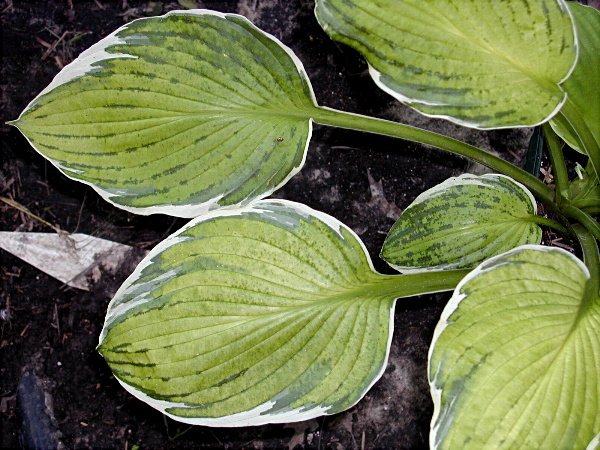
Symptoms
Irregular mottling with ink-bleed or "tie-dye" patterns where colour follows the leaf veins; blue/green tissue lumps unevenly, leaves may pucker, twist or become brittle and collapse; symptoms develop slowly over seasons and are sometimes mistaken for an attractive variegation. Some infected plants stay symptomless carriers.
Plants affected
Easily confused with
- slugs & snails
How to tell them apart: Slug/snail (Gastropoda) feeding leaves clean-edged, irregular HOLES rasped right through the blade and chewed leaf margins, very often with a tell-tale silvery, dried slime trail across the leaf or on the soil; damage is worst on tender lower leaves, appears overnight, and the surrounding tissue keeps its normal green colour. Hosta virus X (HVX) instead shows a discoloration pattern that follows the VEINS: dark blue-green 'ink-bleed' bleeding along veins, green-and-yellow blotchy mottling, ringspots and puckering, and lumpy collapsed tissue that can later dry, necrose and TEAR — producing ragged holes that imitate chewing but with NO slime trail and always tied to the mottled/ink-bleed colour change. Rule of thumb: holes + slime + normal green = gastropods; vein ink-bleed + mottling + collapse = HVX. HVX is incurable, so any vein-following mottling means destroy the plant, not reach for slug pellets.
Treatment
Dr. Phyto builds a dated, step-by-step treatment plan with country-approved products — start a free diagnosis to get yours.
Common questions
- How do I recognise Hosta virus X (HVX) on hosta (plantain lily)?
- Irregular mottling with ink-bleed or "tie-dye" patterns where colour follows the leaf veins; blue/green tissue lumps unevenly, leaves may pucker, twist or become brittle and collapse; symptoms develop slowly over seasons and are sometimes mistaken for an attractive variegation. Some infected plants stay symptomless carriers.
- Do I have to report Hosta virus X (HVX)?
- No. Hosta virus X (HVX) is not a notifiable organism, so there is nothing to report to an authority. Treat it as a normal garden problem.
- How is Hosta virus X (HVX) treated?
- Mainly with biological and cultural measures — removing affected material, changing the conditions that favour it, and treating with agents approved in your country. The exact steps and their timing depend on the plant, the season and where you live: Dr. Phyto works them out in a free diagnosis.
Free first diagnosis · no sign-up to start