Dr. Phyto
walnut anthracnose
Gnomonia leptostyla
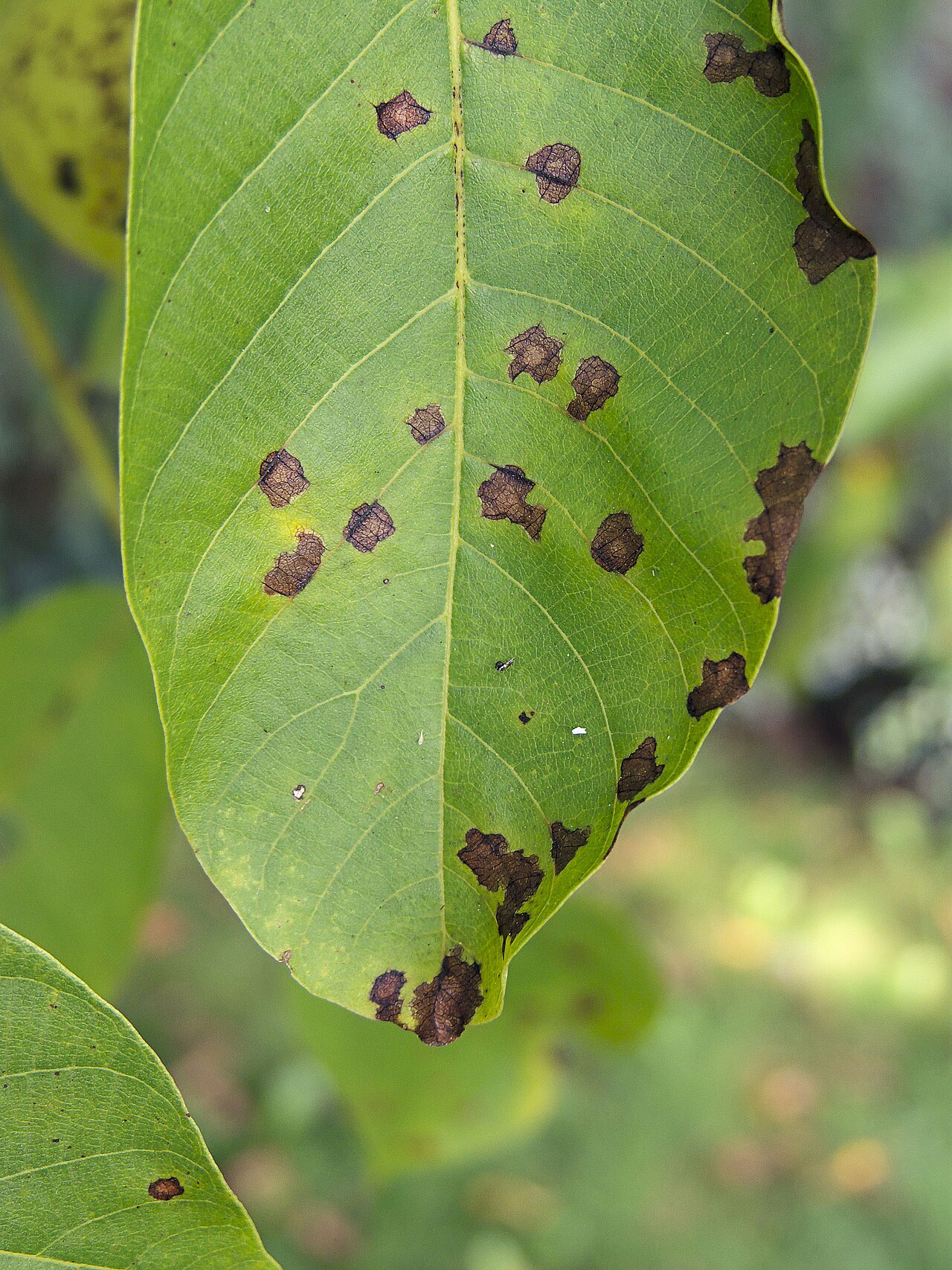
Symptoms
Irregular dark-brown leaf spots 5-15mm with grey centers, severely-spotted leaves yellow and drop early (defoliation by August in bad years), small dark spots on nut husks sometimes penetrating kernel, weakened trees with reduced winter hardiness.
Plants affected
Easily confused with
- walnut blight
How to tell them apart: Walnut anthracnose (Gnomonia leptostyla) shows on leaflets as numerous small, roughly circular to irregular dark-brown spots, 1-5 mm, often with a faint yellowish halo and sometimes tiny black fruiting dots (acervuli) in the spot centre on the underside; heavy infection turns leaflets yellow and causes early leaf drop from the base of the shoot upward, mainly late summer in warm humid weather. Walnut blight (Xanthomonas arboricola pv. juglandis) instead produces angular, water-soaked then black leaf lesions that follow the veins and leaf margins, often with a translucent oily edge, and crucially it also blackens young shoots, catkins and the developing nuts (sunken black greasy spots that rot the husk) early in spring. Look at the nuts and shoots: black, slimy, vein-limited lesions and rotting young fruit mean blight; brown dry rounded leaf spots with a halo and no nut rot mean anthracnose.
Treatment
Dr. Phyto builds a dated, step-by-step treatment plan with country-approved products — start a free diagnosis to get yours.
Common questions
- How do I recognise walnut anthracnose on English walnut?
- Irregular dark-brown leaf spots 5-15mm with grey centers, severely-spotted leaves yellow and drop early (defoliation by August in bad years), small dark spots on nut husks sometimes penetrating kernel, weakened trees with reduced winter hardiness.
- Do I have to report walnut anthracnose?
- No. walnut anthracnose is not a notifiable organism, so there is nothing to report to an authority. Treat it as a normal garden problem.
- How is walnut anthracnose treated?
- Mainly with biological and cultural measures — removing affected material, changing the conditions that favour it, and treating with agents approved in your country. The exact steps and their timing depend on the plant, the season and where you live: Dr. Phyto works them out in a free diagnosis.
Free first diagnosis · no sign-up to start