Dr. Phyto
fusarium head blight / scab
Fusarium graminearum
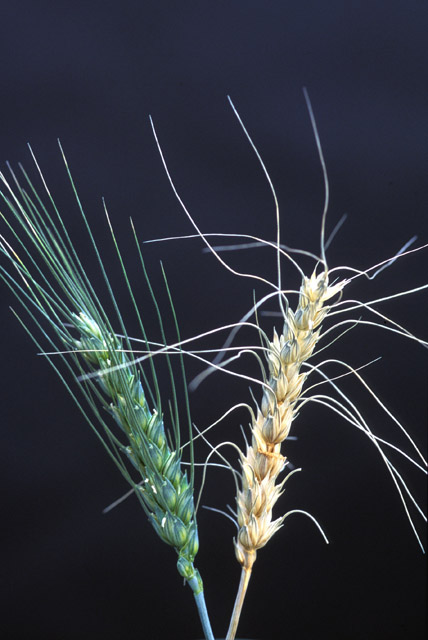
Symptoms
Premature bleaching of individual spikelets during/after flowering, pinkish-orange fungal growth at base of bleached spikelets in humid weather, shrivelled chalky-white kernels (tombstones) at harvest.
Plants affected
Easily confused with
- ergot of rye + cereals
How to tell them apart: Fusarium graminearum (Fusarium head blight): one or more spikelets, or a whole section of the ear, bleach to a pale straw colour while the rest of the head stays green; in humid weather look for salmon-pink to orange spore masses (sporodochia) at the base of the glumes and along the rachis. Infected grains shrivel into chalky-white, lightweight 'tombstone' kernels but stay inside the floret. Claviceps purpurea (ergot) instead replaces individual kernels with a hard, protruding body: first a sticky, sweet yellowish 'honeydew' drop oozes from the floret, then it hardens into a dark purple-black, curved horn (sclerotium) that sticks out well beyond the glumes, far larger than a normal grain. Key tell: pink/orange fuzz and shrivelled pale grains = Fusarium; a black horn-shaped lump replacing a grain = ergot.
- pink snow mould
How to tell them apart: On the wheat head, Fusarium graminearum bleaches whole spikelets or the head above the point of infection, and in humid weather you see salmon-pink to orange sporodochia (sticky spore masses) sitting on the glumes and rachis. Infected grains shrivel into chalky white-pink 'tombstone' kernels. At the seedling stage it causes brown rot of the coleoptile and sub-crown internode, favoured by warm, wet conditions (around 20-30 C) at flowering. Microdochium nivale is a cool-weather pathogen: its head symptoms are a more uniform browning/bleaching with less of the bright orange colour, and any fungal growth is whitish-pink and felty rather than the cushion-like orange sporodochia of Fusarium. It is best known for pink snow mould — circular patches of greyish-pink, water-soaked, matted leaves that appear as snow melts (0-5 C). On seedlings it causes pre- and post-emergence damping-off in cold, wet soils, the opposite temperature range to F. graminearum.
Treatment
Dr. Phyto builds a dated, step-by-step treatment plan with country-approved products — start a free diagnosis to get yours.
Common questions
- How do I recognise fusarium head blight / scab on barley?
- Premature bleaching of individual spikelets during/after flowering, pinkish-orange fungal growth at base of bleached spikelets in humid weather, shrivelled chalky-white kernels (tombstones) at harvest.
- Do I have to report fusarium head blight / scab?
- No. fusarium head blight / scab is not a notifiable organism, so there is nothing to report to an authority. Treat it as a normal garden problem.
- How is fusarium head blight / scab treated?
- Mainly with biological and cultural measures — removing affected material, changing the conditions that favour it, and treating with agents approved in your country. The exact steps and their timing depend on the plant, the season and where you live: Dr. Phyto works them out in a free diagnosis.
Free first diagnosis · no sign-up to start