Dr. Phyto
blister blight of tea
Exobasidium vexans
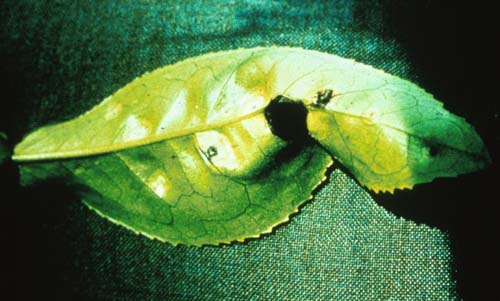
Symptoms
Pale translucent blister-like spots on young tea leaves (the diagnostic primary symptom), spots turn into raised silver-grey waxy patches on leaf undersides with corresponding sunken yellow patches on upper surfaces, severely infected shoots distorted + unsuitable for picking, leaf drop in heavy attacks.
Plants affected
Easily confused with
- anthracnose
How to tell them apart: Exobasidium vexans (blister blight) appears on the youngest, still-folding tea leaves and tender shoots as small pale, translucent oily-looking dots that swell into circular blisters: the upper leaf surface sinks into a concave depression while the underside bulges into a convex, glossy blister that soon turns velvety white with a powdery basidiospore bloom. Lesions are 3-12 mm, raised and rounded, and thrive in cool, wet, low-light monsoon conditions; old blisters dry to a brown sunken scar and the shoot may snap. Colletotrichum gloeosporioides (anthracnose/brown blight) attacks mature and edge/tip tissue, forming larger irregular brown to grey-brown flat lesions with a darker margin and often a yellow halo, NOT raised blisters. On the brown anthracnose lesions you see tiny black dot-like acervuli arranged in concentric rings (sometimes oozing pink-orange spore masses in humidity), whereas blister blight produces a smooth white powdery sporulating face and never black pinpoint fruiting bodies.
Treatment
Dr. Phyto builds a dated, step-by-step treatment plan with country-approved products — start a free diagnosis to get yours.
Common questions
- How do I recognise blister blight of tea on tea plant?
- Pale translucent blister-like spots on young tea leaves (the diagnostic primary symptom), spots turn into raised silver-grey waxy patches on leaf undersides with corresponding sunken yellow patches on upper surfaces, severely infected shoots distorted + unsuitable for picking, leaf drop in heavy attacks.
- Do I have to report blister blight of tea?
- No. blister blight of tea is not a notifiable organism, so there is nothing to report to an authority. Treat it as a normal garden problem.
- How is blister blight of tea treated?
- Mainly with biological and cultural measures — removing affected material, changing the conditions that favour it, and treating with agents approved in your country. The exact steps and their timing depend on the plant, the season and where you live: Dr. Phyto works them out in a free diagnosis.
Free first diagnosis · no sign-up to start