Dr. Phyto
maculatura fogliare del nespolo
Diplocarpon mespili
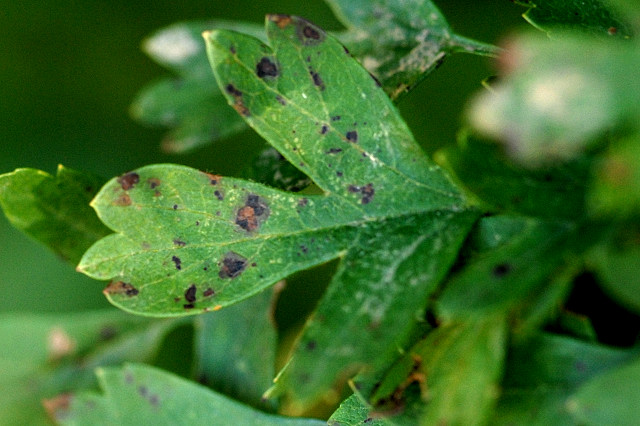
Sintomi
Piccole macchie rosso-violacee con centri grigi sulle foglie giovani, le macchie confluiscono in lesioni più ampie, defogliazione negli anni gravi, ammaccature sui frutti del nespolo.
Piante colpite
Facilmente confuso con
- colpo di fuoco batterico
Come distinguerli: Diplocarpon mespili (maculatura fogliare da Entomosporium) mostra molte piccole macchie distinte, da circolari ad angolose, sparse su tutta la lamina, ciascuna rossastra-violacea o bruna con margine più scuro; a maturità si notano minuscoli corpi fruttiferi neri a capocchia di spillo (acervuli) al centro, l'infezione intensa arrossa le foglie e provoca caduta precoce, ma rami e germogli restano vivi. Erwinia amylovora (colpo di fuoco batterico) NON produce macchie tonde sparse – invece intere cime dei germogli, fiori e foglie imbruniscono o anneriscono e muoiono insieme dall'apice verso il basso, le foglie restano attaccate e pendono come bruciate dal fuoco, i giovani germogli si piegano a caratteristico 'uncino del pastore', e con clima caldo-umido compaiono goccioline di essudato batterico lattiginoso-ambrato su fusti e frutticini. Indizio chiave: molte macchie separate con puntini neri = fungo della maculatura; un disseccamento bruno-nero continuo lungo il germoglio con apice a uncino ed essudato appiccicoso = colpo di fuoco. Il colpo di fuoco è un batterio da quarantena UE e deve essere segnalato.
- batteriosi di Pseudomonas
Come distinguerli: Su Photinia × fraseri, Diplocarpon mespili (maculatura da Entomosporium) inizia come minuscole macchie rotonde rosso vivo o bordeaux sparse su foglie vecchie e nuove; invecchiando i centri diventano grigio-bruni e sviluppano al centro un minuscolo corpo fruttifero (acervulo) nero lucido grande come una capocchia di spillo — questo punto nero rilevato si vede con una lente, è diagnostico e manca nella malattia batterica. Pseudomonas syringae pv. syringae produce invece macchie angolari più scure, da brune a nere, delimitate dalle nervature fogliari, spesso idropiche e traslucide al margine in controluce, talvolta con un sottile alone giallo, e compare soprattutto con clima primaverile fresco e umido su giovani germogli e bordi fogliari, spesso con disseccamento dei rametti e senza punto fruttifero nero. In breve: punto centrale nero lucido e macchie rotonde rosse per Entomosporium, contro macchie angolari delimitate dalle nervature e idropiche con disseccamento dei germogli per Pseudomonas.
- oidio del ciliegio
Come distinguerli: Entrambe colpiscono le foglie di biancospino ma appaiono diverse. Podosphaera clandestina (oidio del biancospino) è una patina polverulenta superficiale da bianca a grigia SOPRA la foglia, si stacca con un dito e deforma gli apici giovani. Diplocarpon mespili (maculatura entomosporica) produce macchie distinte da rosso-violacee a brune con centri grigi più chiari DENTRO il tessuto — non si staccano, portano spesso un minuscolo punto scuro (acervulo) al centro, confluiscono in chiazze e causano forte caduta delle foglie anziché getti deformati.
- maculatura bruna del pero
Come distinguerli: Sulle foglie di cotogno e pero, Diplocarpon mespili (maculatura da Entomosporium) produce molte piccole macchie circolari rosse o bruno-rossastre, ciascuna di solito con un centro leggermente più scuro o grigio-violaceo. L'indizio diagnostico è un minuscolo corpo fruttifero scuro e rilevato (acervulo) al centro delle macchie mature — con una lente appare come un puntino nero o una macchiolina a forma di insetto. Le macchie restano quasi tonde, si distribuiscono fitte su tutta la lamina e confluiscono in caso di forte attacco, causando ingiallimento e caduta precoce delle foglie. La malattia predilige condizioni primaverili fresche e umide con schizzi di pioggia sul fogliame giovane. Stemphylium vesicarium (maculatura bruna) su cotogno e pero inizia come piccole punteggiature necrotiche bruno-rossastre o scure che si ingrandiscono in lesioni brune irregolari, spesso con centro più chiaro e nocciola e un alone rossastro o violaceo diffuso lungo il margine. A differenza di Entomosporium, manca il netto corpo fruttifero nero centrale; la necrosi appare più diffusa e idropica, e le lesioni si concentrano spesso vicino ai margini e agli apici fogliari. Sul frutto forma un marciume circolare scuro e depresso. È favorita da clima estivo caldo-umido ed è associata a residui vegetali morti (ad es. foglie senescenti o infestanti vicine) come fonte di inoculo.
Trattamento
Dr. Phyto crea un piano di trattamento datato e passo-passo con prodotti approvati nel tuo paese — avvia una diagnosi gratuita per ottenere il tuo.
Domande frequenti
- Come riconosco maculatura fogliare del nespolo su cotogno?
- Piccole macchie rosso-violacee con centri grigi sulle foglie giovani, le macchie confluiscono in lesioni più ampie, defogliazione negli anni gravi, ammaccature sui frutti del nespolo.
- Devo segnalare maculatura fogliare del nespolo?
- No. maculatura fogliare del nespolo non è soggetto a segnalazione, quindi non c'è nulla da comunicare a un'autorità. Trattalo come un normale problema del giardino.
- Come si tratta maculatura fogliare del nespolo?
- Soprattutto con misure biologiche e colturali — rimuovere il materiale colpito, cambiare le condizioni che lo favoriscono e intervenire con prodotti autorizzati nel tuo Paese. I passaggi esatti e i tempi dipendono dalla pianta, dalla stagione e da dove vivi: Dr. Phyto li calcola in una diagnosi gratuita.
Prima diagnosi gratuita · nessuna registrazione