Dr. Phyto
carob trunk borer (Capnodis)
Capnodis tenebrionis
Symptoms
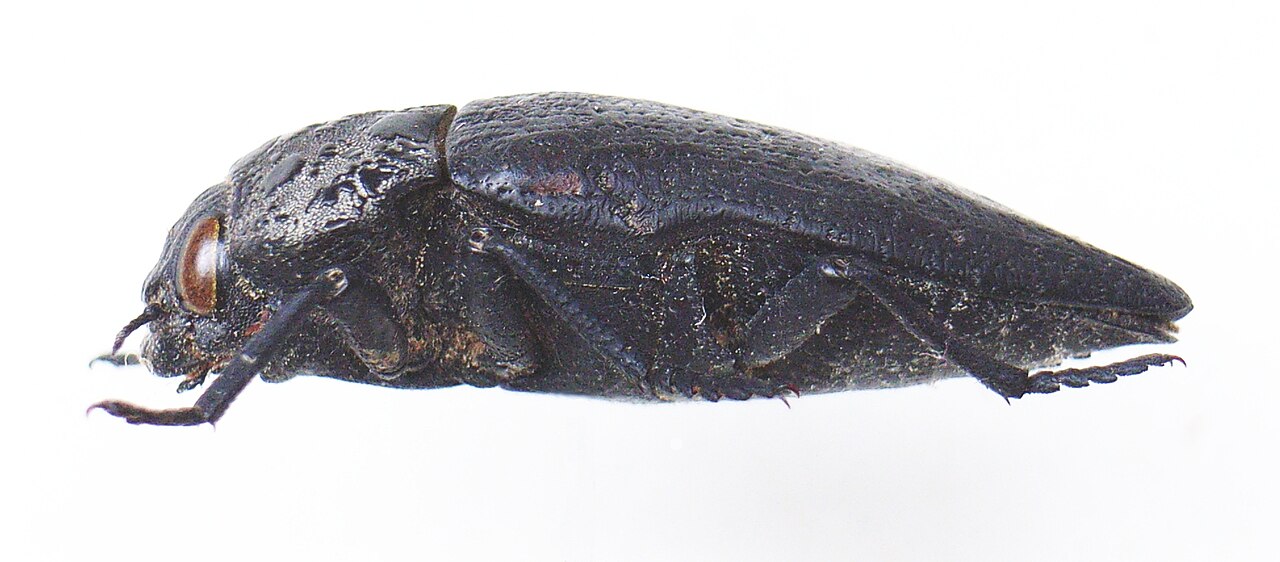
Wilting + dieback of one or several main branches in summer, sawdust-like frass at the base of the trunk, D-shaped exit holes 1cm wide on the bark, large black metallic beetles (2–3cm) on the trunk in summer.
Plants affected
Easily confused with
- carob canker
How to tell them apart: A wood-boring beetle (flat-headed root borer). Look low on the tree: at the root collar and lower trunk you will find oval or D-shaped exit holes about 5-10 mm wide, and coarse, gritty reddish-brown frass (sawdust mixed with sap) packed under loose bark. Peel the bark over a dying limb and you uncover wide, flat tunnels (galleries) full of frass with no fungal threads. Wilting and dieback appear suddenly on whole branches above a girdled, sunken collar, and worst on young or drought-stressed carobs in hot, dry summers. The adult is a stout, dull-black beetle dusted grey, often seen on the trunk. A bark-and-twig fungus, not an insect. There are NO exit holes and NO frass. Instead the dead bark carries tiny black fruiting dots (acervuli) that ooze slimy black spore masses when wet, and the cankers spread as sunken, sharply edged dead patches that slowly enlarge along twigs and branches. Leaves often show grey-brown spots with a darker margin, and twigs die back tip-first (from the outside in) rather than collapsing from a single trunk girdle. Damage is worst in warm, humid, rainy spells and on wounded or weakened tissue.
Treatment
Dr. Phyto builds a dated, step-by-step treatment plan with country-approved products — start a free diagnosis to get yours.
Common questions
- How do I recognise carob trunk borer (Capnodis) on carob tree?
- Wilting + dieback of one or several main branches in summer, sawdust-like frass at the base of the trunk, D-shaped exit holes 1cm wide on the bark, large black metallic beetles (2–3cm) on the trunk in summer.
- Do I have to report carob trunk borer (Capnodis)?
- No. carob trunk borer (Capnodis) is not a notifiable organism, so there is nothing to report to an authority. Treat it as a normal garden problem.
- How is carob trunk borer (Capnodis) treated?
- Mainly with biological and cultural measures — removing affected material, changing the conditions that favour it, and treating with agents approved in your country. The exact steps and their timing depend on the plant, the season and where you live: Dr. Phyto works them out in a free diagnosis.
Free first diagnosis · no sign-up to start