Dr. Phyto
Pfirsich-Fruchtfliege
Bactrocera zonata
⚠ EU-meldepflichtiger Quarantäne-Organismus
Symptome
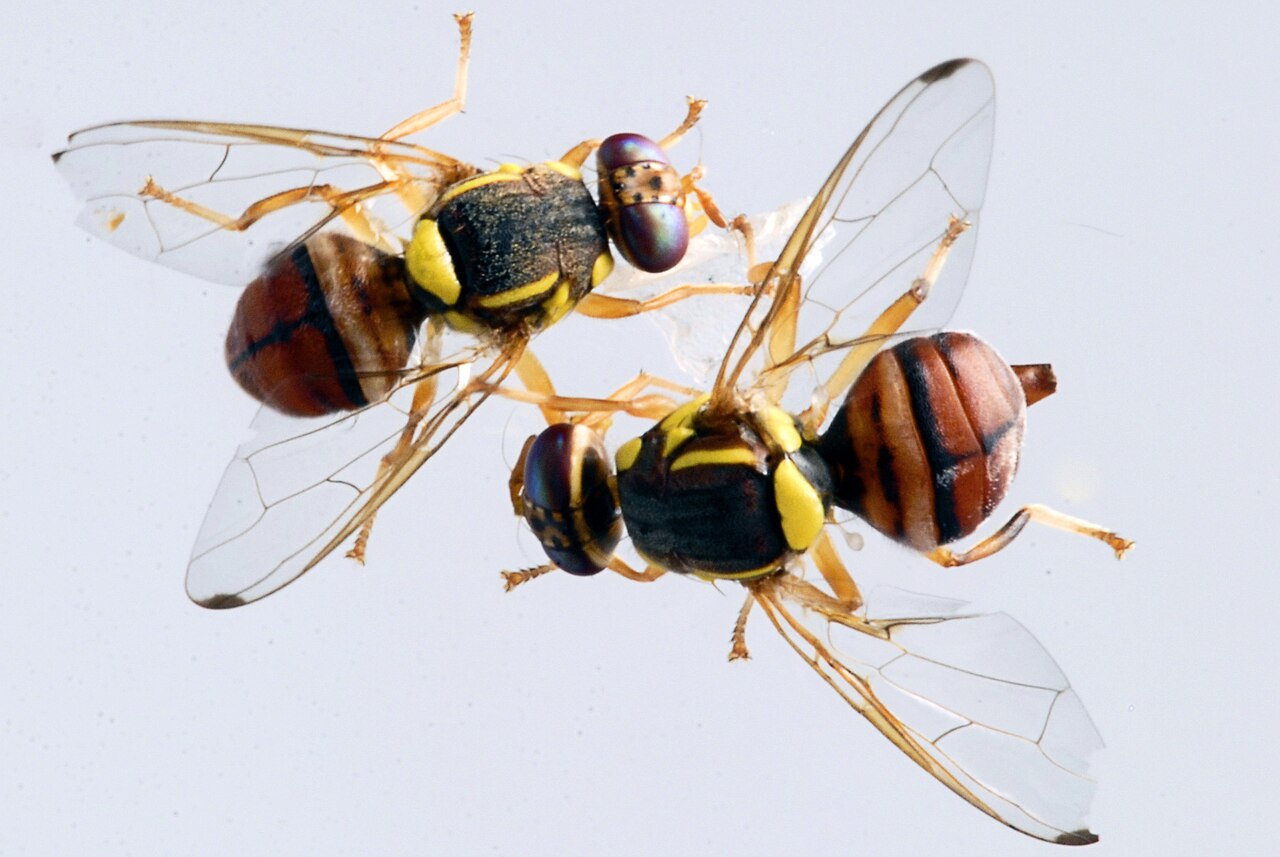
Größer als die Mittelmeerfruchtfliege (8–10 mm), auffälliger orangebrauner Körper mit dunklem Flügelmuster, Larven bohren tief in Granatapfel, Mango, Pfirsich und Zitrusfrüchte; rasche Fruchtfäule.
Betroffene Pflanzen
Leicht verwechselt mit
- Mittelmeer-Fruchtfliege
So unterscheidet man sie: Beide sind Fruchtfliegen, deren Maden im Inneren der Granatapfelfrucht fressen, daher lassen sich die beiden allein am Fruchtschaden (Einstichstellen, innere Fäule, vorzeitiger Fall) nicht unterscheiden — man muss die erwachsene Fliege an oder nahe der Frucht betrachten. Bactrocera zonata (Pfirsichfruchtfliege) ist eine schlanke, wespenartige Fliege mit überwiegend rotbraunem bis orangebraunem Hinterleib, klaren Flügeln mit nur einem schmalen dunklen Streifen entlang des Vorderrandes und an der Spitze sowie einem leuchtend gelben Band auf dem Brustabschnitt; sie hat keine kräftig gefleckten Flügel. Ceratitis capitata (Mittelmeerfruchtfliege) ist kleiner und gedrungener mit gescheckten, gebänderten Flügeln in grauen, gelben und braunen Binden/Flecken, einem blassgelblich-rehbraunen Körper mit silbrigen und schwarzen Zeichnungen auf der Brust; das Männchen trägt zwei rautenförmig verbreiterte schwarze Borsten am Kopf. Findet man die rotbraune Fliege mit klaren Flügeln (B. zonata), als Quarantäneart behandeln und melden.
- Johannisbrotmotte
So unterscheidet man sie: Achten Sie auf einen winzigen, nadelstichartigen 'Stich' auf der glatten Schale, oft mit einem kleinen dunklen oder eingesunkenen Hof und manchmal einem klaren Tröpfchen, das zu einem braunen Fleck eintrocknet. Schneidet man die Frucht auf, findet man beinlose, cremeweiße Maden (vorne spitz, hinten stumpf), die durch das nasse, gärende Fruchtfleisch bohren, das zu einer weichen, wässrigen Fäule mit saurem Geruch wird. Der erwachsene Falter ist eine schlanke bernsteinbraune Fliege mit gebänderten klaren Flügeln. Es gibt keine Gespinste und keine Raupe im Inneren. Achten Sie auf ein größeres, ausgefranstes Bohrloch, meist nahe dem Kelch-/Kronenende, umgeben von rotbraunem Kot (sägemehlartig) und feinen Gespinstfäden. Im Inneren finden Sie eine echte Raupe mit deutlicher Kopfkapsel und Beinen, rosa-grau bis cremeweiß, oft lebhaft kriechend, mit trockenem, krümeligem Kot und versponnenen, beschädigten Kernen statt wässriger Fäule. Der Schaden wirkt trockener und 'angefressen', am Eingang oft dunkler/schwarzer Sekundärschimmel statt saurem gärendem Saft. Kein einzelner klarer Nadelstich.
Behandlung
Dr. Phyto erstellt einen datierten, schrittweisen Behandlungsplan mit im Land zugelassenen Mitteln — starte eine kostenlose Diagnose, um deinen zu erhalten.
Häufige Fragen
- Wie erkenne ich Pfirsich-Fruchtfliege an Granatapfel?
- Größer als die Mittelmeerfruchtfliege (8–10 mm), auffälliger orangebrauner Körper mit dunklem Flügelmuster, Larven bohren tief in Granatapfel, Mango, Pfirsich und Zitrusfrüchte; rasche Fruchtfäule.
- Muss ich Pfirsich-Fruchtfliege melden?
- Ja. Pfirsich-Fruchtfliege ist in der EU ein geregelter Quarantäneschädling. Ein Verdacht muss beim Pflanzenschutzdienst gemeldet werden — der bestätigt ihn und sagt dir, was zu tun ist.
- Wie wird Pfirsich-Fruchtfliege behandelt?
- Vor allem mit biologischen und pflegerischen Maßnahmen — befallenes Material entfernen, die begünstigenden Bedingungen ändern und mit in deinem Land zugelassenen Mitteln behandeln. Die genauen Schritte und ihr Zeitpunkt hängen von Pflanze, Jahreszeit und Wohnort ab: Dr. Phyto ermittelt sie in einer kostenlosen Diagnose.
Erste Diagnose gratis · keine Anmeldung nötig