Dr. Phyto
verticilliosi dell'olivo
Verticillium dahliae
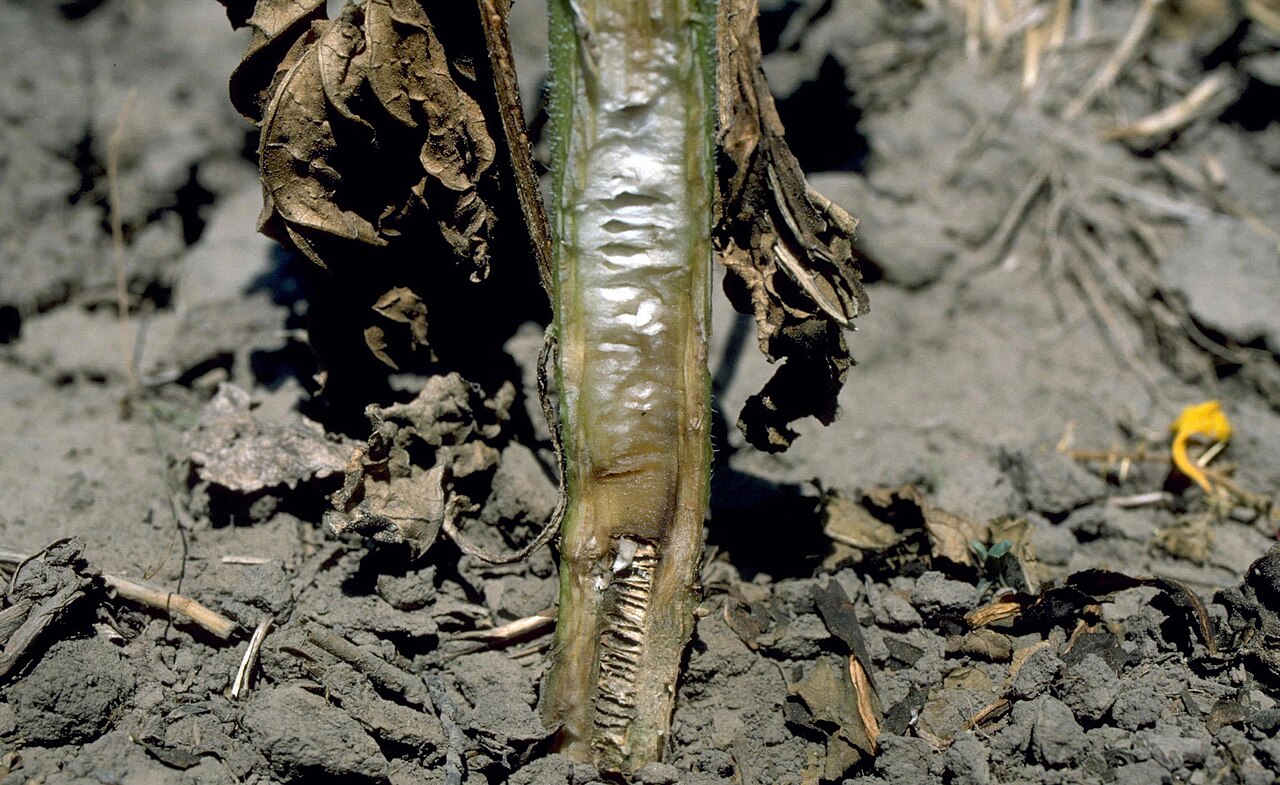
Sintomi
Metà albero appassisce in estate mentre l'altra metà resta verde, imbrunimento nerastro nella sezione trasversale del legno colpito, parziale ripresa in inverno seguita da ricaduta, deperimento nell'arco di 2–4 stagioni.
Piante colpite
Facilmente confuso con
- complesso del disseccamento rapido dell'olivo (CoDiRO)
Come distinguerli: Sull'olivo, entrambi causano il deperimento dei rami ma la gestione è completamente diversa. Verticillium dahliae: un fungo del TERRENO che provoca un improvviso appassimento unilaterale di singoli rami con striature vascolari brune nel legno, spesso con recupero parziale, NON soggetto a notifica obbligatoria. Xylella fastidiosa subsp. pauca (organismo da quarantena UE, SOGGETTO A NOTIFICA OBBLIGATORIA): disseccamento fogliare con un alone giallo che si estende fino al disseccamento dell'intera chioma, trasmesso da sputacchine, senza cura - se osservi un disseccamento in espansione, trattalo come SOSPETTA Xylella e contatta l'autorità fitosanitaria PRIMA di potare.
- virus dell'avvizzimento maculato del pomodoro
Come distinguerli: La Verticillium dahliae è un fungo della tracheoverticilliosi (avvizzimento vascolare) che vive nel terreno: le foglie ingialliscono e imbruniscono dal basso verso l'alto, partendo dalle foglie più vecchie, spesso solo su un lato della pianta o di una foglia (necrosi marginale o internervale a forma di V), e l'avvizzimento è permanente. Il segno diagnostico è interno: tagliando il fusto vicino alla base si vedono striature vascolari da brune a grigio-brune nell'anello legnoso. I sintomi si aggravano in condizioni fresche e umide e la pianta collassa lentamente in alcune settimane. Il virus dell'avvizzimento maculato del pomodoro (TSWV) è trasmesso dai tripidi e mostra segni superficiali, non imbrunimento vascolare: maculature ad anelli concentrici clorotici/necrotici, disegni a linee e a foglia di quercia, bronzatura e chiazze scure irregolari sulle foglie, spesso con crescita deformata su un solo lato e nanismo; i fusti tagliati NON mostrano alcun scolorimento vascolare interno.
- muffa grigia
Come distinguerli: Verticillium dahliae è un avvizzimento vascolare di origine tellurica: le foglie basse ingialliscono, imbruniscono e muoiono, spesso prima su un lato della pianta o su un germoglio, mentre lo stelo resta sodo e asciutto. Il segno rivelatore è interno — tagliando lo stelo vicino alla base si vedono striature brune nel tessuto conduttore dell'acqua subito sotto la superficie, senza muffa all'esterno. Botrytis cinerea (muffa grigia) è un marciume superficiale: steli e colletto sviluppano lesioni molli, imbibite d'acqua, da fulve a brune, che spesso partono da ferite, fiori appassiti o fogliame fitto e umido, e in condizioni umide cresce un feltro grigio peloso di spore sopra la zona marcita. Peluria grigia o collasso molle e poltiglioso indica Botrytis; un avvizzimento asciutto con nette striature vascolari brune interne indica Verticillium.
- oziorrinco
Come distinguerli: Verticillium dahliae (tracheoverticilliosi): una malattia fungina dei vasi che si manifesta nella parte aerea. L'appassimento e l'ingiallimento iniziano spesso su un solo lato della pianta o prima sulle foglie basse/più vecchie, frequentemente a forma di cuneo (a V) dal margine fogliare. Tra le nervature compare una necrosi giallo pallido-bruna mentre le foglie restano inizialmente attaccate, e la pianta collassa gradualmente nell'arco di giorni anche con terreno umido. Il segno diagnostico è interno: tagliare longitudinalmente un fusto basale e cercare striature da brune a scure nel tessuto conduttore (imbrunimento vascolare) — le radici restano sode e integre. Otiorhynchus sulcatus (oziorrinco/punteruolo nero della vite): un insetto, e il danno è meccanico, non vascolare. L'appassimento improvviso è causato da larve bianche, apode, ricurve a C (fino a circa 1 cm, con capo bruno) che hanno divorato le radichette e roso la corteccia del colletto e delle radici principali sotto il livello del suolo. Sollevando una pianta appassita, il pane di terra è sciolto, roso e spesso si sfalda, con larve visibili nel substrato; l'interno del fusto è pulito, senza striature vascolari. Gli adulti (neri opachi, ~9 mm, piriformi) lasciano di notte caratteristiche tacche a mezzaluna ai bordi delle foglie.
- sclerotinia
Come distinguerli: Sclerotinia sclerotiorum produce un marciume molle e acquoso al colletto e alla base dello stelo del carciofo, ricoperto da un micelio bianco cotonoso (lanuginoso) e denso; all'interno dello stelo svuotato e sul colletto in marcescenza si trovano sclerozi neri e duri delle dimensioni di piccoli semi o piselli. Le piante colpite appassiscono improvvisamente e lo stelo basale si decolora e si sfilaccia. È favorita da condizioni fresche, umide e da vegetazione fitta. Verticillium dahliae provoca un avvizzimento vascolare più lento e progressivo: le foglie inferiori ed esterne mostrano un ingiallimento cuneiforme internervale e marginale che vira al bruno, spesso su un solo lato della pianta, senza muffa superficiale. Tagliando lo stelo o il colletto per il lungo si rivela una striatura bruna nell'anello vascolare interno; non c'è lanugine bianca, solo microscleroti microscopici nel tessuto morto.
- ramularia del carciofo
Come distinguerli: Cercate macchie fogliari distinte e ben delimitate sul fogliame del carciofo: piccole lesioni da angolari a tondeggianti, con centro da bruno chiaro a bruno-grigiastro, spesso circondate da un alone più scuro o giallo. In condizioni umide può comparire una fine peluria bianco-grigiastra (sporulazione) sulla pagina inferiore delle macchie. Il danno resta chiaramente puntiforme e localizzato alla foglia; le macchie si ingrandiscono e confluiscono, ma il tessuto vascolare di steli e piccioli tagliati rimane pulito e bianco. La pianta non appassisce nel complesso; le macchie compaiono prima sulle foglie esterne più vecchie. L'avvizzimento da Verticillium è diffuso, non puntiforme: interi settori della foglia impallidiscono con clorosi internervale (ingiallimento tra le nervature) e seccano in un disseccamento marginale, spesso su un lato della pianta o su metà foglia. Le foglie esterne colpite appassiscono e collassano nelle ore calde. Il segno decisivo è interno: tagliate uno stelo o un grosso picciolo per il lungo e cercate striature vascolari brune o grigiastre. Nessuna macchia distinta e nessuna sporulazione lanuginosa sulla superficie fogliare.
- stress idrico
Come distinguerli: Lo stress idrico su Acer palmatum brucia le foglie in modo uniforme: margini e punte secchi e marroni si estendono verso l'interno su TUTTA la chioma contemporaneamente, peggiori sul lato più caldo ed esposto, e un'annaffiatura profonda porta un parziale recupero. La Verticillium dahliae (verticilliosi) colpisce invece in modo ASIMMETRICO — un ramo o un lato dell'albero appassisce e dissecca all'improvviso mentre il resto sembra sano, spesso a metà estate senza siccità recente. Il segno decisivo è interno: scortecciare o tagliare un ramo appassito e cercare striature verde oliva o brunastre nell'alburno (decolorazione vascolare); la siccità lascia il legno pulito e chiaro.
- scottatura solare / bruciatura fogliare
Come distinguerli: Su Acer palmatum, la scottatura solare abiotica produce un imbrunimento marginale e internervale uniforme con bordi fogliari croccanti, cartacei, marrone chiaro, distribuito in modo uniforme sulla chioma esterna più esposta al sole e al vento, senza appassimento del tessuto verde e senza scolorimento del legno. Verticillium dahliae provoca invece un improvviso appassimento unilaterale e un disseccamento fogliare limitato a un singolo ramo o settore della chioma, dove le foglie si arricciano e collassano mentre sono ancora parzialmente verdi, e staccando la corteccia di un ramo colpito si rivela la rivelatrice striatura verde oliva-grigio-bruna nell'alburno. Il segno decisivo è questa colorazione vascolare interna e il disseccamento ramo per ramo (settoriale) della Verticillium rispetto alla scottatura uniforme, solo superficiale e legata all'esposizione della scottatura solare.
- cancro da Botryosphaeria
Come distinguerli: Sull'acero giapponese entrambi fanno appassire un ramo alla volta, ma Verticillium dahliae attacca dall'interno: scortecciando o tagliando un ramo morente si trovano striature verde oliva-brune longitudinali nell'alburno, mentre le foglie si bruciano ai margini e si arricciano su interi rami senza cancri corticali. Botryosphaeria dothidea agisce in superficie: cercate cancri infossati, scuri, spesso fessurati sulla corteccia, talvolta essudanti, costellati di minuscoli corpi fruttiferi neri a forma di puntino (picnidi); il legno sotto il cancro imbrunisce solo localmente attorno alla lesione, non come striatura interna continua. Il deperimento da Verticillium segue spesso suoli umidi o siti di reimpianto, quello da Botryosphaeria tipicamente segue siccità, scottature solari o ferite di potatura su alberi stressati.
- ruggine della menta
Come distinguerli: Puccinia menthae (ruggine della menta) e Verticillium dahliae (verticilliosi) ingialliscono entrambi il fogliame della menta, ma i segni diagnostici sono chiari osservando da vicino. Girare le foglie: la ruggine mostra pustole rilevate e polverulente da arancio a bruno-ruggine (e prima macchie giallo pallido rigonfie con giovani getti deformati e ispessiti) sparse sulla pagina INFERIORE delle foglie, con terreno sano. La verticilliosi NON presenta pustole — invece ingiallimento e bruciatura bruna dei margini compaiono su un solo lato o su un singolo getto, la pianta appassisce con il caldo, resta stentata, e un taglio in un fusto basso rivela striature brune dei tessuti vascolari interni. In breve: polvere arancio sotto la foglia = ruggine; appassimento unilaterale più striature brune nei vasi del fusto = verticilliosi.
- ruggine del pistacchio
Come distinguerli: Su Pistacia terebinthus sia Pileolaria terebinthi (ruggine del pistacchio) sia Verticillium dahliae (verticilliosi/tracheoverticilliosi) iniziano con ingiallimento internervale diffuso, disseccamento e caduta precoce delle foglie, ma i segni decisivi differiscono. Pileolaria terebinthi forma piccole pustole tondeggianti o irregolari bruno-rossastre o purpuree con alone giallo su foglia, picciolo e frutto; girando la foglia si trovano masse polverulente e rilevate di spore di ruggine sulla pagina inferiore, mentre il legno resta pulito al taglio. Verticillium dahliae NON produce pustole: invece uno o pochi rami appassiscono e disseccano (spesso da un solo lato), e tagliando un rametto avvizzito si vedono striature o anelli bruni o grigiastri nel legno vascolare, con sintomi più gravi nei periodi caldi e secchi.
- Oidio dell'okra (mal bianco endofitico, mediterraneo)
Come distinguerli: Sia la Leveillula taurica (oidio) sia il Verticillium dahliae (verticilliosi) iniziano con macchie gialle sulle foglie dell'okra, perciò all'inizio si confondono facilmente. La prova decisiva è la PAGINA INFERIORE della foglia: con la Leveillula taurica si trova uno strato polverulento bianco-grigio di spore proprio sotto le macchie gialle e la pianta non appassisce allo stelo. Il Verticillium dahliae lascia la pagina inferiore PULITA (nessuna polvere) — l'ingiallimento è invece spesso unilaterale o a cuneo tra le nervature, la pianta appassisce nelle ore calde e, tagliando per il lungo uno stelo basale, si vedono striature brune nel legno. Polvere sotto la foglia = Leveillula; striature brune nello stelo + appassimento = Verticillium.
Trattamento
Dr. Phyto crea un piano di trattamento datato e passo-passo con prodotti approvati nel tuo paese — avvia una diagnosi gratuita per ottenere il tuo.
Domande frequenti
- Come riconosco verticilliosi dell'olivo su dalia?
- Metà albero appassisce in estate mentre l'altra metà resta verde, imbrunimento nerastro nella sezione trasversale del legno colpito, parziale ripresa in inverno seguita da ricaduta, deperimento nell'arco di 2–4 stagioni.
- Devo segnalare verticilliosi dell'olivo?
- No. verticilliosi dell'olivo non è soggetto a segnalazione, quindi non c'è nulla da comunicare a un'autorità. Trattalo come un normale problema del giardino.
- Come si tratta verticilliosi dell'olivo?
- Soprattutto con misure biologiche e colturali — rimuovere il materiale colpito, cambiare le condizioni che lo favoriscono e intervenire con prodotti autorizzati nel tuo Paese. I passaggi esatti e i tempi dipendono dalla pianta, dalla stagione e da dove vivi: Dr. Phyto li calcola in una diagnosi gratuita.
Prima diagnosi gratuita · nessuna registrazione