Dr. Phyto
σκωρίαση κουκιάς
Uromyces viciae-fabae
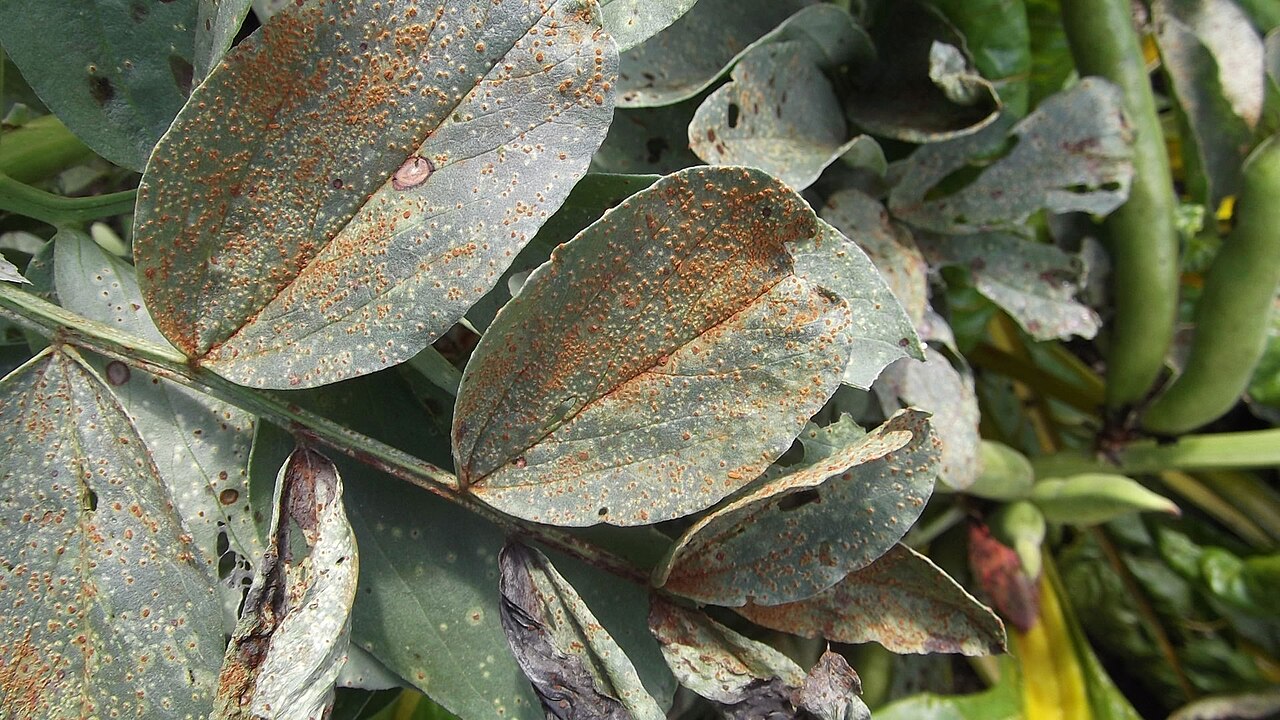
Συμπτώματα
Έντονα πορτοκαλοκαστανές ανάγλυφες φλύκταινες (ουρηδίνια) στην κάτω επιφάνεια των φύλλων + στους βλαστούς, κίτρινες χλωρωτικές άλω γύρω από τις φλύκταινες στην πάνω επιφάνεια του φύλλου, η σοβαρή προσβολή προκαλεί πρόωρη φυλλόπτωση, σκούρες φλύκταινες τελειοσπορίων σχηματίζονται αργά στην εποχή σε ιστό που νεκρώνεται.
Φυτά που προσβάλλονται
Συχνά συγχέεται με
- σοκολατί κηλίδωση κουκιάς
Πώς να τα ξεχωρίσετε: Η σοκολατί κηλίδωση (Botrytis fabae) ξεκινά ως μικρές κοκκινοκαφέ έως σοκολατί κηλίδες διάσπαρτες σε φύλλα, βλαστούς και λοβούς· οι κηλίδες παραμένουν επίπεδες και επιφανειακές και σε υγρό καιρό συνενώνονται σε μεγάλες σκούρες καστανές έως γκριζωπές πλάκες με γκρίζα μουχλιασμένη επίστρωση, νεκρώνοντας ολόκληρα φύλλα. Η σκωρίαση του κουκιού (Uromyces viciae-fabae) αντίθετα σχηματίζει ελαφρώς ανυψωμένες, σκονισμένες φλύκταινες: αρχικά κρεμώδεις-κίτρινες κηλίδες γίνονται σκωριόχρωμες κανελοκαφέ ουρεδίες κυρίως στην κάτω επιφάνεια του φύλλου, που σπάζουν και απελευθερώνουν σκονώδη σπόρια στο δάχτυλο, αργότερα γίνονται σκούρες καστανές έως μαύρες φλύκταινες τελειοσπορίων. Δοκιμή: τρίψτε την αλλοίωση — η σκωρίαση ξεφλουδίζει ως έγχρωμη σκόνη και είναι ανάγλυφη, ενώ η σοκολατί κηλίδα είναι επίπεδος ξηρός λεκές χωρίς σκόνη σπορίων (μόνο γκρίζα χνουδωτή μούχλα όταν σποριάζει).
Αντιμετώπιση
Ο Dr. Phyto δημιουργεί ένα χρονολογημένο, βήμα-προς-βήμα σχέδιο αντιμετώπισης με εγκεκριμένα στη χώρα προϊόντα — ξεκινήστε μια δωρεάν διάγνωση.
Συχνές ερωτήσεις
- Πώς αναγνωρίζω σκωρίαση κουκιάς σε κουκιά;
- Έντονα πορτοκαλοκαστανές ανάγλυφες φλύκταινες (ουρηδίνια) στην κάτω επιφάνεια των φύλλων + στους βλαστούς, κίτρινες χλωρωτικές άλω γύρω από τις φλύκταινες στην πάνω επιφάνεια του φύλλου, η σοβαρή προσβολή προκαλεί πρόωρη φυλλόπτωση, σκούρες φλύκταινες τελειοσπορίων σχηματίζονται αργά στην εποχή σε ιστό που νεκρώνεται.
- Πρέπει να δηλώσω σκωρίαση κουκιάς;
- Όχι. Το σκωρίαση κουκιάς δεν είναι δηλωτέο, οπότε δεν χρειάζεται να ενημερώσεις κάποια αρχή. Αντιμετώπισέ το σαν συνηθισμένο πρόβλημα κήπου.
- Πώς αντιμετωπίζεται το σκωρίαση κουκιάς;
- Κυρίως με βιολογικά και καλλιεργητικά μέτρα — απομάκρυνση του προσβεβλημένου υλικού, αλλαγή των συνθηκών που το ευνοούν και χρήση εγκεκριμένων στη χώρα σου σκευασμάτων. Τα ακριβή βήματα και ο χρόνος τους εξαρτώνται από το φυτό, την εποχή και τον τόπο: ο Dr. Phyto τα βρίσκει σε μια δωρεάν διάγνωση.
Πρώτη διάγνωση δωρεάν · χωρίς εγγραφή