Dr. Phyto
στεμφυλίωση αχλαδιάς
Stemphylium vesicarium
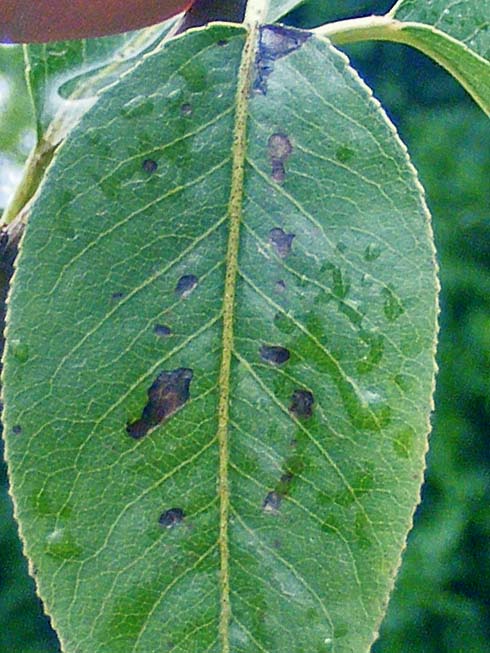
Συμπτώματα
Στρογγυλές κηλίδες 2–5 mm κοκκινοκαφέ χρώματος στα ανώτερα φύλλα, σκούρες βυθισμένες αλλοιώσεις στους αναπτυσσόμενους καρπούς γύρω από την περιοχή του κάλυκα και τα φακίδια, σήψη και πτώση των καρπών πριν τη συγκομιδή.
Φυτά που προσβάλλονται
Συχνά συγχέεται με
- περονόσπορος κρεμμυδιού
Πώς να τα ξεχωρίσετε: Το Stemphylium vesicarium (φυλλικό έγκαυμα Stemphylium) ξεκινά ως μικρές λευκωπές έως κίτρινες κηλίδες, συνήθως στην πλευρά του φύλλου που βλέπει στον άνεμο ή μετά από ζημιά από χαλάζι ή έντομα, που επιμηκύνονται σε καστανές, ατρακτοειδείς νεκρωτικές κηλίδες· σε υγρό καιρό γίνονται ελαιοκάστανες έως μαύρες και βελούδινες καθώς ο μύκητας σπορογονεί πυκνά, και η κορυφή του φύλλου ξεραίνεται. Το Peronospora destructor (περονόσπορος του κρεμμυδιού) δημιουργεί μακρύτερες, πιο ωχρές, ασαφείς κιτρινοπράσινες ωοειδείς κηλίδες με δυσδιάκριτα όρια· το διαγνωστικό του σημάδι είναι ένα χνουδωτό γκρι έως ιώδες-μωβ επίχρισμα στην επιφάνεια της κηλίδας, ορατό κυρίως στην πρωινή δροσιά ή ομίχλη· ολόκληρα φύλλα λυγίζουν, κιτρινίζουν και καταρρέουν από την κορυφή. Βασικός κανόνας: βελούδινο ΜΑΥΡΟ χνούδι σημαίνει Stemphylium, ενώ ΓΚΡΙ-ΙΩΔΕΣ χνούδι σημαίνει περονόσπορο. Επειδή το Stemphylium συχνά εποικίζει παλιές κηλίδες περονοσπόρου, εξετάστε το πιο φρέσκο εμπρόσθιο όριο της κηλίδας, όχι το νεκρό κέντρο, για να ταυτοποιήσετε το πρωτογενές παθογόνο.
- βοτρύτης κρεμμυδιού
Πώς να τα ξεχωρίσετε: Ο Botrytis squamosa (βοτρύτιδα του φύλλου, 'blast') εμφανίζει μικροσκοπικές (1-5 mm), λευκωπές έως ασημί, ωοειδείς έως επιμήκεις κηλίδες στα φύλλα, καθεμία συνήθως περιβαλλόμενη από μια ωχρή, υδαρή ή ανοιχτοπράσινη άλω, διάσπαρτες στο φύλλο· σε υγρό καιρό πολλές κηλίδες συνενώνονται, οι κορυφές των φύλλων ξεραίνονται και όλο το φύλλο καίγεται, αλλά σπάνια βλέπει κανείς σκούρα μούχλα εκτός αν ο ιστός είναι νεκρός. Αντίθετα, ο Stemphylium vesicarium (φυλλόκαυση από Stemphylium) παράγει βλάβες που γρήγορα γίνονται κίτρινες και μετά ανοιχτό έως σκούρο καφέ, επιμηκύνονται κατά μήκος του φύλλου και, πιο χαρακτηριστικά, αναπτύσσουν μια σκούρα ελαιοπράσινη έως σχεδόν μαύρη βελούδινη σποριοποίηση στο κέντρο των παλαιότερων βλαβών. Βασικό γνώρισμα στον αγρό: ο Stemphylium αποικίζει κατά προτίμηση ιστό ήδη εξασθενημένο ή νεκρό (συχνά καταλαμβάνει κηλίδες blast του Botrytis, ξερές κορυφές ή ζημιά από όζον), οπότε σκούρες σποριοποιούσες περιοχές πάνω σε ωχρές ασημί κηλίδες σημαίνουν συνήθως ότι ο Stemphylium ακολούθησε τον Botrytis. Οι κηλίδες του Botrytis παραμένουν ωχρές με άλω και δεν έχουν σκούρο χνουδωτό κέντρο.
- θρίπας του κρεμμυδιού
Πώς να τα ξεχωρίσετε: Το Stemphylium vesicarium (φυλλικός μώλωπας Stemphylium) ξεκινά ως μικρές ωχροκίτρινες έως μπεζ, υδαρείς ωοειδείς κηλίδες στα φύλλα του κρεμμυδιού, συχνά ξεκινώντας από την κορυφή του φύλλου ή στην πλευρά που βλέπει τον επικρατούντα άνεμο. Οι κηλίδες μεγαλώνουν στο διαγνωστικό επίμηκες σχήμα ρόμβου (φακού), γίνονται ανοιχτοκαφέ και μετά σκούρες ελαιοκαφέ καθώς ο μύκητας σπορογονεί, και η κορυφή του φύλλου ξεραίνεται και καταρρέει. Αναζητήστε ένα βελούδινο σκούρο χνούδι σπορίων στο κέντρο της κηλίδας σε συνθήκες υγρασίας· οι κηλίδες παραμένουν στη θέση τους και δεν ακολουθούν κίνηση εντόμου. Ο Thrips tabaci (θρίπας του κρεμμυδιού) αντίθετα δημιουργεί ασημί-λευκές έως λευκωπές κηλίδες στιγμάτων, συγκεντρωμένες στις προστατευμένες μασχάλες των φύλλων και στα εσωτερικά νεαρότερα φύλλα, χωρίς καθορισμένο σχήμα ρόμβου. Το ασήμωμα είναι μια μεμβράνη από άδεια, γεμάτα αέρα κύτταρα μυζήματος, και θα βρείτε μικροσκοπικά (1-1,5 mm) λεπτά κιτρινοκαφέ έντομα και σκούρα, βερνικωτά περιττώματα ανάμεσα στις ουλές, κάτι που μια μυκητολογική κηλίδα ποτέ δεν έχει.
- φουζικλαδιάση αχλαδιάς
Πώς να τα ξεχωρίσετε: Το Stemphylium vesicarium (καστανή κηλίδωση της αχλαδιάς) δημιουργεί μικρές, στρογγυλές κοκκινοκάστανες έως σοκολατί κηλίδες στα φύλλα, συχνά με ανοιχτότερο κέντρο και διάχυτη κίτρινη άλω· στους καρπούς δίνει επίπεδες έως ελαφρώς βυθισμένες σκουρόχρωμες αλλοιώσεις χωρίς χνούδι, και εξαπλώνεται γρήγορα με ζεστό υγρό καλοκαιρινό καιρό και από τα πεσμένα φύλλα. Το Venturia pirina (φουζικλάδιο της αχλαδιάς) παράγει κηλίδες που ξεκινούν ελαιοπράσινες και φαίνονται βελούδινες ή μουτζουρωμένες λόγω της σκούρας καπνώδους σποριοποίησης στην επιφάνεια, με ασαφή πτεροειδή όρια· στους καρπούς οι κηλίδες γίνονται μαύρες, τραχιές, φελλώδεις και σχίζονται καθώς ο καρπός μεγαλώνει. Το αποφασιστικό σημάδι είναι η βελούδινη ελαιοκαστανή σποριοποίηση και το φελλώδες σχίσιμο του φουζικλάδιου σε αντίθεση με τις ξηρές, καθαρές κοκκινοκάστανες κηλίδες της καστανής κηλίδωσης.
- εντομοσπορίωση των φύλλων της μουσμουλιάς
Πώς να τα ξεχωρίσετε: Στα φύλλα κυδωνιάς και αχλαδιάς το Diplocarpon mespili (κηλίδωση Entomosporium) προκαλεί πολλές μικρές, κυκλικές κόκκινες έως κοκκινοκαστανές κηλίδες, καθεμία συνήθως με ελαφρώς σκουρότερο ή γκριζο-μωβ κέντρο. Το διαγνωστικό στοιχείο είναι ένα μικροσκοπικό σκούρο, ανυψωμένο καρποφόρο σωμάτιο (ακέρβουλος) στο κέντρο των ώριμων κηλίδων — με μεγεθυντικό φακό μοιάζει με μικροσκοπική μαύρη κουκκίδα ή κηλίδα σε σχήμα εντόμου. Οι κηλίδες παραμένουν σχεδόν στρογγυλές, εξαπλώνονται πυκνά σε όλο το έλασμα και συνενώνονται σε έντονη προσβολή, προκαλώντας κιτρίνισμα και πρόωρη φυλλόπτωση. Η ασθένεια ευνοείται από δροσερές, υγρές ανοιξιάτικες συνθήκες με εκτόξευση νερού στο νεαρό φύλλωμα. Το Stemphylium vesicarium (καστανή κηλίδωση) σε κυδωνιά και αχλαδιά ξεκινά ως μικρές κοκκινοκαστανές έως σκούρες νεκρωτικές στίξεις που μεγαλώνουν σε ακανόνιστες καστανές βλάβες, συχνά με ανοιχτότερο μπεζ κέντρο και διάχυτη κοκκινωπή ή μωβ άλω γύρω από το όριο. Σε αντίθεση με το Entomosporium, λείπει το ευδιάκριτο κεντρικό μαύρο καρποφόρο σωμάτιο· η νέκρωση φαίνεται πιο διάχυτη και υδαρής, και οι βλάβες συγκεντρώνονται συχνά κοντά στα όρια και τις άκρες των φύλλων. Στον καρπό σχηματίζει σκούρα, βυθισμένη κυκλική σήψη. Ευνοείται από θερμό, υγρό καλοκαιρινό καιρό και σχετίζεται με νεκρά φυτικά υπολείμματα (π.χ. γηρασμένα φύλλα ή ζιζάνια κοντά) ως πηγή μόλυνσης.
Αντιμετώπιση
Ο Dr. Phyto δημιουργεί ένα χρονολογημένο, βήμα-προς-βήμα σχέδιο αντιμετώπισης με εγκεκριμένα στη χώρα προϊόντα — ξεκινήστε μια δωρεάν διάγνωση.
Συχνές ερωτήσεις
- Πώς αναγνωρίζω στεμφυλίωση αχλαδιάς σε αχλάδι;
- Στρογγυλές κηλίδες 2–5 mm κοκκινοκαφέ χρώματος στα ανώτερα φύλλα, σκούρες βυθισμένες αλλοιώσεις στους αναπτυσσόμενους καρπούς γύρω από την περιοχή του κάλυκα και τα φακίδια, σήψη και πτώση των καρπών πριν τη συγκομιδή.
- Πρέπει να δηλώσω στεμφυλίωση αχλαδιάς;
- Όχι. Το στεμφυλίωση αχλαδιάς δεν είναι δηλωτέο, οπότε δεν χρειάζεται να ενημερώσεις κάποια αρχή. Αντιμετώπισέ το σαν συνηθισμένο πρόβλημα κήπου.
- Πώς αντιμετωπίζεται το στεμφυλίωση αχλαδιάς;
- Κυρίως με βιολογικά και καλλιεργητικά μέτρα — απομάκρυνση του προσβεβλημένου υλικού, αλλαγή των συνθηκών που το ευνοούν και χρήση εγκεκριμένων στη χώρα σου σκευασμάτων. Τα ακριβή βήματα και ο χρόνος τους εξαρτώνται από το φυτό, την εποχή και τον τόπο: ο Dr. Phyto τα βρίσκει σε μια δωρεάν διάγνωση.
Πρώτη διάγνωση δωρεάν · χωρίς εγγραφή