Dr. Phyto
verme militare (Spodoptera frugiperda)
Spodoptera frugiperda
⚠ Organismo da quarantena soggetto a notifica UE
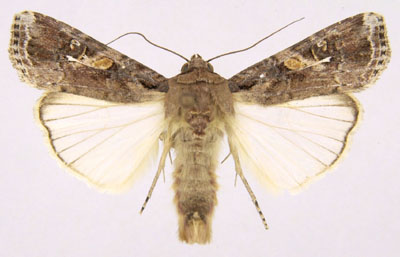
Sintomi
Le larve giovani scheletrizzano le foglie e fanno "finestrelle"; quelle più grandi rodono fori irregolari e penetrano nel verticillo, nel pennacchio e nelle spighe del mais, lasciando abbondante rosura umida; la larva ha una "Y" rovesciata chiara sul capo e quattro punti scuri a quadrato sul penultimo segmento.
Piante colpite
Facilmente confuso con
- falsa carpocapsa
Come distinguerli: Entrambi penetrano nei frutti del peperone (Capsicum annuum), ma le larve e il tipo di danno differiscono. Spodoptera frugiperda (verme militare autunnale) si nutre soprattutto di foglie e apici vegetativi: cercate rosure lacerate a finestra e grandi fori irregolari nelle foglie, con masse umide di escrementi simili a segatura nel verticillo fogliare e sul fogliame; il bruco è liscio, fino a ~40 mm, da verdastro a bruno con una Y rovesciata chiara sul capo e quattro punti neri disposti a quadrato sul penultimo segmento. Thaumatotibia leucotreta (falsa carpocapsa) è un perforatore esclusivo del frutto: cercate un singolo piccolo foro d'ingresso (1-2 mm) sulla superficie del frutto, circondato da un alone infossato e spesso scolorito dal giallo al violaceo, con escrementi appiccicosi estrusi dal foro e maturazione precoce e marciume all'interno; la sua larva è corta (~15 mm), rosso-rosata con capo scuro e vive nascosta dentro il frutto. Se il danno è soprattutto su foglie e verticillo, sospettate il verme militare autunnale; se il frutto mostra un alone scolorito attorno a un foro tappato di escrementi e una larva rosa all'interno, sospettate la falsa carpocapsa. ENTRAMBI sono organismi da quarantena soggetti a notifica nell'UE — segnalate immediatamente qualsiasi sospetto al vostro organismo nazionale di protezione delle piante (NPPO).
- nottua del cotone
Come distinguerli: Lafride autunnale (Spodoptera frugiperda): cercate nel cornetto del mais una larva con una sutura chiara a forma di Y rovesciata sulla capsula cefalica scura e quattro grandi punti neri disposti a quadrato sul penultimo (ottavo) segmento addominale; lattacco lascia fori sfrangiati e allungati e abbondanti escrementi umidi simili a segatura ammassati in profondità nel cornetto. È un organismo da quarantena dellUE non insediato nellUE. Nottua del cotone (Helicoverpa armigera): la larva ha colore molto variabile (verde, rosa, marrone fino a quasi nero) con strisce longitudinali chiare e scure alternate e capo liscio privo della Y bianca rovesciata; minuscole microspine scure danno alla pelle una sensazione ruvida simile a carta vetrata, e preferisce penetrare direttamente nelle sete e nella punta della spiga anziché lacerare le foglie del cornetto. Se trovate il capo con la Y rovesciata e i quattro punti neri a quadrato, trattatela come lafride autunnale e segnalatela allorganizzazione nazionale per la protezione delle piante (NPPO).
- piralide del mais
Come distinguerli: Le larve della nottua dell'esercito autunnale (lafarda) (Spodoptera frugiperda) si annidano in profondità nel cono fogliare del mais, sono di colore bruno-verdastro o grigio con tre sottili strisce chiare e mostrano una 'Y' rovesciata chiara sulla capsula cefalica scura, oltre a quattro punti neri disposti a quadrato sul penultimo segmento. La loro alimentazione nel cono produce grandi fori sfrangiati e abbondanti escrementi umidi simili a segatura ammassati nell'imbuto. Le larve della piralide del mais (Ostrinia nubilalis) sono di colore grigio-rosa spento o crema con capo bruno scuro e una fila di piccole macchie scure rotonde su ciascun lato del corpo — senza Y rovesciata e senza il quadrato di quattro punti. Le larve più mature scavano gallerie nel fusto e nel peduncolo della spiga lasciando fori rotondi ed escrementi secchi e friabili all'ingresso, mentre la nottua dell'esercito autunnale rimane più a lungo un divoratore superficiale del cono. La nottua dell'esercito autunnale è un organismo da quarantena dell'UE soggetto a notifica obbligatoria (Reg. 2019/2072) — se la sospetti, non trattare alla cieca: fotografa la larva e segnalala immediatamente all'organizzazione nazionale per la protezione delle piante (NPPO).
Trattamento
Dr. Phyto crea un piano di trattamento datato e passo-passo con prodotti approvati nel tuo paese — avvia una diagnosi gratuita per ottenere il tuo.
Domande frequenti
- Come riconosco verme militare (Spodoptera frugiperda) su Gramigna?
- Le larve giovani scheletrizzano le foglie e fanno "finestrelle"; quelle più grandi rodono fori irregolari e penetrano nel verticillo, nel pennacchio e nelle spighe del mais, lasciando abbondante rosura umida; la larva ha una "Y" rovesciata chiara sul capo e quattro punti scuri a quadrato sul penultimo segmento.
- Devo segnalare verme militare (Spodoptera frugiperda)?
- Sì. verme militare (Spodoptera frugiperda) è un organismo da quarantena regolamentato nell'UE. Un sospetto va segnalato al servizio fitosanitario nazionale — lo confermerà e ti dirà come procedere.
- Come si tratta verme militare (Spodoptera frugiperda)?
- Soprattutto con misure biologiche e colturali — rimuovere il materiale colpito, cambiare le condizioni che lo favoriscono e intervenire con prodotti autorizzati nel tuo Paese. I passaggi esatti e i tempi dipendono dalla pianta, dalla stagione e da dove vivi: Dr. Phyto li calcola in una diagnosi gratuita.
Prima diagnosi gratuita · nessuna registrazione