Dr. Phyto
ωίδιο της τριανταφυλλιάς
Podosphaera pannosa
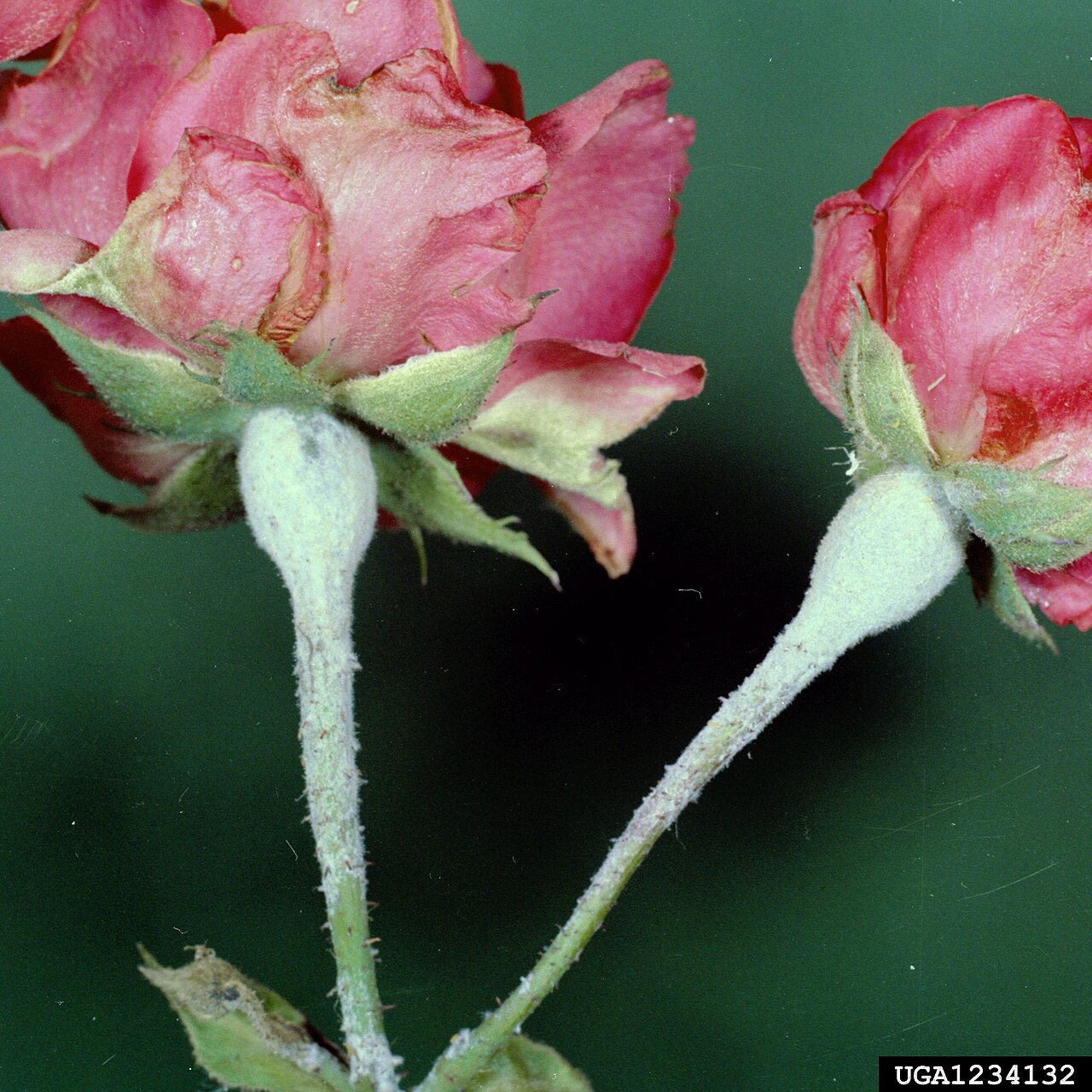
Συμπτώματα
Λευκή αλευρώδης επικάλυψη στη νέα βλάστηση, παραμορφωμένοι οφθαλμοί.
Φυτά που προσβάλλονται
Συχνά συγχέεται με
- μαύρη κηλίδωση της τριανταφυλλιάς
Πώς να τα ξεχωρίσετε: Μαύρη κηλίδωση των τριανταφυλλιών (Diplocarpon rosae): μαύρες κηλίδες με φτερωτές, κροσσωτές παρυφές στην επάνω επιφάνεια του φύλλου, με περιβάλλον κιτρίνισμα και πρόωρη φυλλόπτωση, χειρότερη σε υγρά καλοκαίρια. Ωίδιο των τριανταφυλλιών (Podosphaera pannosa): λευκή σκονισμένη επικάλυψη σε νεαρά φύλλα, οφθαλμούς και κορυφές βλαστών που τα παραμορφώνει και τα κατσαρώνει, χειρότερη σε ξηρό καιρό με δροσερές νύχτες.
- τεφρά σήψη (Botrytis)
Πώς να τα ξεχωρίσετε: Ο Botrytis cinerea (τεφρά σήψη/γκρι μούχλα) στις τριανταφυλλιές εμφανίζεται ως χνουδωτή, γκριζοκαφέ, τσόχινη επικάλυψη σε μπουμπούκια, πέταλα και άνθη που μαραίνονται, συχνά με μαλακή, υδαρή καστανή σήψη· τα προσβεβλημένα μπουμπούκια δεν ανοίγουν και γίνονται γλοιώδης πολτός σε δροσερό, υγρό, στάσιμο αέρα. Αντίθετα, ο Podosphaera pannosa (ωίδιο/περονόσπορος της τριανταφυλλιάς) σχηματίζει ξηρή, αλευρώδη λευκή έως ελαφρώς γκρι, σκονισμένη επικάλυψη σε νεαρούς βλαστούς, επιφάνειες φύλλων και ανθικά μπουμπούκια, με κατσαρωμένη, παραμορφωμένη και κοκκινωπή νέα βλάστηση· ευνοείται από ζεστές ημέρες με υγρές νύχτες αλλά στεγνή επιφάνεια φύλλων. Κλειδί: η γκρι μούχλα είναι χνουδωτή, γκρι και υγρή/σάπια, ενώ το ωίδιο είναι λευκό, ξηρό, σκονισμένο και σκουπίζεται από την επιφάνεια.
Αντιμετώπιση
Ο Dr. Phyto δημιουργεί ένα χρονολογημένο, βήμα-προς-βήμα σχέδιο αντιμετώπισης με εγκεκριμένα στη χώρα προϊόντα — ξεκινήστε μια δωρεάν διάγνωση.
Συχνές ερωτήσεις
- Πώς αναγνωρίζω ωίδιο της τριανταφυλλιάς σε τριαντάφυλλο;
- Λευκή αλευρώδης επικάλυψη στη νέα βλάστηση, παραμορφωμένοι οφθαλμοί.
- Πρέπει να δηλώσω ωίδιο της τριανταφυλλιάς;
- Όχι. Το ωίδιο της τριανταφυλλιάς δεν είναι δηλωτέο, οπότε δεν χρειάζεται να ενημερώσεις κάποια αρχή. Αντιμετώπισέ το σαν συνηθισμένο πρόβλημα κήπου.
- Πώς αντιμετωπίζεται το ωίδιο της τριανταφυλλιάς;
- Κυρίως με βιολογικά και καλλιεργητικά μέτρα — απομάκρυνση του προσβεβλημένου υλικού, αλλαγή των συνθηκών που το ευνοούν και χρήση εγκεκριμένων στη χώρα σου σκευασμάτων. Τα ακριβή βήματα και ο χρόνος τους εξαρτώνται από το φυτό, την εποχή και τον τόπο: ο Dr. Phyto τα βρίσκει σε μια δωρεάν διάγνωση.
Πρώτη διάγνωση δωρεάν · χωρίς εγγραφή