Dr. Phyto
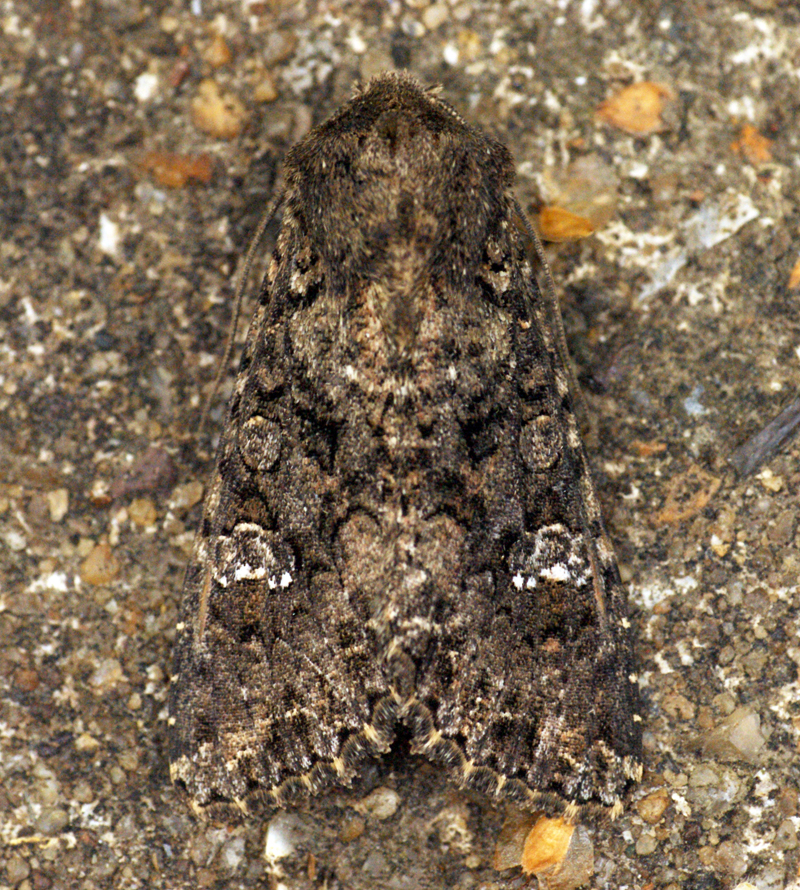
cabbage moth
Mamestra brassicae
Symptoms
Brown-green caterpillars 40mm long with pale lateral stripe, deep tunnels into cabbage / cauliflower hearts, dark frass deposits inside head.
Plants affected
Easily confused with
- large white butterfly
How to tell them apart: Pieris brassicae (Large White) larvae are gregarious and feed in clusters on the OUTER leaves: they are yellow-green with conspicuous black blotches/spots, three yellow longitudinal stripes (one mid-dorsal, two lateral), and a covering of short white-grey hairs. Damage is open skeletonisation and ragged holes on exposed foliage, with dry granular green frass on top of the leaves. Mamestra brassicae (Cabbage Moth) larvae are smooth and HAIRLESS, green when young turning greyish-brown with a faint pale lateral line and a slightly humped rear segment; they bore DOWN INTO the heart of the head, tunnelling out of sight. Look for wet, sticky greenish-brown frass packed deep in the cabbage heart and internal galleries rather than surface feeding.
- diamondback moth
How to tell them apart: Plutella xylostella (diamondback moth) larvae are small (up to ~12 mm), slender, bright pale-green caterpillars that taper to a point at both ends and wriggle violently, often dropping on a fine silk thread when the leaf is touched. They feed only on the surface of outer leaves, leaving the upper epidermis intact so the damage shows as pale 'windowpanes' and small shot-holes, never reaching the head. Mamestra brassicae (cabbage moth) larvae become large (up to ~40 mm), fat and smooth, ranging from green through brown to almost black with a faint pale line along the side, and do not drop on silk. Their key sign is that after early surface grazing they tunnel deep into the centre/heart of the cabbage, packing the cavity with wet greenish-brown frass that rots and smells.
Treatment
Dr. Phyto builds a dated, step-by-step treatment plan with country-approved products — start a free diagnosis to get yours.
Common questions
- How do I recognise cabbage moth on cabbage / broccoli / cauliflower / Brussels sprouts?
- Brown-green caterpillars 40mm long with pale lateral stripe, deep tunnels into cabbage / cauliflower hearts, dark frass deposits inside head.
- Do I have to report cabbage moth?
- No. cabbage moth is not a notifiable organism, so there is nothing to report to an authority. Treat it as a normal garden problem.
- How is cabbage moth treated?
- Mainly with biological and cultural measures — removing affected material, changing the conditions that favour it, and treating with agents approved in your country. The exact steps and their timing depend on the plant, the season and where you live: Dr. Phyto works them out in a free diagnosis.
Free first diagnosis · no sign-up to start