Dr. Phyto
Ωίδιο της βερβερίδας
Erysiphe berberidis
Συμπτώματα
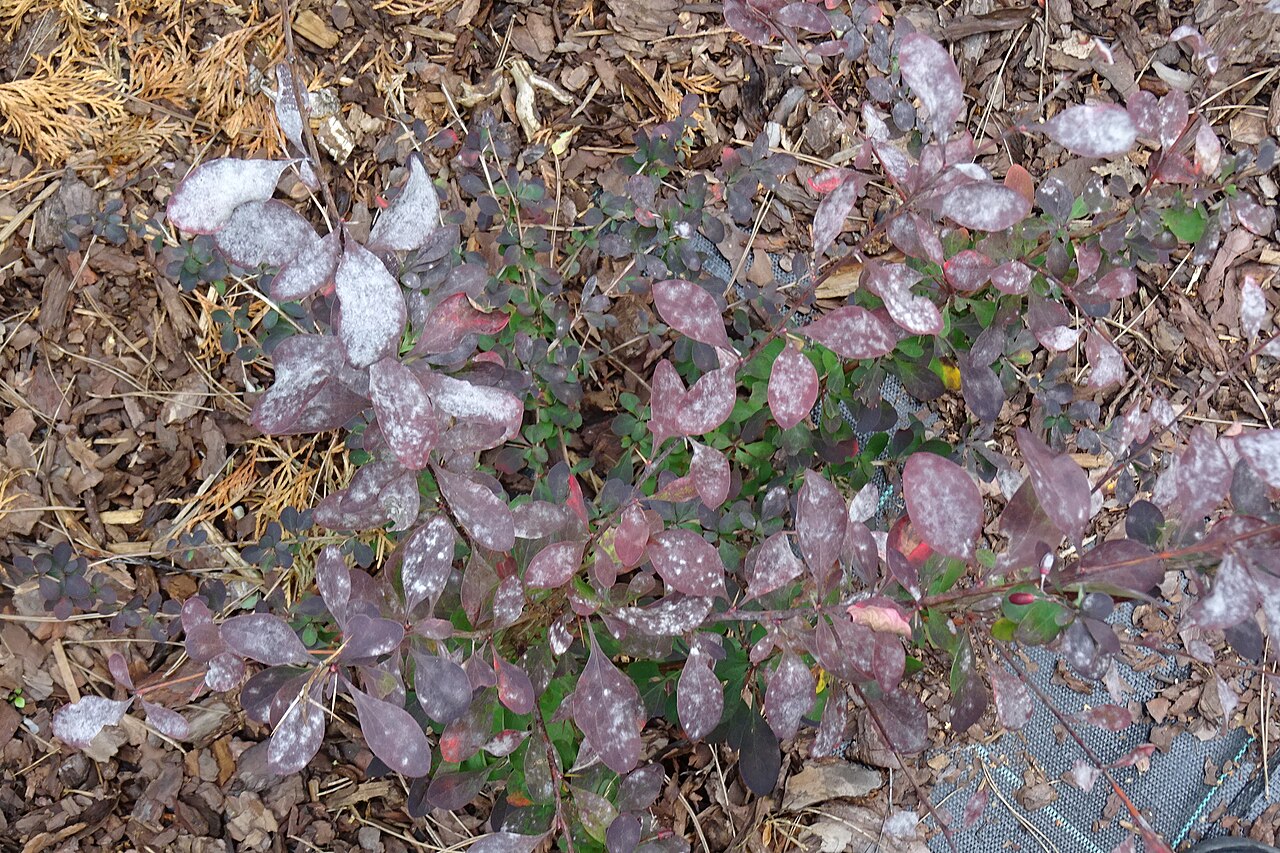
Στην πάνω και κάτω επιφάνεια των φύλλων, καθώς και στις τρυφερές κορυφές των βλαστών και στα πράσινα στελέχη της Berberis thunbergii αναπτύσσεται μια λεπτή λευκή έως γκριζωπή αλευρώδης επικάλυψη. Η προσβεβλημένη νέα βλάστηση μένει καχεκτική, ζαρώνει ή στρεβλώνεται· τα σοβαρά προσβεβλημένα φύλλα κιτρινίζουν, καστανιάζουν και πέφτουν πρόωρα, αφήνοντας λεπτούς, παραμορφωμένους βλαστούς. Η αλευρώδης επίπαση αφαιρείται εύκολα με το δάχτυλο, κάτι που τη διακρίνει από σκόνη ή υπολείμματα ψεκασμού, ενώ αργά μέσα στην εποχή μικροσκοπικά μαύρα καρποσώματα στο μέγεθος κεφαλής καρφίτσας (χασμοθήκια) μπορεί να στικτώσουν τις λευκές επικαλύψεις. Στις ποικιλίες με πορφυρά φύλλα το ασημόλευκο στρώμα ξεχωρίζει ιδιαίτερα πάνω στο σκούρο φύλλωμα.
Φυτά που προσβάλλονται
Αντιμετώπιση
Ο Dr. Phyto δημιουργεί ένα χρονολογημένο, βήμα-προς-βήμα σχέδιο αντιμετώπισης με εγκεκριμένα στη χώρα προϊόντα — ξεκινήστε μια δωρεάν διάγνωση.
Συχνές ερωτήσεις
- Πώς αναγνωρίζω Ωίδιο της βερβερίδας σε βερβερίδα Thunberg;
- Στην πάνω και κάτω επιφάνεια των φύλλων, καθώς και στις τρυφερές κορυφές των βλαστών και στα πράσινα στελέχη της Berberis thunbergii αναπτύσσεται μια λεπτή λευκή έως γκριζωπή αλευρώδης επικάλυψη. Η προσβεβλημένη νέα βλάστηση μένει καχεκτική, ζαρώνει ή στρεβλώνεται· τα σοβαρά προσβεβλημένα φύλλα κιτρινίζουν, καστανιάζουν και πέφτουν πρόωρα, αφήνοντας λεπτούς, παραμορφωμένους βλαστούς.
- Πρέπει να δηλώσω Ωίδιο της βερβερίδας;
- Όχι. Το Ωίδιο της βερβερίδας δεν είναι δηλωτέο, οπότε δεν χρειάζεται να ενημερώσεις κάποια αρχή. Αντιμετώπισέ το σαν συνηθισμένο πρόβλημα κήπου.
- Πώς αντιμετωπίζεται το Ωίδιο της βερβερίδας;
- Κυρίως με βιολογικά και καλλιεργητικά μέτρα — απομάκρυνση του προσβεβλημένου υλικού, αλλαγή των συνθηκών που το ευνοούν και χρήση εγκεκριμένων στη χώρα σου σκευασμάτων. Τα ακριβή βήματα και ο χρόνος τους εξαρτώνται από το φυτό, την εποχή και τον τόπο: ο Dr. Phyto τα βρίσκει σε μια δωρεάν διάγνωση.
Πρώτη διάγνωση δωρεάν · χωρίς εγγραφή