Dr. Phyto
Rothalsbock (Aromia bungii)
Aromia bungii
⚠ EU-meldepflichtiger Quarantäne-Organismus
Symptome
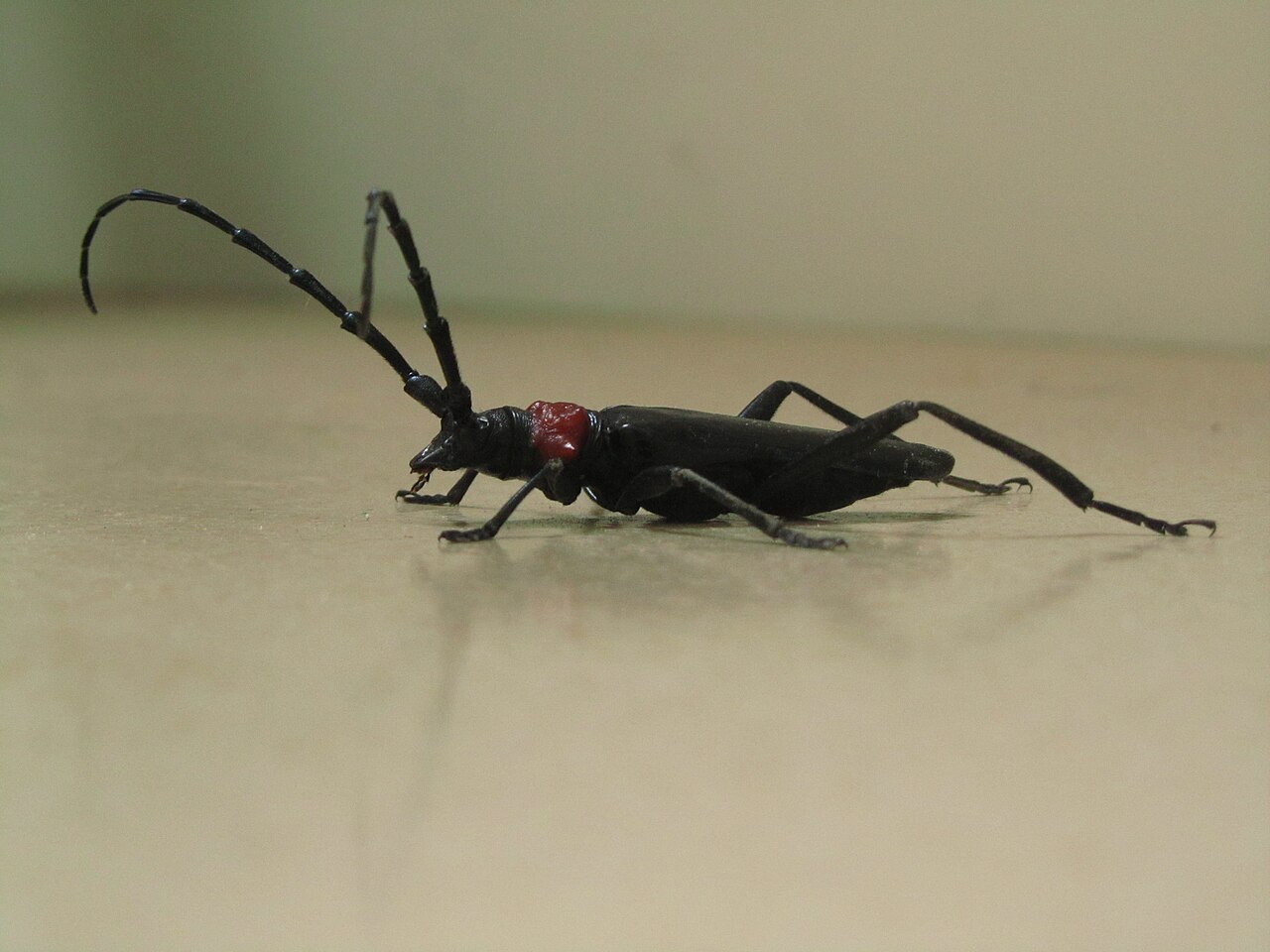
Großer schwarzer Bockkäfer mit leuchtend rot-orangem Fleck am Halsschild und sehr langen Fühlern; die Larven bohren lange Gänge in Stamm und Hauptäste von Steinobst (Pfirsich, Kirsche, Pflaume, Aprikose) und drücken grobes faseriges Bohrmehl aus Rissen an der Basis; Äste welken, der Baum geht zurück und kann umgürtet und getötet werden.
Betroffene Pflanzen
Leicht verwechselt mit
- Bakterienbrand der Süßkirsche
So unterscheidet man sie: Aromia bungii (Rothalsbock-Bockkäfer) ist ein Holzbohrer: Achten Sie auf runde bis ovale Ausfluglöcher (etwa 6-10 mm) tief am Stamm und an den Gerüstästen, grobes faseriges rötliches Bohrmehl (zerkautes Holz und Sägespäne) in Rindenrissen oder am Stammfuß aufgehäuft, sowie Gummi vermischt mit diesem Bohrmehl. Die Käfer sind auffällig - glänzend schwarz mit leuchtend rotem Halsschild (Nacken). Der Schaden ist auf Fraßgänge im Holz beschränkt und ganze Äste welken im Sommer plötzlich oberhalb des durchbohrten Abschnitts. Pseudomonas syringae pv. morsprunorum (Bakterienbrand) ist ein Erreger: Achten Sie auf eingesunkene, dunkle, flache Rindenkrebse an Ästen und Stamm, oft mit klarem bernsteinfarbenem Gummifluss am Krebsrand (Gummi OHNE Sägemehl oder Bohrmehl), im Frühjahr 'Schrotschuss'-Blattflecken sowie Blüten- und Triebsterben. Die Krebse breiten sich besonders bei kühlem, feuchtem Herbst-/Frühjahrswetter aus, und es gibt keine Ausfluglöcher oder faseriges Bohrmehl.
- Hallimasch (Armillaria-Wurzelfäule)
So unterscheidet man sie: Aromia bungii (Rothalsbock) verrät sich durch faseriges, sägemehlartiges Bohrmehl und grobe Holzspäne, die aus Rindenrissen tief am Stamm und an den Hauptästen herausquellen, durch ovale bis runde Ausbohrlöcher (etwa 6-10 mm) und durch die glänzend schwarzen Käfer mit leuchtend orangerotem 'Halsschild' (Pronotum). Der Schaden ist Larvenfraß unter der Rinde, daher vertrocknen welkende Äste, während das Holz darunter mit kotgefüllten Gängen durchzogen ist. Armillaria mellea (Hallimasch) zeigt dagegen cremeweiße, fächerförmige Myzelhäute zwischen Rinde und Holz am Wurzelhals, schwarze schnürsenkelartige Rhizomorphen im Boden und an den Wurzeln sowie honigfarbene Pilzhüte, die im Herbst büschelig am Stammfuß stehen. Bei Armillaria ist die Rinde am Wurzelhals eingesunken und faulig, und es fehlen Insekten-Ausbohrlöcher und Sägemehl. HINWEIS: Aromia bungii ist ein prioritärer EU-Quarantäneschädling — wenn Sie den orange-halsigen Käfer, ovale Ausbohrlöcher oder Holzspan-Bohrmehl sehen, melden Sie dies sofort Ihrer nationalen Pflanzenschutzbehörde (NPPO).
- Europäische Spitzendürre
So unterscheidet man sie: Aromia bungii (Rothalsbock / Rotnacken-Bockkäfer) ist ein holzbohrender Quarantänekäfer: Achten Sie am STAMM und an dicken Gerüstästen auf runde bis ovale Ausbohrlöcher (~6-10 mm), Häufchen aus grobem, hellem Bohrmehl am Stammfuß und in Rindenrissen sowie Gummifluss direkt aus den Bohrgängen im alten Holz. Monilinia laxa (Spitzendürre / Blütenmonilia) ist ein Pilz: er tötet BLÜTEN und junge Triebe ab, hinterlässt eingesunkene Triebkrebse mit Gummitröpfchen am Krebsrand und graubraune, mehlige Sporenpolster auf befallenen Blüten und Trieben nach feuchtem, kühlem Frühjahrswetter. Entscheidend: sichtbare Bohrlöcher mit trockenem Bohrmehl bedeuten den Käfer; graues Pilz-Sporenlager auf abgestorbenen Blüten und dünnen Trieben ohne Löcher bedeutet Monilia. Aromia bungii ist ein EU-Quarantäneorganismus (VO 2019/2072 Anhang II) — bei Ausbohrlöchern und Bohrmehl sofort dem nationalen Pflanzenschutzdienst (NPPO) melden und das Holz nicht selbst transportieren oder verbrennen.
Behandlung
Dr. Phyto erstellt einen datierten, schrittweisen Behandlungsplan mit im Land zugelassenen Mitteln — starte eine kostenlose Diagnose, um deinen zu erhalten.
Häufige Fragen
- Wie erkenne ich Rothalsbock (Aromia bungii) an Pfirsich?
- Großer schwarzer Bockkäfer mit leuchtend rot-orangem Fleck am Halsschild und sehr langen Fühlern; die Larven bohren lange Gänge in Stamm und Hauptäste von Steinobst (Pfirsich, Kirsche, Pflaume, Aprikose) und drücken grobes faseriges Bohrmehl aus Rissen an der Basis; Äste welken, der Baum geht zurück und kann umgürtet und getötet werden.
- Muss ich Rothalsbock (Aromia bungii) melden?
- Ja. Rothalsbock (Aromia bungii) ist in der EU ein geregelter Quarantäneschädling. Ein Verdacht muss beim Pflanzenschutzdienst gemeldet werden — der bestätigt ihn und sagt dir, was zu tun ist.
- Wie wird Rothalsbock (Aromia bungii) behandelt?
- Vor allem mit biologischen und pflegerischen Maßnahmen — befallenes Material entfernen, die begünstigenden Bedingungen ändern und mit in deinem Land zugelassenen Mitteln behandeln. Die genauen Schritte und ihr Zeitpunkt hängen von Pflanze, Jahreszeit und Wohnort ab: Dr. Phyto ermittelt sie in einer kostenlosen Diagnose.
Erste Diagnose gratis · keine Anmeldung nötig