Dr. Phyto
mouche noire des agrumes
Aleurocanthus woglumi
⚠ Organisme de quarantaine à déclaration obligatoire dans l'UE
Symptômes
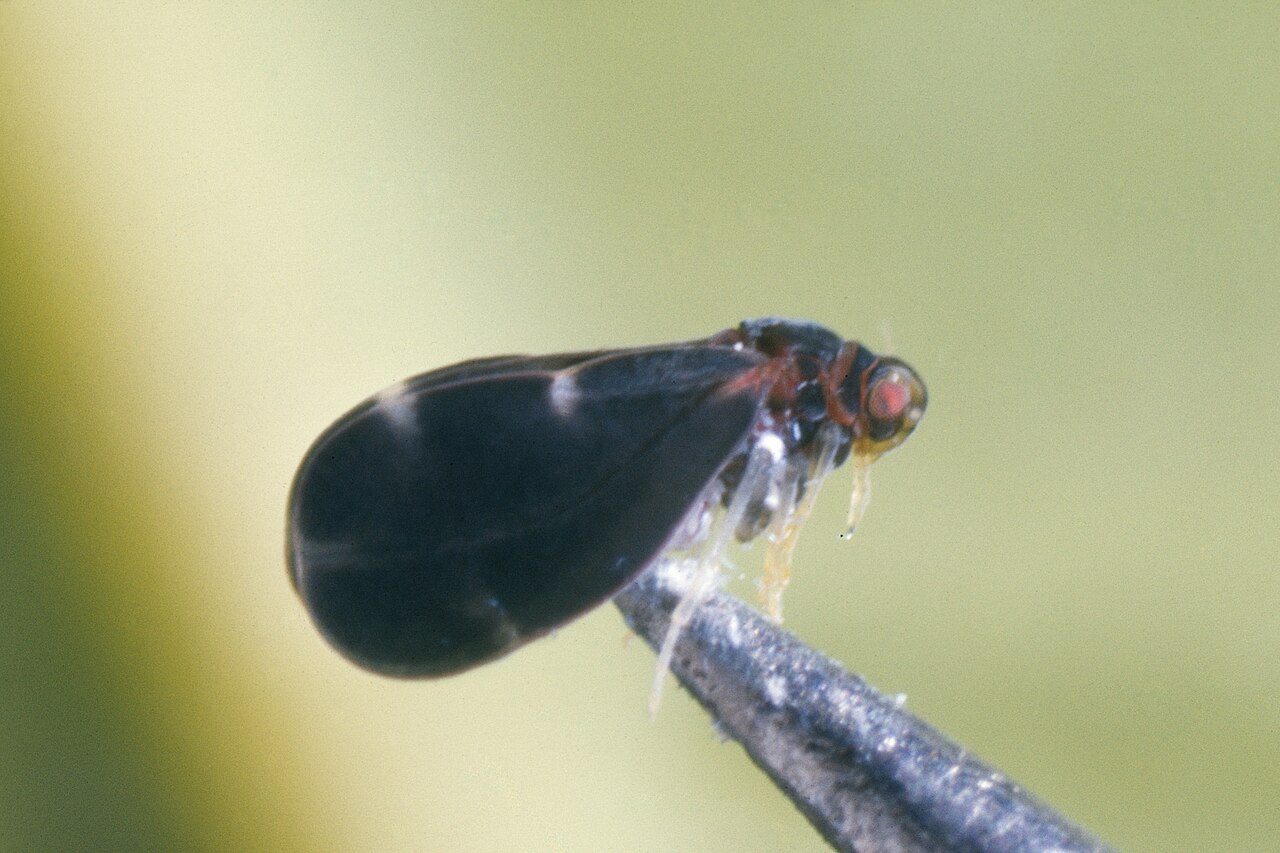
Boucliers noirs en forme de pantoufle (le stade nymphal — très caractéristique) sur la face inférieure des feuilles d'agrumes, abondant miellat et fumagine noire sur les feuilles, les fruits et le sol sous les arbres, jaunissement et chute précoce des feuilles, dépérissement des rameaux en cas de forte infestation, dépréciation des fruits due aux dégâts esthétiques.
Plantes touchées
Souvent confondu avec
- cochenille brune molle
Comment les distinguer: L'aleurode noir des agrumes (Aleurocanthus woglumi) se présente comme des amas de nymphes ovales d'un noir profond, couvertes de soies rigides et épineuses, serrées en motifs circulaires ou en spirale réguliers sur la FACE INFÉRIEURE des feuilles, souvent bordées d'une frange de filaments cireux blancs autour de chaque nymphe. La cochenille brune molle (Coccus hesperidum) montre au contraire des boucliers plats, lisses et ovales, de couleur jaune-brun translucide à brun clair (jamais épineux, jamais noir profond), dispersés irrégulièrement le long des nervures centrales des feuilles et des tiges. Les deux sécrètent du miellat et développent une fumagine noire, mais les colonies noires épineuses et cuirassées de l'aleurode contrastent nettement avec les cochenilles lisses, plates et ambrées. Si vous voyez les colonies denses de nymphes noires épineuses, considérez-les comme une suspicion d'aleurode noir des agrumes — un organisme de quarantaine de l'UE à déclaration obligatoire — et signalez-la à votre organisation nationale de protection des végétaux (ONPV/NPPO) avant tout traitement.
- psylle asiatique des agrumes (vecteur du HLB)
Comment les distinguer: Aleurode noir des agrumes (un aleurode/mouche blanche). Sur la FACE INFÉRIEURE DE LA FEUILLE, on observe des colonies denses et aplaties de stades immatures noir de jais, ovales et fortement épineux, disposés selon un motif caractéristique en spirale ou en peigne, souvent bordés d'une frange de filaments cireux blancs. Les adultes sont gris ardoise à noirs, avec des yeux rougeâtres et un léger voile cireux sur les ailes, et se posent à plat sur la feuille. Le miellat est abondant et la feuille se couvre d'une épaisse fumagine noire. C'est un organisme de quarantaine de l'UE (Annexe II, Règl. 2019/2072) — en cas de suspicion, signalez-le à votre organisation nationale de protection des végétaux (ONPV/NPPO). Psylle asiatique des agrumes. Sur les JEUNES POUSSES et les rameaux tendres : les adultes sont petits, bruns mouchetés et se tiennent le corps incliné fortement tête en bas selon un angle de 30 à 45 degrés, sautant lorsqu'on les dérange. Les nymphes sont aplaties, jaune-orange et sécrètent de caractéristiques TUBULES CIREUX blancs et enroulés de miellat (et non un disque plat et épineux). L'infestation tord et gondole les jeunes feuilles. C'est un organisme de quarantaine de l'UE et le vecteur du verdissement des agrumes (Huanglongbing) — en cas de suspicion, signalez-le à votre organisation nationale de protection des végétaux (ONPV/NPPO).
Traitement
Dr. Phyto établit un plan de traitement daté, étape par étape, avec des produits homologués dans votre pays — lancez un diagnostic gratuit pour obtenir le vôtre.
Questions fréquentes
- Comment reconnaître mouche noire des agrumes sur oranger ?
- Boucliers noirs en forme de pantoufle (le stade nymphal — très caractéristique) sur la face inférieure des feuilles d'agrumes, abondant miellat et fumagine noire sur les feuilles, les fruits et le sol sous les arbres, jaunissement et chute précoce des feuilles, dépérissement des rameaux en cas de forte infestation, dépréciation des fruits due aux dégâts esthétiques.
- Dois-je déclarer mouche noire des agrumes ?
- Oui. mouche noire des agrumes est un organisme de quarantaine réglementé dans l'UE. Une suspicion doit être signalée à l'organisation nationale de protection des végétaux, qui la confirmera et vous indiquera la suite.
- Comment traite-t-on mouche noire des agrumes ?
- Surtout par des mesures biologiques et culturales — retirer le matériel atteint, modifier les conditions qui le favorisent et intervenir avec des produits autorisés dans votre pays. Les étapes exactes et leur calendrier dépendent de la plante, de la saison et du lieu : Dr. Phyto les établit lors d'un diagnostic gratuit.
Premier diagnostic gratuit · sans inscription