Dr. Phyto
Verticillium wilt of alfalfa
Verticillium albo-atrum
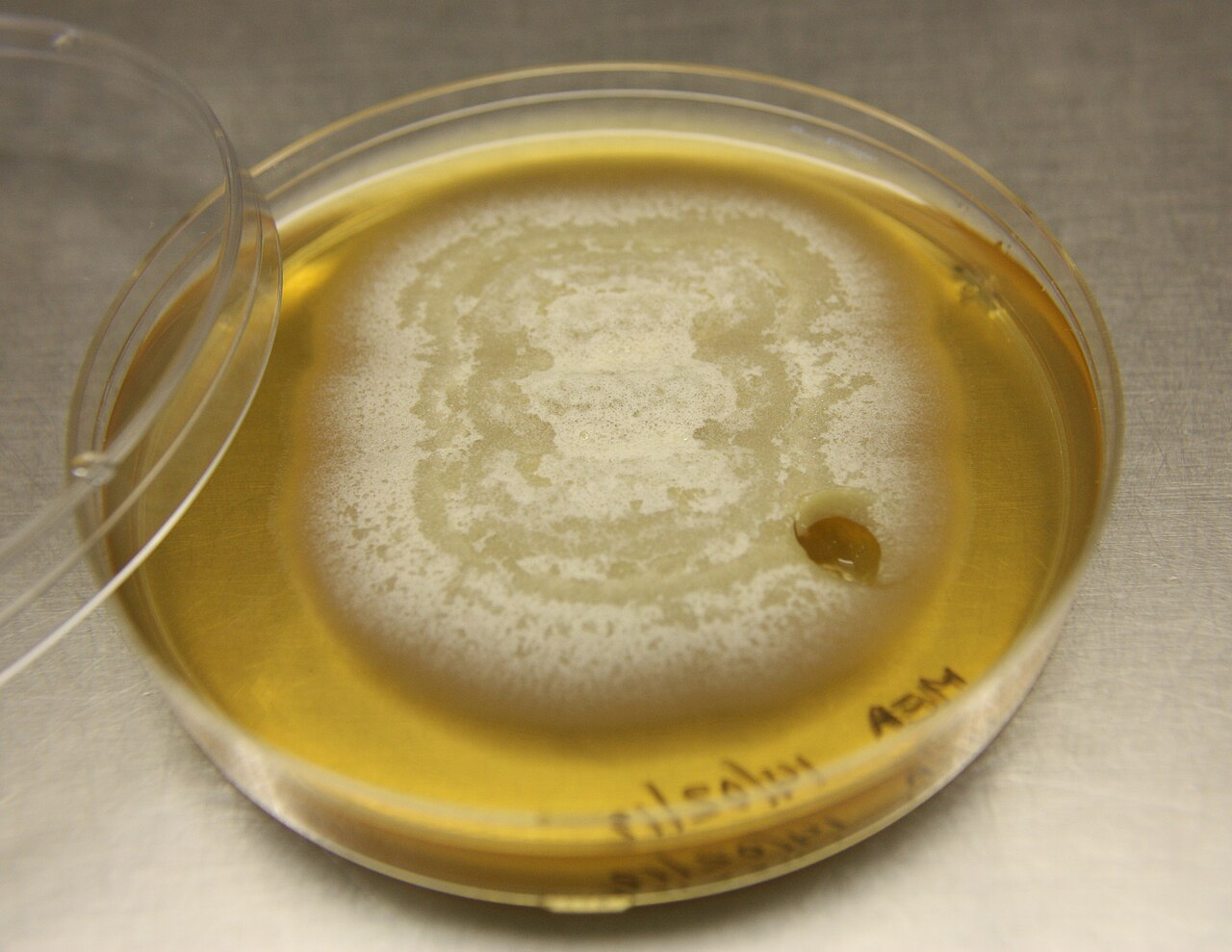
Symptoms
V-shaped yellow wedges on individual leaflets, progressive yellowing + wilting from base of plant upward, vascular tissue browning visible when stem is sliced lengthwise, plants stunted + die within 2-3 years, gradual stand decline in established fields.
Plants affected
Easily confused with
- Phytophthora root rot of alfalfa
How to tell them apart: Both Phytophthora medicaginis (Phytophthora root rot) and Verticillium albo-atrum (Verticillium wilt) cause yellowing, wilting and stunting of alfalfa shoots, but the diagnostic signs are below ground or in the stem. Dig up the crown: Phytophthora medicaginis shows soft, water-soaked, reddish-brown to black rot of the taproot and lateral roots — often a sharp orange-brown lesion at the soil line, worst in waterlogged or poorly drained patches. Verticillium albo-atrum leaves the roots firm and pale; instead split the lower stem to find tan to light-brown streaking in the vascular tissue, and look for the typical V-shaped chlorosis at leaflet tips and pink-tinged or rolled upper leaflets on plants that wilt but stay rooted. Phytophthora kills plants in wet low spots; Verticillium spreads plant-to-plant down a row and worsens in cool weather.
- hop downy mildew
How to tell them apart: Hop downy mildew (Pseudoperonospora humuli) and Verticillium wilt (Verticillium albo-atrum) both begin as diffuse yellowing of the lower leaves, but they diverge clearly as they develop. Downy mildew turns infected shoots into pale, stunted, brittle 'spikes' with downcurled leaves, and in humid weather you see a fine black-grey downy fuzz of spores coating the underside of leaves along angular, vein-bounded chlorotic patches. Verticillium produces no surface mould at all: the leaves yellow then brown between the veins and curl upward, the plant wilts, and the giveaway is brown vascular streaking inside the stem and rootstock when you cut the bine lengthwise. So check the leaf underside for grey sporulation (downy mildew) versus slicing the stem to look for internal brown wood-staining (Verticillium).
- hop aphid / damson-hop aphid
How to tell them apart: Both Phorodon humuli (damson-hop aphid) and Verticillium albo-atrum (hop verticillium wilt) make hop leaves turn yellow and wilt, but the cause is visible on close inspection. With Phorodon humuli you find soft-bodied aphids 1-2 mm long, shiny pale yellow-green with three dark green stripes, clustered on leaf undersides and shoot tips, plus sticky honeydew and black sooty mould; curling and yellowing follow the feeding and the bine itself stays healthy when cut. With Verticillium albo-atrum there are no insects: yellowing and wilting begin on the lowest leaves and climb up the bine, the leaf blade discolours between the main veins first and then browns at the margins, and a lengthwise or cross cut of the bine near the base reveals brown streaking of the woody vascular tissue under the bark, which the aphid never causes.
Treatment
Dr. Phyto builds a dated, step-by-step treatment plan with country-approved products — start a free diagnosis to get yours.
Common questions
- How do I recognise Verticillium wilt of alfalfa on alfalfa / lucerne?
- V-shaped yellow wedges on individual leaflets, progressive yellowing + wilting from base of plant upward, vascular tissue browning visible when stem is sliced lengthwise, plants stunted + die within 2-3 years, gradual stand decline in established fields.
- Do I have to report Verticillium wilt of alfalfa?
- No. Verticillium wilt of alfalfa is not a notifiable organism, so there is nothing to report to an authority. Treat it as a normal garden problem.
- How is Verticillium wilt of alfalfa treated?
- Mainly with biological and cultural measures — removing affected material, changing the conditions that favour it, and treating with agents approved in your country. The exact steps and their timing depend on the plant, the season and where you live: Dr. Phyto works them out in a free diagnosis.
Free first diagnosis · no sign-up to start