Dr. Phyto
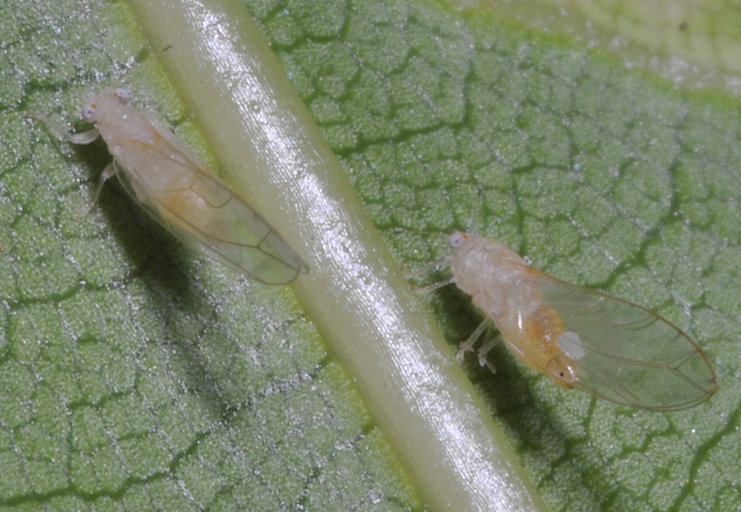
Lorbeer-Blattfloh
Trioza alacris
Betroffene Pflanzen
Leicht verwechselt mit
- Lorbeer-Blattbrand
So unterscheidet man sie: Beide schädigen die Blattränder des Echten Lorbeers (Laurus nobilis), aber Stigmina deflectans ist ein Pilz und Trioza alacris (Lorbeerblattfloh) ein Insekt. Stigmina erzeugt flache, abgestorbene, trockene braun- bis purpurfarbene Nekrosen sowie verbrannte Ränder oder Spitzendürre; das Gewebe ist eingesunken und leblos, das Blatt bleibt flach, und in den Flecken können winzige dunkle Pilzpünktchen sitzen, schlimmer im feuchten Schatten. Trioza lässt den lebenden Blattrand verdicken und sich nach unten einrollen zu einer geschwollenen, erst gelben, dann braunen gallenartigen Falte; in dieser Einrollung sitzen weiche hellgrüne Nymphen mit flauschigem weißem Wachs, dazu klebriger Honigtau und Rußtau auf darunterliegenden Blättern. Faustregel: flache tote Läsionen ohne Insekten = Stigmina; verdickte eingerollte Ränder mit weißem Wachs, Honigtau und lebenden Nymphen = Trioza.
Behandlung
Dr. Phyto erstellt einen datierten, schrittweisen Behandlungsplan mit im Land zugelassenen Mitteln — starte eine kostenlose Diagnose, um deinen zu erhalten.
Häufige Fragen
- Muss ich Lorbeer-Blattfloh melden?
- Nein. Lorbeer-Blattfloh ist nicht meldepflichtig, es gibt also nichts an eine Behörde zu melden. Behandle es wie ein normales Gartenproblem.
- Wie wird Lorbeer-Blattfloh behandelt?
- Vor allem mit biologischen und pflegerischen Maßnahmen — befallenes Material entfernen, die begünstigenden Bedingungen ändern und mit in deinem Land zugelassenen Mitteln behandeln. Die genauen Schritte und ihr Zeitpunkt hängen von Pflanze, Jahreszeit und Wohnort ab: Dr. Phyto ermittelt sie in einer kostenlosen Diagnose.
Erste Diagnose gratis · keine Anmeldung nötig