Dr. Phyto
rouille de la menthe
Puccinia menthae
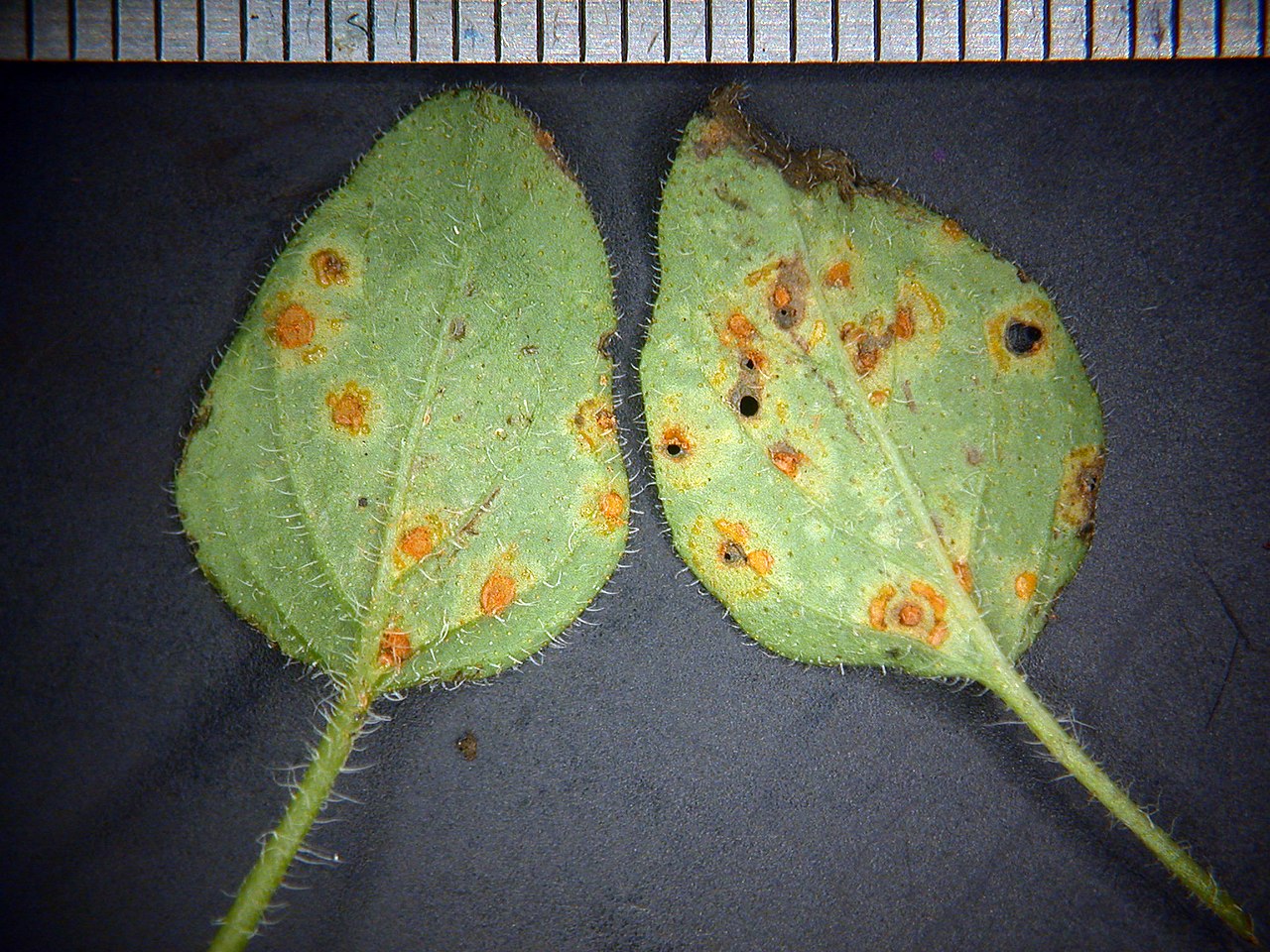
Symptômes
Pousses printanières déformées et pâles (infection systémique), pustules de rouille orange vif sur la face inférieure des feuilles en été, taches brunes de spores en automne, récolte réduite.
Plantes touchées
Souvent confondu avec
- verticilliose de l'olivier
Comment les distinguer: Puccinia menthae (rouille de la menthe) et Verticillium dahliae (verticilliose) jaunissent tous deux le feuillage de la menthe, mais les signes diagnostiques sont nets en regardant de près. Retournez les feuilles : la rouille montre des pustules saillantes et poudreuses, orange à brun-rouille (et plus tôt des taches jaune pâle boursouflées avec de jeunes pousses déformées et épaissies) dispersées sur la face INFÉRIEURE des feuilles, sur un sol sain. La verticilliose ne présente AUCUNE pustule — à la place, le jaunissement et le dessèchement brun des marges apparaissent d'un seul côté ou sur une seule pousse, la plante flétrit à la chaleur, reste rabougrie, et une coupe dans une tige basse révèle des stries brunes des tissus vasculaires internes. En bref : poussière orange sous la feuille = rouille ; flétrissement unilatéral plus stries brunes dans les vaisseaux de la tige = verticilliose.
Traitement
Dr. Phyto établit un plan de traitement daté, étape par étape, avec des produits homologués dans votre pays — lancez un diagnostic gratuit pour obtenir le vôtre.
Questions fréquentes
- Comment reconnaître rouille de la menthe sur menthe poivrée ?
- Pousses printanières déformées et pâles (infection systémique), pustules de rouille orange vif sur la face inférieure des feuilles en été, taches brunes de spores en automne, récolte réduite.
- Dois-je déclarer rouille de la menthe ?
- Non. rouille de la menthe n'est pas à déclaration obligatoire : il n'y a rien à signaler à une autorité. Traitez-le comme un problème de jardin ordinaire.
- Comment traite-t-on rouille de la menthe ?
- Surtout par des mesures biologiques et culturales — retirer le matériel atteint, modifier les conditions qui le favorisent et intervenir avec des produits autorisés dans votre pays. Les étapes exactes et leur calendrier dépendent de la plante, de la saison et du lieu : Dr. Phyto les établit lors d'un diagnostic gratuit.
Premier diagnostic gratuit · sans inscription