Dr. Phyto
ruggine dell'aglio
Puccinia allii
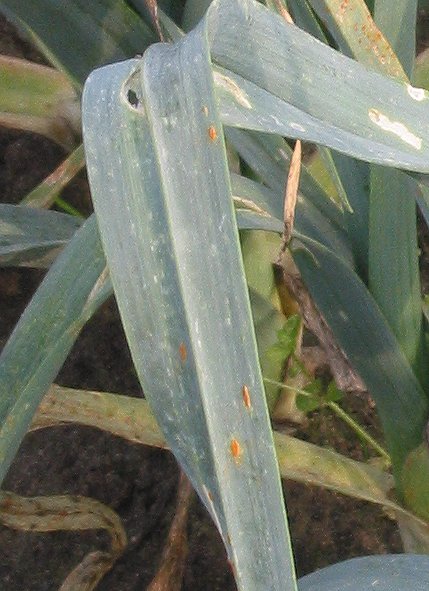
Sintomi
Piccole pustole ovali giallo-arancio brillante su foglie + guaine, le pustole si aprono rilasciando spore polverulente, le piante gravemente infette senescono 3-4 settimane in anticipo.
Piante colpite
Facilmente confuso con
- tripide della cipolla
Come distinguerli: Entrambi colpiscono il fogliame dell'aglio (Allium sativum) e provocano precocemente macchie biancastre sulle foglie, ma Puccinia allii (ruggine dell'aglio/porro) è un fungo mentre Thrips tabaci (tripide della cipolla) è un minuscolo insetto. La ruggine inizia come piccole macchie pallide che si sollevano rapidamente in pustole polverose giallo-arancio vivo che erompono attraverso la superficie fogliare — passando un dito si raccoglie polvere arancione di spore. Il danno da tripidi resta piatto: punteggiatura argenteo-biancastra, chiazze e striature lungo la foglia, costellate da minuti escrementi neri simili a catrame, e spesso si scorgono i sottili insetti giallo-bruni (sotto i 2 mm) annidati nelle pieghe e alla base delle foglie. Nessuna pustola arancione in rilievo e nessuna polvere di ruggine indica tripidi, non ruggine.
Trattamento
Dr. Phyto crea un piano di trattamento datato e passo-passo con prodotti approvati nel tuo paese — avvia una diagnosi gratuita per ottenere il tuo.
Domande frequenti
- Come riconosco ruggine dell'aglio su aglio?
- Piccole pustole ovali giallo-arancio brillante su foglie + guaine, le pustole si aprono rilasciando spore polverulente, le piante gravemente infette senescono 3-4 settimane in anticipo.
- Devo segnalare ruggine dell'aglio?
- No. ruggine dell'aglio non è soggetto a segnalazione, quindi non c'è nulla da comunicare a un'autorità. Trattalo come un normale problema del giardino.
- Come si tratta ruggine dell'aglio?
- Soprattutto con misure biologiche e colturali — rimuovere il materiale colpito, cambiare le condizioni che lo favoriscono e intervenire con prodotti autorizzati nel tuo Paese. I passaggi esatti e i tempi dipendono dalla pianta, dalla stagione e da dove vivi: Dr. Phyto li calcola in una diagnosi gratuita.
Prima diagnosi gratuita · nessuna registrazione