Dr. Phyto
Großer Kohlweißling
Pieris brassicae
Symptome
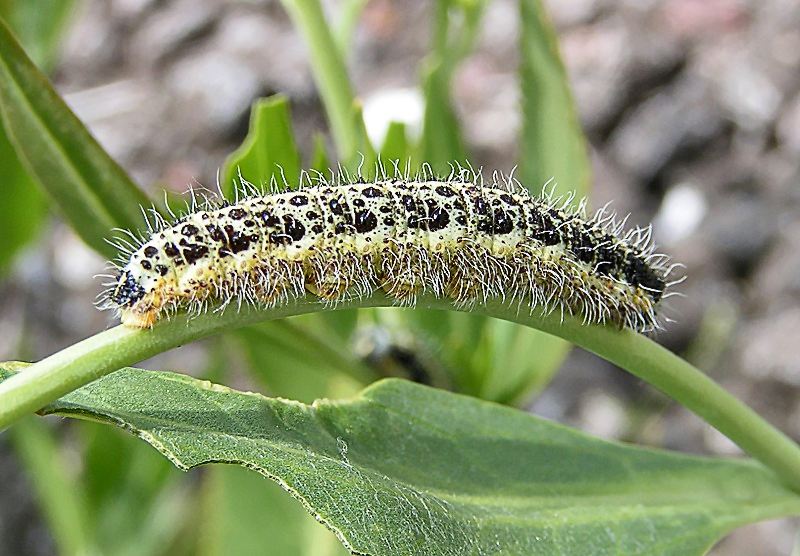
Große gelb-schwarze, behaarte Raupen, 35 mm lang, gefräßiger Fraß, der nur die Blattrippen übrig lässt, Eigelege von 20–100 leuchtend gelben Eiern an Blattunterseiten.
Betroffene Pflanzen
Leicht verwechselt mit
- Kohleule
So unterscheidet man sie: Larven von Pieris brassicae (Großer Kohlweißling) leben gesellig und fressen in Gruppen an den ÄUSSEREN Blättern: sie sind gelbgrün mit auffälligen schwarzen Flecken, drei gelben Längsstreifen (einer auf dem Rücken, zwei seitlich) und kurz weißgrau behaart. Der Schaden ist offene Skelettierung und ausgefranste Löcher an freiliegenden Blättern, mit trockenem, körnigem grünem Kot oben auf den Blättern. Larven von Mamestra brassicae (Kohleule) sind glatt und UNBEHAART, jung grün, später graubraun mit blasser Seitenlinie und leicht erhöhtem hinterem Segment; sie bohren sich TIEF IN das Herz des Kohlkopfes und fressen verborgen im Inneren. Achte auf feuchten, klebrigen grünbraunen Kot tief im Kohlherz und innere Fraßgänge statt Oberflächenfraß.
- Kohlmotte
So unterscheidet man sie: Die Raupe des Großen Kohlweißlings ist ausgewachsen viel größer (bis ~40 mm), kräftig gebaut, gelbgrün mit auffälligen schwarzen Flecken sowie einem gelben Rücken- und Seitenstreifen und kurz behaart. Die Raupen fressen gesellig in Gruppen, schaffen rasch große, ausgefranste Löcher und skelettieren Blätter bis zu den Adern, oft an den oberen Blättern und am Herz. Sie hinterlassen reichlich grünschwarzen Kot und lassen sich bei Berührung nicht an einem Seidenfaden fallen. Die Larve der Kohlschabe (Diamantrückenmotte) ist klein (max. ~10-12 mm), schlank, blass- bis hellgrün, am Körper verjüngt und besitzt ein gegabeltes hinteres Nachschieber-Paar. Sie frisst meist an der Unterseite der äußeren und unteren Blätter, schabt eine Blattseite ab und hinterlässt ein dünnes durchsichtiges 'Fenster' (Fensterfraß) sowie kleine unregelmäßige Löcher. Bei Störung windet sie sich heftig rückwärts und lässt sich an einem Seidenfaden fallen. Die Puppe sitzt in einem lockeren, offenen netzartigen Seidenkokon auf dem Blatt.
Behandlung
Dr. Phyto erstellt einen datierten, schrittweisen Behandlungsplan mit im Land zugelassenen Mitteln — starte eine kostenlose Diagnose, um deinen zu erhalten.
Häufige Fragen
- Wie erkenne ich Großer Kohlweißling an Kohl / Brokkoli / Blumenkohl / Rosenkohl?
- Große gelb-schwarze, behaarte Raupen, 35 mm lang, gefräßiger Fraß, der nur die Blattrippen übrig lässt, Eigelege von 20–100 leuchtend gelben Eiern an Blattunterseiten.
- Muss ich Großer Kohlweißling melden?
- Nein. Großer Kohlweißling ist nicht meldepflichtig, es gibt also nichts an eine Behörde zu melden. Behandle es wie ein normales Gartenproblem.
- Wie wird Großer Kohlweißling behandelt?
- Vor allem mit biologischen und pflegerischen Maßnahmen — befallenes Material entfernen, die begünstigenden Bedingungen ändern und mit in deinem Land zugelassenen Mitteln behandeln. Die genauen Schritte und ihr Zeitpunkt hängen von Pflanze, Jahreszeit und Wohnort ab: Dr. Phyto ermittelt sie in einer kostenlosen Diagnose.
Erste Diagnose gratis · keine Anmeldung nötig