Dr. Phyto
encre du chêne / Ramorum
Phytophthora ramorum
⚠ Organisme de quarantaine à déclaration obligatoire dans l'UE
Symptômes
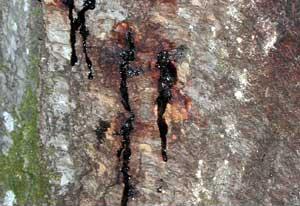
Taches foliaires brun foncé débutant souvent à l'extrémité de la feuille et s'étendant le long de la nervure centrale, chancres suintants sur les tiges et les troncs (écoulement de sève sombre), flétrissement et dépérissement des branches, mort complète de l'arbre possible en 2 ans (chêne et mélèze) ; les hôtes arbustifs (Rhododendron) présentent un noircissement foliaire et un dépérissement des pousses.
Plantes touchées
Souvent confondu avec
- otiorhynque de la vigne
Comment les distinguer: Sur le rhododendron, Phytophthora ramorum est un agent pathogène fongiforme : recherchez des taches nécrotiques brun foncé à noirâtres s'étendant depuis la pointe de la feuille ou le long de la nervure centrale, des pétioles et des pousses noircis, et un flétrissement avec dépérissement des extrémités progressant vers le bas, souvent après un temps humide et doux. Otiorhynchus sulcatus (otiorhynque de la vigne) est un insecte : les adultes rongent des encoches angulaires caractéristiques en forme de U sur les bords des feuilles (jamais à l'intérieur du limbe), tandis que les larves blanches, apodes et arquées en C à tête brune dévorent les racines et annèlent la base de la tige, provoquant le flétrissement de toute la plante avec des feuilles vertes intactes et sans encoches. Signe décisif : encoches marginales plus larves blanches aux racines signifient otiorhynque ; lésions sombres s'étendant sur feuilles et pousses sans encoches marginales signifient Phytophthora. Si vous suspectez ramorum, ne déplacez pas la plante.
- pourridié à Phytophthora cinnamomi
Comment les distinguer: Sur Camellia japonica, le Phytophthora cinnamomi est une pourriture racinaire d origine tellurique : il fait pourrir les fines racines absorbantes (qui deviennent brun-noir et cassantes), forme au niveau du sol / du collet un chancre brun-rougeatre en forme de V, et le houppier jaunit, fletrit et deperit lentement sur 1 a 3 ans, les symptomes remontant DU bas vers le haut ; les racines sont visiblement pourries. Le Phytophthora ramorum est au contraire une brulure aerienne a racines saines : cherchez des lesions foliaires brun fonce, gorgees d eau et a marge nette, demarrant a la pointe de la feuille ou au petiole et descendant le long de la nervure centrale, des chancres noirs qui s etendent sur les rameaux et un deperissement des pousses sur le HAUT de la plante, ainsi qu une chute rapide des feuilles quelques jours apres l infection. Regle pratique : degats remontant du sol avec racines pourries = P. cinnamomi ; lesions et deperissements sur feuilles et pousses avec racines saines = P. ramorum suspecte. Le P. ramorum est un organisme de quarantaine UE a notification obligatoire (Reg. 2019/2072 Annexe II) : si le tableau sur le haut de la plante correspond, ne taillez PAS et ne deplacez pas la plante, et prevenez d abord votre autorite phytosanitaire nationale (ONPV/NPPO).
- pourriture des fleurs de camélia
Comment les distinguer: Vérifiez QUEL organe brunit. Ciborinia camelliae (pourriture des fleurs du camélia) n'attaque que la fleur : des anneaux brun clair s'étendent depuis la base des pétales, la fleur entière brunit et s'effondre en environ 48 heures, les pétales tombés portent au sol de durs sclérotes noirs (disques semblables à des graines), et les feuilles restent vertes et saines. Phytophthora ramorum (dépérissement à Ramorum / mort subite du chêne) attaque au contraire le feuillage et le bois : des taches brun foncé débutent à la pointe de la feuille et descendent le long de la nervure centrale, les pousses dépérissent et les tiges présentent des chancres sombres suintants — jamais de sclérotes. Si le brunissement se trouve sur les feuilles, les pousses ou les tiges (et non limité aux pétales), traitez-le comme une suspicion de P. ramorum, organisme de quarantaine à déclaration obligatoire réglementé par l'UE : ne taillez ni ne déplacez la plante et signalez-le à votre organisation nationale de protection des végétaux (ONPV/NPPO).
Traitement
Dr. Phyto établit un plan de traitement daté, étape par étape, avec des produits homologués dans votre pays — lancez un diagnostic gratuit pour obtenir le vôtre.
Questions fréquentes
- Comment reconnaître encre du chêne / Ramorum sur rhododendron pontique ?
- Taches foliaires brun foncé débutant souvent à l'extrémité de la feuille et s'étendant le long de la nervure centrale, chancres suintants sur les tiges et les troncs (écoulement de sève sombre), flétrissement et dépérissement des branches, mort complète de l'arbre possible en 2 ans (chêne et mélèze) ; les hôtes arbustifs (Rhododendron) présentent un noircissement foliaire et un dépérissement des pousses.
- Dois-je déclarer encre du chêne / Ramorum ?
- Oui. encre du chêne / Ramorum est un organisme de quarantaine réglementé dans l'UE. Une suspicion doit être signalée à l'organisation nationale de protection des végétaux, qui la confirmera et vous indiquera la suite.
- Comment traite-t-on encre du chêne / Ramorum ?
- Surtout par des mesures biologiques et culturales — retirer le matériel atteint, modifier les conditions qui le favorisent et intervenir avec des produits autorisés dans votre pays. Les étapes exactes et leur calendrier dépendent de la plante, de la saison et du lieu : Dr. Phyto les établit lors d'un diagnostic gratuit.
Premier diagnostic gratuit · sans inscription