Dr. Phyto
basil downy mildew
Peronospora belbahrii
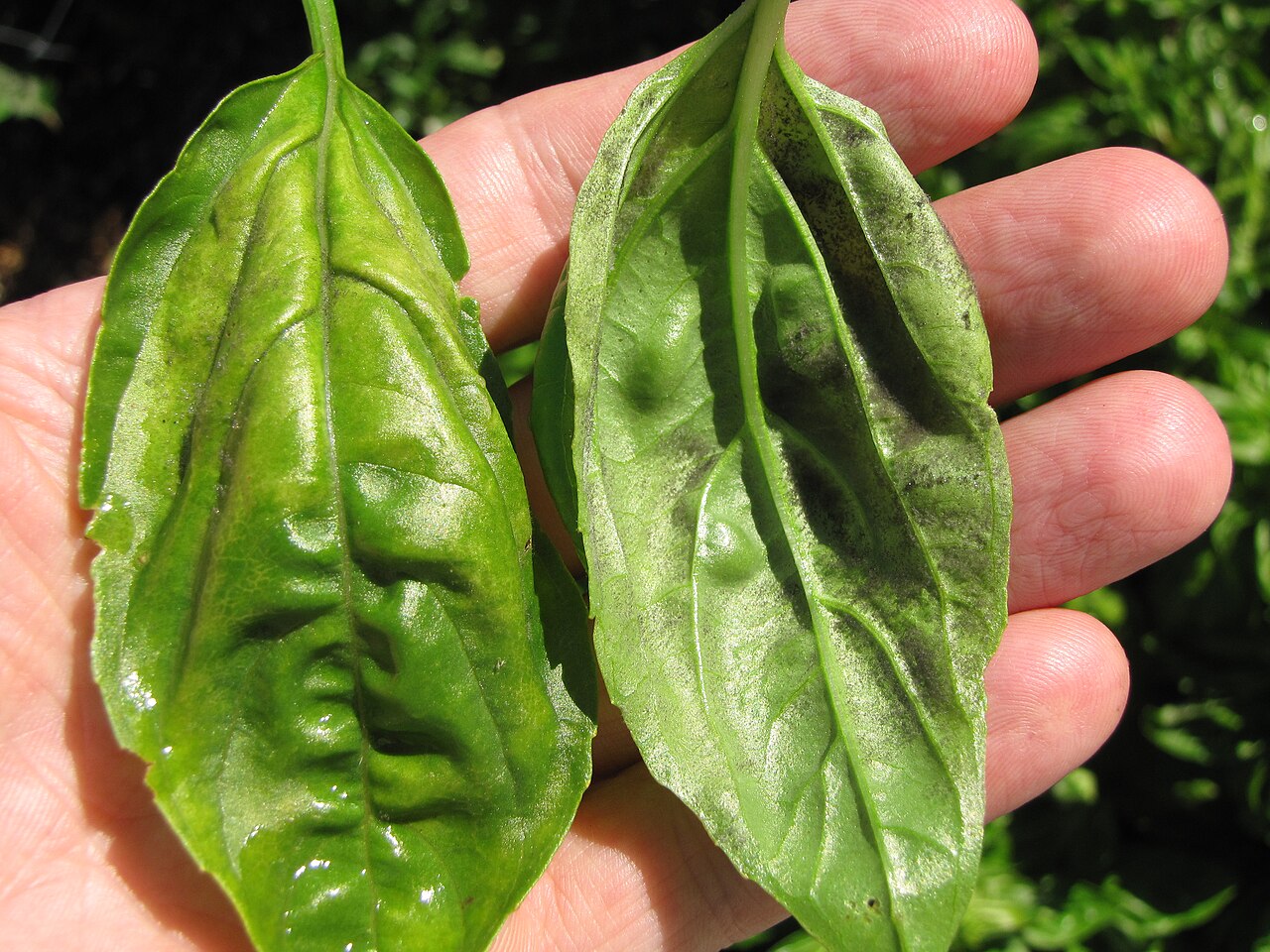
Symptoms
Yellowing between veins, grey-purple fuzz on underside.
Plants affected
Easily confused with
- basil Fusarium wilt
How to tell them apart: Fusarium oxysporum f.sp. basilici (Fusarium wilt) and Peronospora belbahrii (basil downy mildew) both start as leaf yellowing, but the location and partner signs differ. Fusarium yellowing is often one-sided on the plant, paired with sudden wilting, brown stem cankers, and — when you slit the stem lengthwise — dark brown streaks inside the vascular tissue; the underside of the leaf stays clean. Peronospora chlorosis is a diffuse, blocky yellowing on the upper leaf surface sharply hemmed in by the leaf veins, and turning the leaf over reveals a grey-to-purplish velvety fuzz on the underside, worst in humid, cool nights. Wilt with a clean leaf back means Fusarium; angular yellow patches with grey furry undersides mean downy mildew.
Treatment
Dr. Phyto builds a dated, step-by-step treatment plan with country-approved products — start a free diagnosis to get yours.
Common questions
- How do I recognise basil downy mildew on basil?
- Yellowing between veins, grey-purple fuzz on underside.
- Do I have to report basil downy mildew?
- No. basil downy mildew is not a notifiable organism, so there is nothing to report to an authority. Treat it as a normal garden problem.
- How is basil downy mildew treated?
- Mainly with biological and cultural measures — removing affected material, changing the conditions that favour it, and treating with agents approved in your country. The exact steps and their timing depend on the plant, the season and where you live: Dr. Phyto works them out in a free diagnosis.
Free first diagnosis · no sign-up to start