Dr. Phyto
black sigatoka
Mycosphaerella fijiensis
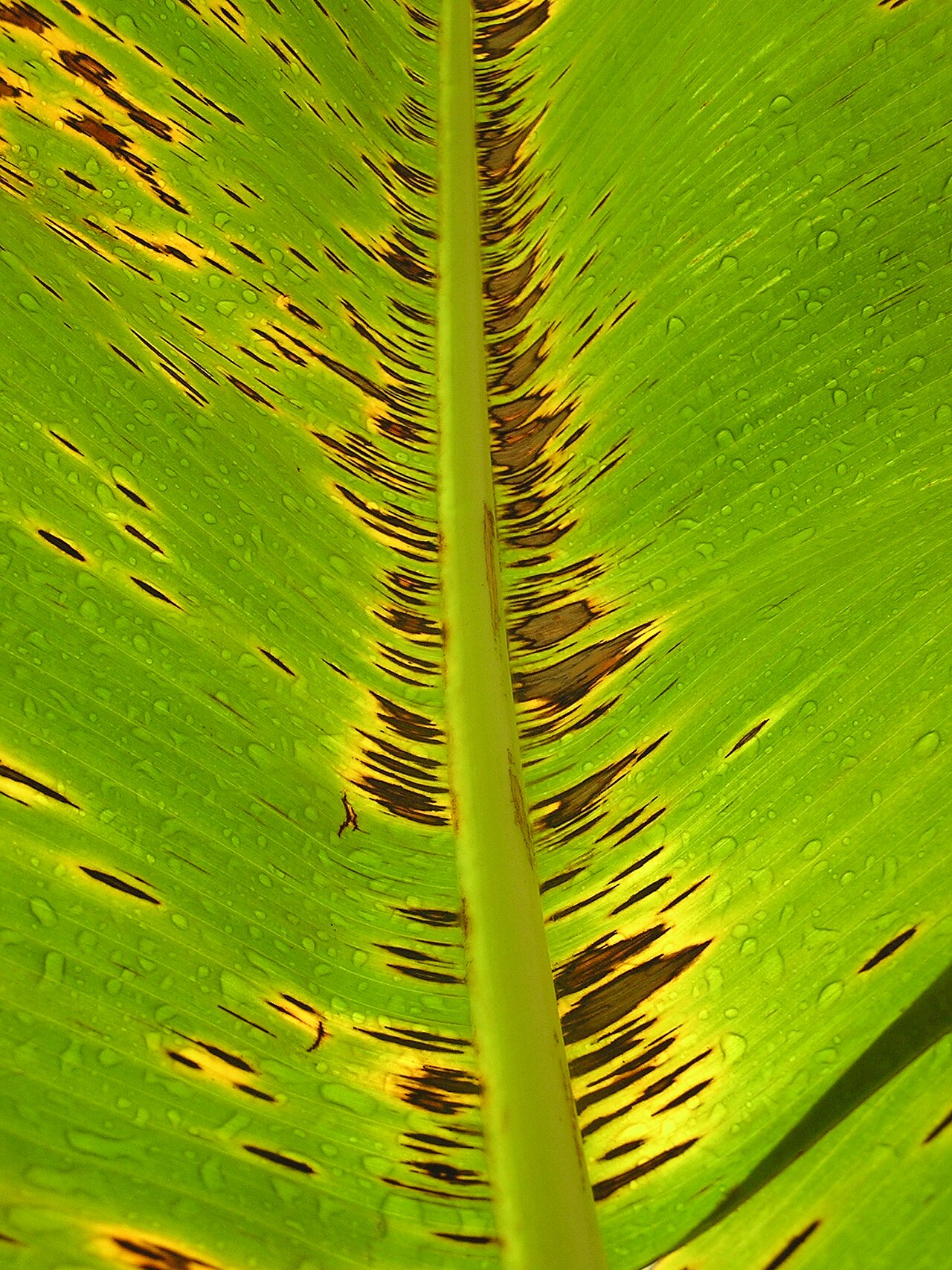
Symptoms
Dark brown to black streaks on banana leaves expanding into elongate dark blotches with grey centers, severe defoliation killing entire plants within 1-2 seasons, bunches fail to fill properly + ripen prematurely with poor quality, complete crop loss in unmanaged plantings.
Plants affected
Easily confused with
- Banana streak disease
How to tell them apart: Black Sigatoka (Mycosphaerella fijiensis) and Banana streak virus both produce dark streaks running parallel to the veins on the banana leaf lamina, but the cause differs. Mycosphaerella fijiensis starts as tiny reddish-brown specks that elongate into narrow rust-brown to black necrotic streaks, which enlarge into spindle-shaped lesions with a pale grey dead centre and a yellow halo; in humid weather the underside shows dark spore structures. Banana streak virus produces yellow-to-chlorotic streaks first that may later turn brown, often as continuous broken lines along the veins together with leaf distortion, vein clearing or back-throw, and stunting, but without the spindle lesions, grey dead centres or sporulation of the fungus. The fungal lesions are clustered and progressive from the leaf tip and margin; the viral streaks are scattered and systemic across young leaves.
Treatment
Dr. Phyto builds a dated, step-by-step treatment plan with country-approved products — start a free diagnosis to get yours.
Common questions
- How do I recognise black sigatoka on banana?
- Dark brown to black streaks on banana leaves expanding into elongate dark blotches with grey centers, severe defoliation killing entire plants within 1-2 seasons, bunches fail to fill properly + ripen prematurely with poor quality, complete crop loss in unmanaged plantings.
- Do I have to report black sigatoka?
- Yes. black sigatoka is a regulated quarantine organism in the EU. A suspected finding must be reported to your national plant protection organisation — they will confirm it and tell you what to do next.
- How is black sigatoka treated?
- Mainly with biological and cultural measures — removing affected material, changing the conditions that favour it, and treating with agents approved in your country. The exact steps and their timing depend on the plant, the season and where you live: Dr. Phyto works them out in a free diagnosis.
Free first diagnosis · no sign-up to start