Dr. Phyto
ωίδιο (καλλωπιστικών)
Golovinomyces sp.
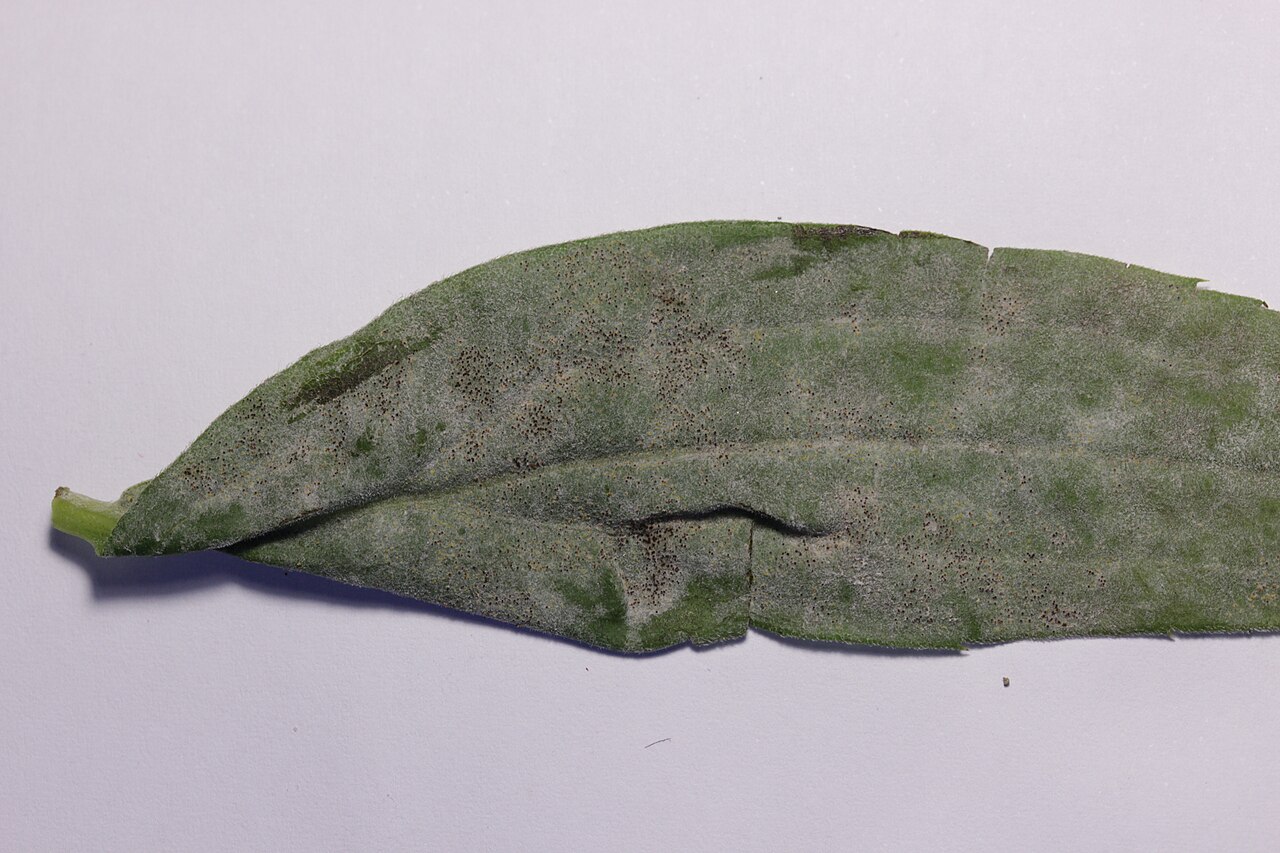
Συμπτώματα
Μια λευκή-έως-γκρίζα αλευρώδης επίστρωση απλώνεται στην άνω επιφάνεια των φύλλων, στους βλαστούς και στα μπουμπούκια· από κάτω ο ιστός κιτρινίζει, τα νεαρά φύλλα ζαρώνουν ή μένουν καχεκτικά· έντονη προσβολή καφετιάζει τα φύλλα. Σε αντίθεση με τον περονόσπορο, η ανάπτυξη είναι στην ΑΝΩ επιφάνεια και σκουπίζεται· χειρότερα σε ζεστές ημέρες με δροσερές, υγρές νύχτες.
Φυτά που προσβάλλονται
Συχνά συγχέεται με
- λευκή σκωρίαση του χρυσάνθεμου
Πώς να τα ξεχωρίσετε: O Puccinia horiana (leuki skouria tis chrysanthemou) emfanizetai prota os mikres ochro-prasines eos kitrinopes vathoulotes kilides stin EPANO epifaneia tou fyllou; gyrnontas to fyllo, vriskeis akrivos apo kato anasikomenes, roz eos kafe-leukes flyktainodeis flyktaines (telia) - sklires, kerodeis, pou diaspoun tin epidermida. Eunoeitai apo droseres, ygres synthikes me ygrasia sto fyllo (15-25C). O Golovinomyces sp. (oidio) antithetos schimatizei mia epifaneiaki, xiri, skonismeni leuki aleurodi epikalypsi pou skoupizetai me to dachtylo kai vrisketai PANO stin epano epifaneia, tous vlastous kai tous oftalmous - choris flyktaines apo kato, me yfi pio chnoudoti para flyktainodi. Protima zestes meres me stegna fylla alla ygres nychtes. To apofasistiko test: flyktaines pou diaspoun tin kato epifaneia tou fyllou = leuki skouria (organismos karantinas EE); skoni pou skoupizetai choris tipota apo kato = oidio. I leuki skouria einai ypochreotika diloteous - anaferete kathe ypopto peristatiko stin ethniki fytoprostatevtiki archi (NPPO) prin apo kathe agogi.
- τεφρά σήψη (Botrytis)
Πώς να τα ξεχωρίσετε: Ο Botrytis cinerea (φαιά σήψη) εμφανίζεται ως χνουδωτό, γκριζο-καφέ στρώμα μούχλας, συνήθως σε κατεστραμμένους, γερασμένους ή βρεγμένους από τη βροχή ιστούς — σε πέταλα που μαραίνονται, σε μπουμπούκια και σε μαλακούς βλαστούς που γίνονται καφέ, υδαρείς και καταρρέουν. Όταν τους αγγίξεις, ξεπηδά ένα σύννεφο γκρίζων σπορίων και ο ιστός από κάτω είναι σάπιος και μαλακός. Ευνοείται από δροσερό, υγρό, στάσιμο αέρα. Αντίθετα, ο Golovinomyces sp. (ωίδιο) καλύπτει ζωντανά, κατά τα άλλα υγιή πράσινα φύλλα με μια ξηρή, επίπεδη λευκή έως γκριζωπή σκόνη που μπορείς να την σκουπίσεις με το δάχτυλο· ξεκινά τυπικά ως διακριτές στρογγυλές κηλίδες στην πάνω επιφάνεια του φύλλου πριν επεκταθεί. Το φύλλο παραμένει σφιχτό (χωρίς σήψη), αν και μπορεί να κιτρινίσει και να κουλουριαστεί, και προτιμά ζεστές ημέρες με στεγνά φύλλα αλλά υγρές νύχτες.
- σκληρωτινίαση
Πώς να τα ξεχωρίσετε: Το Golovinomyces sp. (ωίδιο) εμφανίζει μια ξηρή, σκονισμένη, λευκή έως γκριζωπή πουδραρισμένη επικάλυψη που κάθεται πάνω στην άνω επιφάνεια των φύλλων, στα στελέχη και στους ανθοφόρους οφθαλμούς και σκουπίζεται με το δάχτυλο, αφήνοντας τον πράσινο ιστό από κάτω ανέπαφο· εξαπλώνεται σε ζεστές, ξηρές και πυκνοφυτεμένες συνθήκες και σπάνια σκοτώνει το φυτό. Αντίθετα, το Sclerotinia sclerotiorum (λευκή σήψη) παράγει ένα πυκνό, βαμβακερό, υγρόμορφο λευκό μυκήλιο που συγκεντρώνεται στη βάση του στελέχους και σε ιστό που ήδη μαλακώνει, συνοδευόμενο από υδαρείς καστανές κηλίδες, ξαφνικό μαρασμό και κατάρρευση του στελέχους. Το καθοριστικό σημάδι βρίσκεται μέσα ή πάνω στο σαπισμένο στέλεχος: το Sclerotinia σχηματίζει σκληρά, ακανόνιστα μαύρα σκληρώτια στο μέγεθος περιττωμάτων ποντικιού, κάτι που το ωίδιο ποτέ δεν παράγει. Δροσερές, υγρές, βρεγμένες συνθήκες και μια γλοιώδης μαλακή σήψη δείχνουν Sclerotinia, όχι ωίδιο.
- τετράνυχος
Πώς να τα ξεχωρίσετε: Το ωίδιο σχηματίζει λευκό έως γκριζωπό αλευρώδες στρώμα ή τσόχινες κηλίδες ΣΤΗΝ ΕΠΑΝΩ ΕΠΙΦΑΝΕΙΑ του φύλλου, στα στελέχη και τους οφθαλμούς, που μπορείτε να το ΣΚΟΥΠΙΣΕΤΕ με το δάχτυλο αποκαλύπτοντας πράσινο ιστό από κάτω. Ξεκινά ως ξεχωριστές στρογγυλές αλευρώδεις κηλίδες που ενώνονται σε συνεχές στρώμα· δεν υπάρχει ιστός ούτε κινούμενες κουκκίδες από κάτω. Ευδοκιμεί σε ήπιο, υγρό αέρα με κακό αερισμό, συχνά στη σκιά. Ο δίστικτος τετράνυχος προκαλεί λεπτό, ανοιχτόχρωμο στίξιμο ΣΤΗΝ ΕΠΑΝΩ ΕΠΙΦΑΝΕΙΑ ΤΟΥ ΦΥΛΛΟΥ — αμέτρητες μικροσκοπικές κιτρινόλευκες κουκκίδες· καθώς επιδεινώνεται, όλο το φύλλο γίνεται θαμπό χάλκινο ή γκριζοπράσινο. Κοιτάξτε ΑΠΟ ΚΑΤΩ το φύλλο για λεπτό μεταξωτό ιστό και μικροσκοπικές κινούμενες κουκκίδες (τα ακάρεα και τα ανοιχτόχρωμα δέρματα έκδυσης). Ο αποχρωματισμός είναι μοτίβο κουκκίδων, ποτέ σκόνη που αφαιρείται, και είναι χειρότερος σε ζεστές, ξηρές, σκονισμένες συνθήκες.
Αντιμετώπιση
Ο Dr. Phyto δημιουργεί ένα χρονολογημένο, βήμα-προς-βήμα σχέδιο αντιμετώπισης με εγκεκριμένα στη χώρα προϊόντα — ξεκινήστε μια δωρεάν διάγνωση.
Συχνές ερωτήσεις
- Πώς αναγνωρίζω ωίδιο (καλλωπιστικών) σε ντάλια;
- Μια λευκή-έως-γκρίζα αλευρώδης επίστρωση απλώνεται στην άνω επιφάνεια των φύλλων, στους βλαστούς και στα μπουμπούκια· από κάτω ο ιστός κιτρινίζει, τα νεαρά φύλλα ζαρώνουν ή μένουν καχεκτικά· έντονη προσβολή καφετιάζει τα φύλλα. Σε αντίθεση με τον περονόσπορο, η ανάπτυξη είναι στην ΑΝΩ επιφάνεια και σκουπίζεται· χειρότερα σε ζεστές ημέρες με δροσερές, υγρές νύχτες.
- Πρέπει να δηλώσω ωίδιο (καλλωπιστικών);
- Όχι. Το ωίδιο (καλλωπιστικών) δεν είναι δηλωτέο, οπότε δεν χρειάζεται να ενημερώσεις κάποια αρχή. Αντιμετώπισέ το σαν συνηθισμένο πρόβλημα κήπου.
- Πώς αντιμετωπίζεται το ωίδιο (καλλωπιστικών);
- Κυρίως με βιολογικά και καλλιεργητικά μέτρα — απομάκρυνση του προσβεβλημένου υλικού, αλλαγή των συνθηκών που το ευνοούν και χρήση εγκεκριμένων στη χώρα σου σκευασμάτων. Τα ακριβή βήματα και ο χρόνος τους εξαρτώνται από το φυτό, την εποχή και τον τόπο: ο Dr. Phyto τα βρίσκει σε μια δωρεάν διάγνωση.
Πρώτη διάγνωση δωρεάν · χωρίς εγγραφή