Dr. Phyto
Kastanienrindenkrebs
Cryphonectria parasitica
⚠ EU-meldepflichtiger Quarantäne-Organismus
Symptome
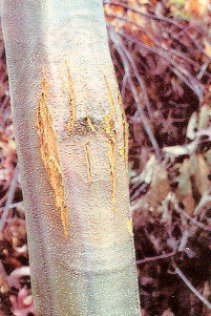
Eingesunkene orange-braune Krebse auf der Rinde mit rissigen und aufgeworfenen Rändern, leuchtend orange Pilzstromata (stecknadelkopfgroß) in der Krebsoberfläche eingebettet, vollständige Umgürtung und Absterben der Äste oberhalb des Krebses innerhalb von 1–2 Jahren, charakteristische Stockausschläge unterhalb des Krebses nach Absterben des oberen Astes, schließlich Baumtod über 3–8 Jahre bei klassisch virulenten Stämmen.
Betroffene Pflanzen
Leicht verwechselt mit
- Asiatische Kastaniengallwespe
So unterscheidet man sie: Cryphonectria parasitica (Kastanienrindenkrebs) bildet eingesunkene bis aufgerissene, hellbraune Rindenkrebse, die ganze Äste umgürten und abtöten; auf der Krebsstelle sieht man hervorbrechende orange bis orangegelbe Fruchtkörper (bei feuchtem Wetter orange Sporenranken), blassbraune Myzelfächer unter der Rinde und abgestorbene braune Blätter, die welken, aber oberhalb des Krebses hängen bleiben. Dryocosmus kuriphilus (Esskastanien-Gallwespe) bildet dagegen einzelne 8-20 mm große Anschwellungen (Gallen) an Frühjahrsknospen, Triebspitzen, Blattmittelrippen und Blattstielen, zuerst grün bis rosa-rot, später zu harten holzigen braunen Gallen austrocknend, die jahrelang an den Zweigen haften - ohne Rindenkrebs, ohne orange Stromata und ohne hängenden Totlaub-Vorhang. Achten Sie auf die Rinde: ein eingesunkener, aufgerissener Krebs mit orangen Pusteln ist Rindenkrebs; ein runder grün-brauner Knoten an Knospe oder Blattrippe ist die Gallwespe. Beide sind in EU-Schutzgebieten geregelt, daher in einem Schutzgebiet einen Verdacht auf Rindenkrebs der zuständigen Pflanzenschutzbehörde (NPPO) bestätigen und melden.
Behandlung
Dr. Phyto erstellt einen datierten, schrittweisen Behandlungsplan mit im Land zugelassenen Mitteln — starte eine kostenlose Diagnose, um deinen zu erhalten.
Häufige Fragen
- Wie erkenne ich Kastanienrindenkrebs an Edelkastanie?
- Eingesunkene orange-braune Krebse auf der Rinde mit rissigen und aufgeworfenen Rändern, leuchtend orange Pilzstromata (stecknadelkopfgroß) in der Krebsoberfläche eingebettet, vollständige Umgürtung und Absterben der Äste oberhalb des Krebses innerhalb von 1–2 Jahren, charakteristische Stockausschläge unterhalb des Krebses nach Absterben des oberen Astes, schließlich Baumtod über 3–8 Jahre bei klassisch virulenten Stämmen.
- Muss ich Kastanienrindenkrebs melden?
- Ja. Kastanienrindenkrebs ist in der EU ein geregelter Quarantäneschädling. Ein Verdacht muss beim Pflanzenschutzdienst gemeldet werden — der bestätigt ihn und sagt dir, was zu tun ist.
- Wie wird Kastanienrindenkrebs behandelt?
- Vor allem mit biologischen und pflegerischen Maßnahmen — befallenes Material entfernen, die begünstigenden Bedingungen ändern und mit in deinem Land zugelassenen Mitteln behandeln. Die genauen Schritte und ihr Zeitpunkt hängen von Pflanze, Jahreszeit und Wohnort ab: Dr. Phyto ermittelt sie in einer kostenlosen Diagnose.
Erste Diagnose gratis · keine Anmeldung nötig