Dr. Phyto
grape grey mould
Botrytis cinerea vitis
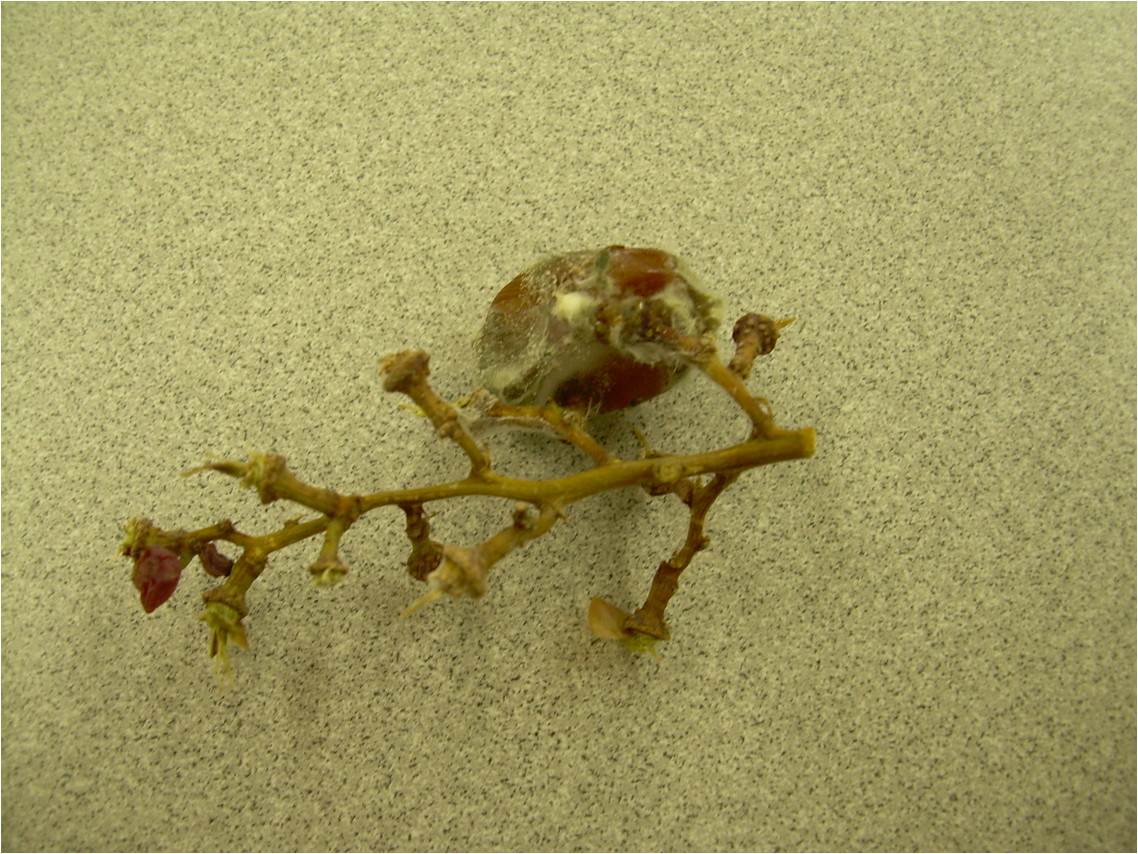
Symptoms
Brown soft rot of individual berries within a bunch, grey fuzzy sporulation after a few warm humid days, whole bunch collapse, vinegar/cider off-smell from infected fruit.
Plants affected
Easily confused with
- grape downy mildew
How to tell them apart: Botrytis cinerea (grey mould / bunch rot) produces a dusty, mouse-grey, fuzzy mould that engulfs ripening berries and clusters in warm humid weather; affected berries turn brown, shrivel and split, and the velvety grey sporulation puffs up in dust clouds when touched. Plasmopara viticola (downy mildew) shows up first on leaves as yellowish translucent 'oil-spots' on the upper side with a dense, snow-white, downy felt on the LOWER leaf surface; on young green berries it forms a white downy bloom, while older infected berries turn leathery, brown-grey, dimpled and dull ('brown rot' / 'grey rot') with NO fuzzy white growth. Key tells: Botrytis grey + dusty and indifferent to leaf undersides; downy mildew is pure white + downy and tied to leaves with oil-spots and cool wet nights.
- European grapevine moth
How to tell them apart: Botrytis grey rot covers ripening berries and whole clusters in a soft brown collapse topped by a dusty, ash-grey fuzzy mould that puffs into a cloud when disturbed. The skin slips off easily and the berry pulp turns into a watery, sweetish mush. It spreads outward berry-to-berry within the bunch and is worst in humid, rainy, or dewy weather and on tight clusters. There is no insect, no webbing and no boring hole at its origin — only fungal growth. The European grapevine moth is recognised by the caterpillar's damage rather than the moth itself: small pinkish-to-greenish larvae bore into flower buds and green or ripening berries, leaving a neat round entry hole, dark crumbly frass (droppings) and fine silken webbing that ties florets or berries together into a 'glomerule'. Cut a damaged berry open and you find the larva or its tunnel inside. The grey mould that later appears is secondary; the primary sign is the hole, the silk and the frass made by the larva.
Treatment
Dr. Phyto builds a dated, step-by-step treatment plan with country-approved products — start a free diagnosis to get yours.
Common questions
- How do I recognise grape grey mould on grape vine?
- Brown soft rot of individual berries within a bunch, grey fuzzy sporulation after a few warm humid days, whole bunch collapse, vinegar/cider off-smell from infected fruit.
- Do I have to report grape grey mould?
- No. grape grey mould is not a notifiable organism, so there is nothing to report to an authority. Treat it as a normal garden problem.
- How is grape grey mould treated?
- Mainly with biological and cultural measures — removing affected material, changing the conditions that favour it, and treating with agents approved in your country. The exact steps and their timing depend on the plant, the season and where you live: Dr. Phyto works them out in a free diagnosis.
Free first diagnosis · no sign-up to start