Dr. Phyto
plane anthracnose
Apiognomonia veneta
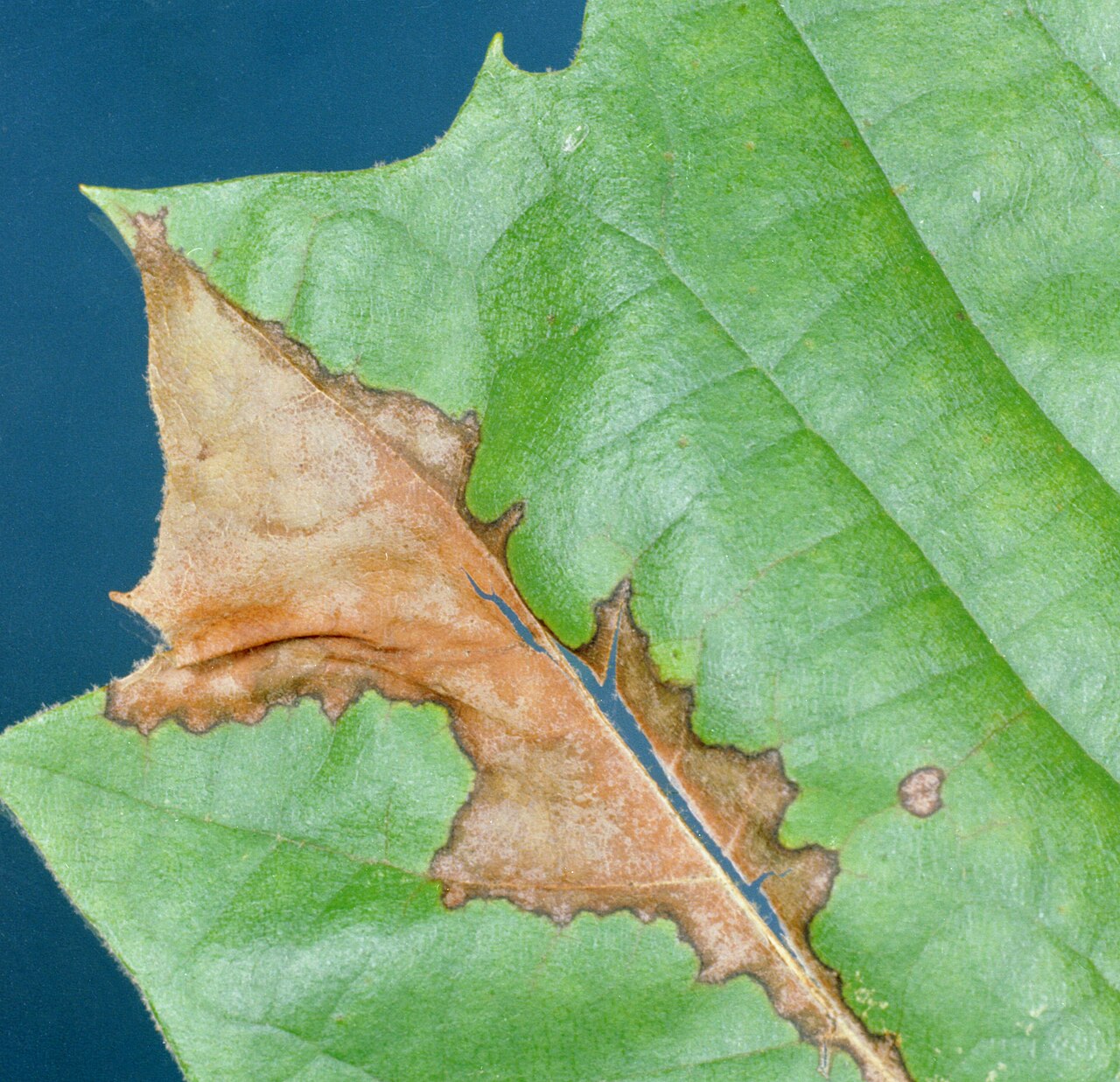
Symptoms
Brown angular leaf lesions following veins, twig dieback + cankers on young shoots, premature defoliation of entire trees in epidemic years, witches' broom symptoms in chronic infections, characteristic black fruiting bodies on dead twigs in winter.
Plants affected
Easily confused with
- Plane powdery mildew
How to tell them apart: Erysiphe platani (plane powdery mildew) forms a white to grey powdery coating that sits ON the leaf surface and wipes off, with young leaves curled, pale and stunted. Apiognomonia veneta (plane anthracnose) instead causes brown to tan necrotic blotches that follow the leaf veins, plus bud death, shoot dieback and twig cankers, with no powdery growth that wipes off; anthracnose damage is darkest in cool, wet spring weather, whereas the mildew is favoured by warm, dry conditions with high humidity.
Treatment
Dr. Phyto builds a dated, step-by-step treatment plan with country-approved products — start a free diagnosis to get yours.
Common questions
- How do I recognise plane anthracnose on oriental plane?
- Brown angular leaf lesions following veins, twig dieback + cankers on young shoots, premature defoliation of entire trees in epidemic years, witches' broom symptoms in chronic infections, characteristic black fruiting bodies on dead twigs in winter.
- Do I have to report plane anthracnose?
- No. plane anthracnose is not a notifiable organism, so there is nothing to report to an authority. Treat it as a normal garden problem.
- How is plane anthracnose treated?
- Mainly with biological and cultural measures — removing affected material, changing the conditions that favour it, and treating with agents approved in your country. The exact steps and their timing depend on the plant, the season and where you live: Dr. Phyto works them out in a free diagnosis.
Free first diagnosis · no sign-up to start