Dr. Phyto
Fuchsien-Gallmilbe
Aculops fuchsiae
Symptome
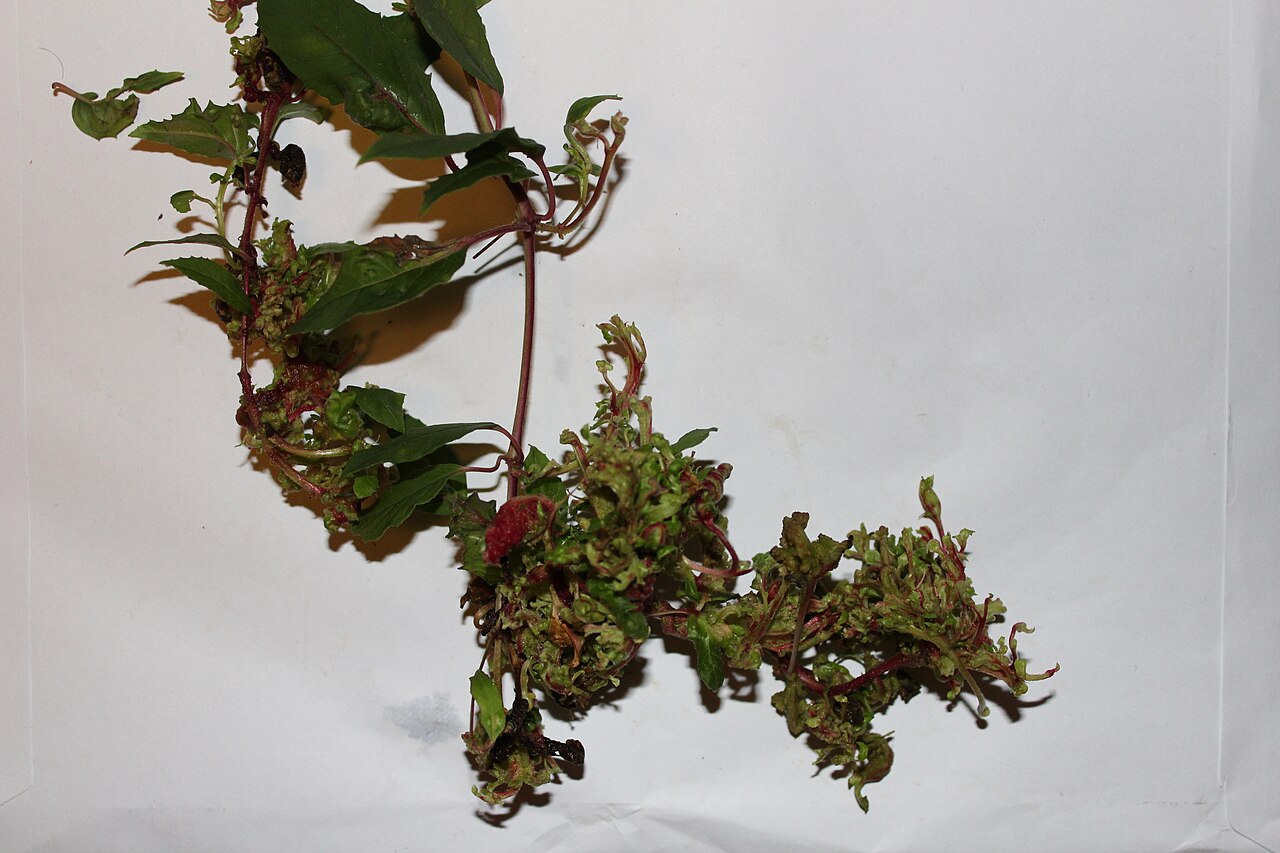
Triebspitzen, junge Blätter und Blütenknospen werden stark verformt, verdickt und gerötet und bilden pfirsichflaumige, gallenartige Büschel, als würde die Pflanze an den Spitzen "kochen"; befallene Triebe blühen nicht; leicht mit Herbizidschaden oder einer Krankheit zu verwechseln, doch die Ursache ist eine mikroskopische Gallmilbe, mit bloßem Auge unsichtbar.
Betroffene Pflanzen
Leicht verwechselt mit
- Fuchsienrost
So unterscheidet man sie: Pucciniastrum epilobii (Fuchsienrost) ist ein Pilz: auf der BLATTUNTERSEITE bilden sich erhabene, pulvrige Pusteln in leuchtendem Orange bis Orangegelb, in verstreuten Flecken, die sich als farbiger Staub abreiben lassen; die OBERSEITE zeigt passend dazu blassgelbe Flecken. Das Blatt bleibt flach und normal geformt, nur verfärbt. Aculops fuchsiae (Fuchsiengallmilbe) ist eine mikroskopisch kleine Gallmilbe: sie bildet keine pulvrigen Sporen, sondern verformt und VERDICKT das Gewebe zu rötlichen, geschwollenen, blasigen, eingerollten und oft behaarten Wucherungen an Triebspitzen, jungen Blättern und Blütenknospen. Staubt es orange ab, ist es Rost; ist das Gewebe fleischig, verdreht und festsitzend, ist es die Gallmilbe.
- Baumwollblattlaus
So unterscheidet man sie: Aculops fuchsiae (Fuchsien-Gallmilbe) zeigt keine sichtbaren Insekten — nur den Schaden: Triebspitzen und jüngste Blätter schwellen an, verdicken sich und verkrümmen zu einer kupferrosa bis rötlichen, blasigen, hexenbesenartigen Masse, die verhärtet und auch beim Heranwachsen deformiert bleibt, sodass die Pflanze keine normalen Blätter und Blüten mehr bildet. Aphis gossypii (Baumwoll-/Grüne Gurkenblattlaus) hinterlässt die Insekten selbst: dichte Kolonien kleiner, weichhäutiger, birnenförmiger Blattläuse (gelbgrün bis dunkelgrün) auf der Unterseite eingerollter Spitzen, mit weißen Häutungsresten, klebrigem Honigtau und schwarzem Rußtau. Blattlaus-Kräuselung ist weich, grün und nach Entfernung der Kolonie umkehrbar; die Milben-Deformation ist hart, verdickt, abnorm gefärbt und dauerhaft. Suchen Sie zuerst nach lebenden Läusen und Honigtau, bevor Sie eine Gallmilbe annehmen.
Behandlung
Dr. Phyto erstellt einen datierten, schrittweisen Behandlungsplan mit im Land zugelassenen Mitteln — starte eine kostenlose Diagnose, um deinen zu erhalten.
Häufige Fragen
- Wie erkenne ich Fuchsien-Gallmilbe an Fuchsie?
- Triebspitzen, junge Blätter und Blütenknospen werden stark verformt, verdickt und gerötet und bilden pfirsichflaumige, gallenartige Büschel, als würde die Pflanze an den Spitzen "kochen"; befallene Triebe blühen nicht; leicht mit Herbizidschaden oder einer Krankheit zu verwechseln, doch die Ursache ist eine mikroskopische Gallmilbe, mit bloßem Auge unsichtbar.
- Muss ich Fuchsien-Gallmilbe melden?
- Nein. Fuchsien-Gallmilbe ist nicht meldepflichtig, es gibt also nichts an eine Behörde zu melden. Behandle es wie ein normales Gartenproblem.
- Wie wird Fuchsien-Gallmilbe behandelt?
- Vor allem mit biologischen und pflegerischen Maßnahmen — befallenes Material entfernen, die begünstigenden Bedingungen ändern und mit in deinem Land zugelassenen Mitteln behandeln. Die genauen Schritte und ihr Zeitpunkt hängen von Pflanze, Jahreszeit und Wohnort ab: Dr. Phyto ermittelt sie in einer kostenlosen Diagnose.
Erste Diagnose gratis · keine Anmeldung nötig